


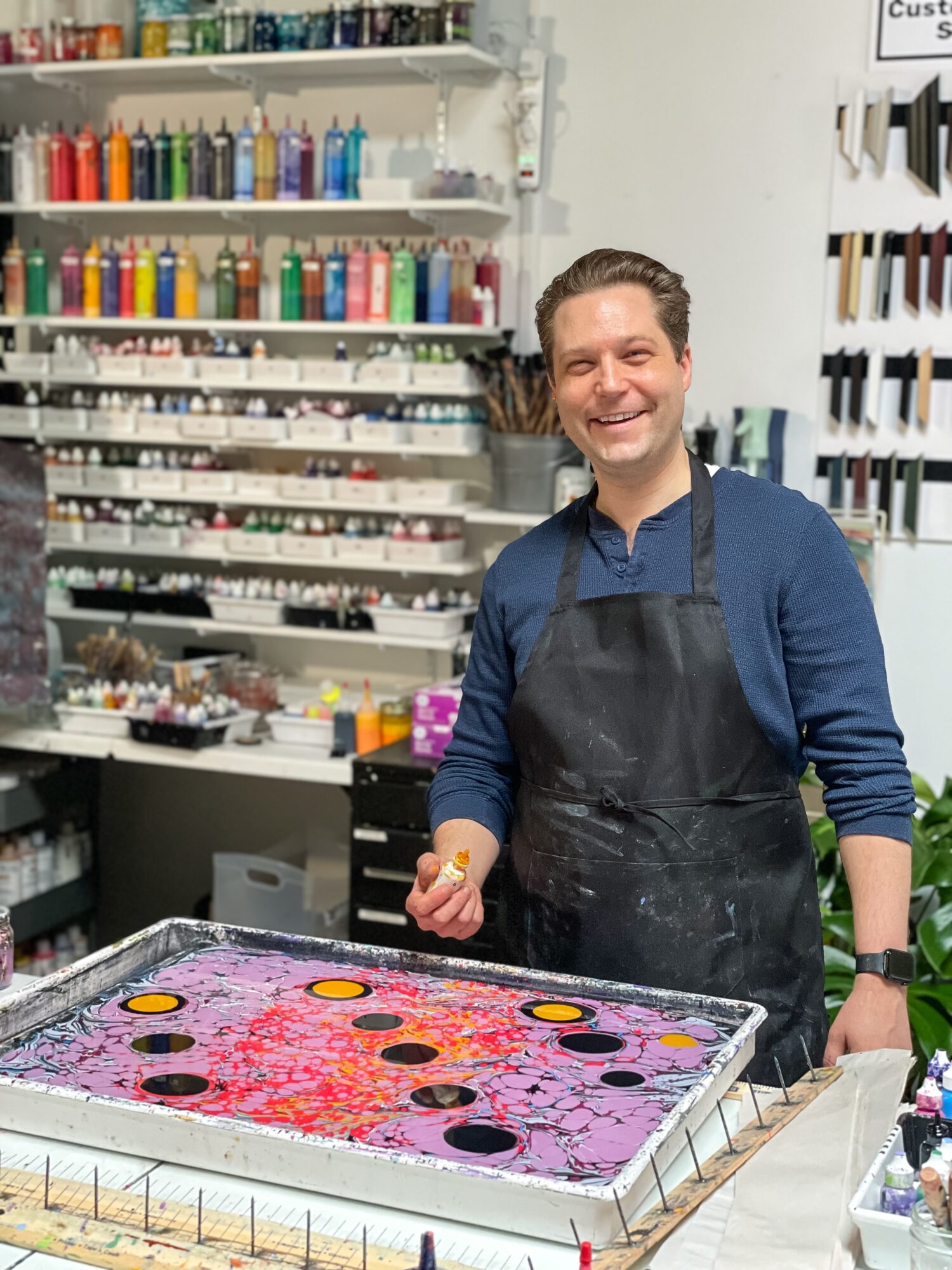
Today we’d like to introduce you to Keith Garubba.
Hi Keith, it’s an honor to have you on the platform. Thanks for taking the time to share your story with us – to start maybe you can share some of your backstory with our readers?
I fell in love with drawing as a kid, surrounded by brothers and friends who were always cooking up comic books and backyard video projects. Creative storytelling was how we played, and drawing was just how I talked. I went to Keystone College passionately pursuing the dream of becoming a comic book artist or illustrator. There, I met an instructor I’ve always considered a mentor, Sally Tosti, who taught printmaking and book arts. She opened a door I didn’t even know existed. I had no idea printmaking was a whole world of its own. I would go on to earn two degrees in printmaking.
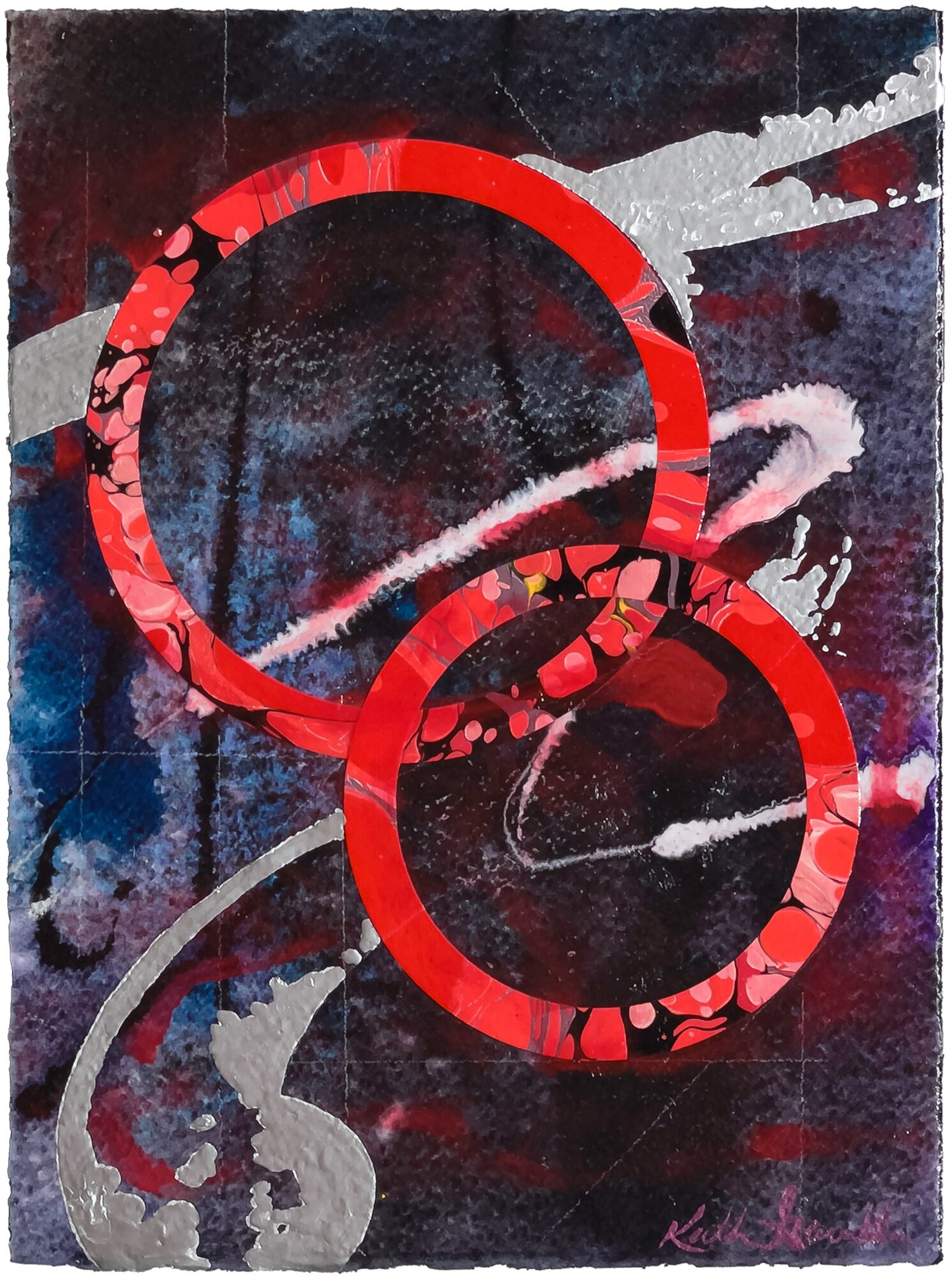
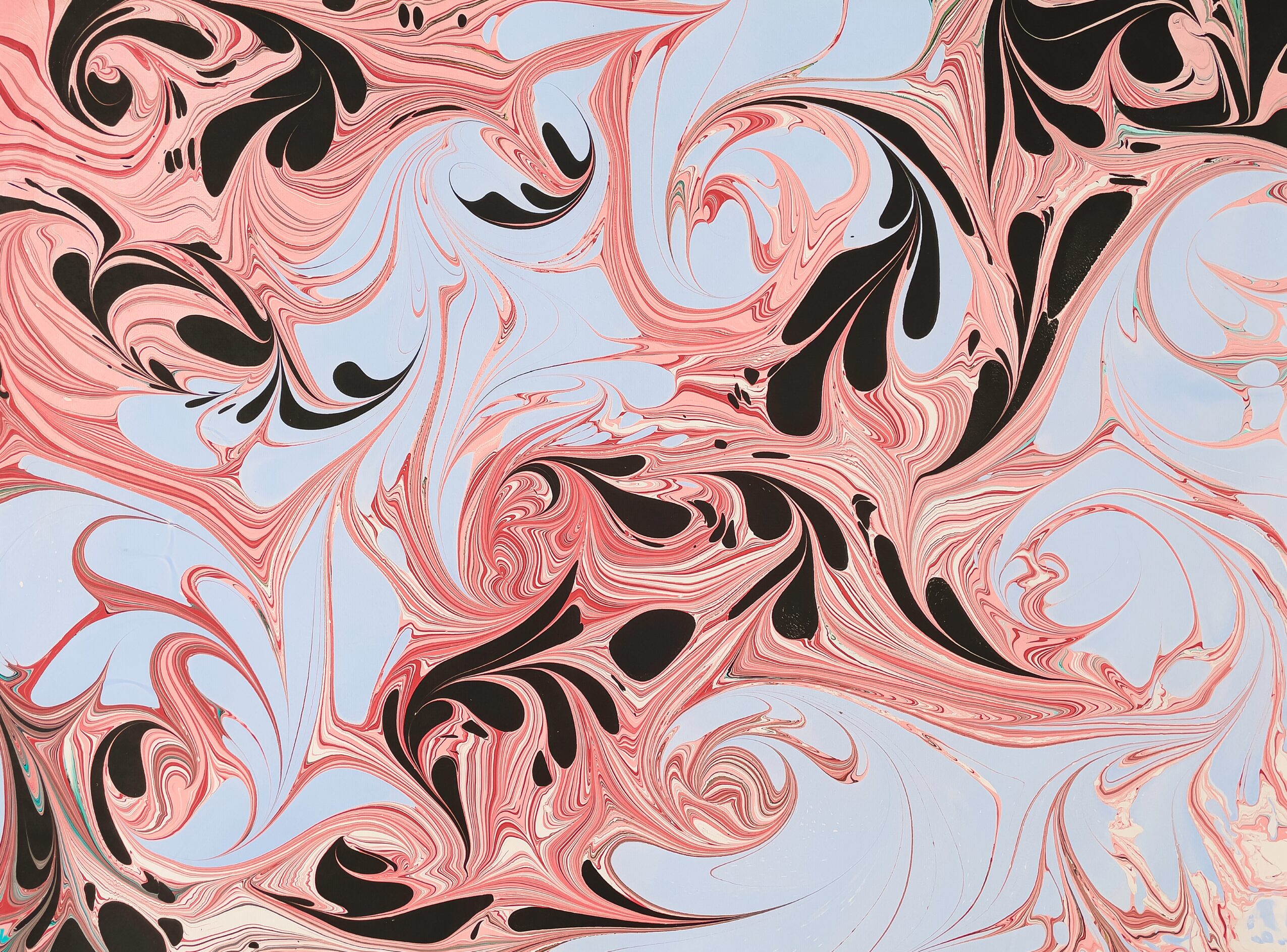
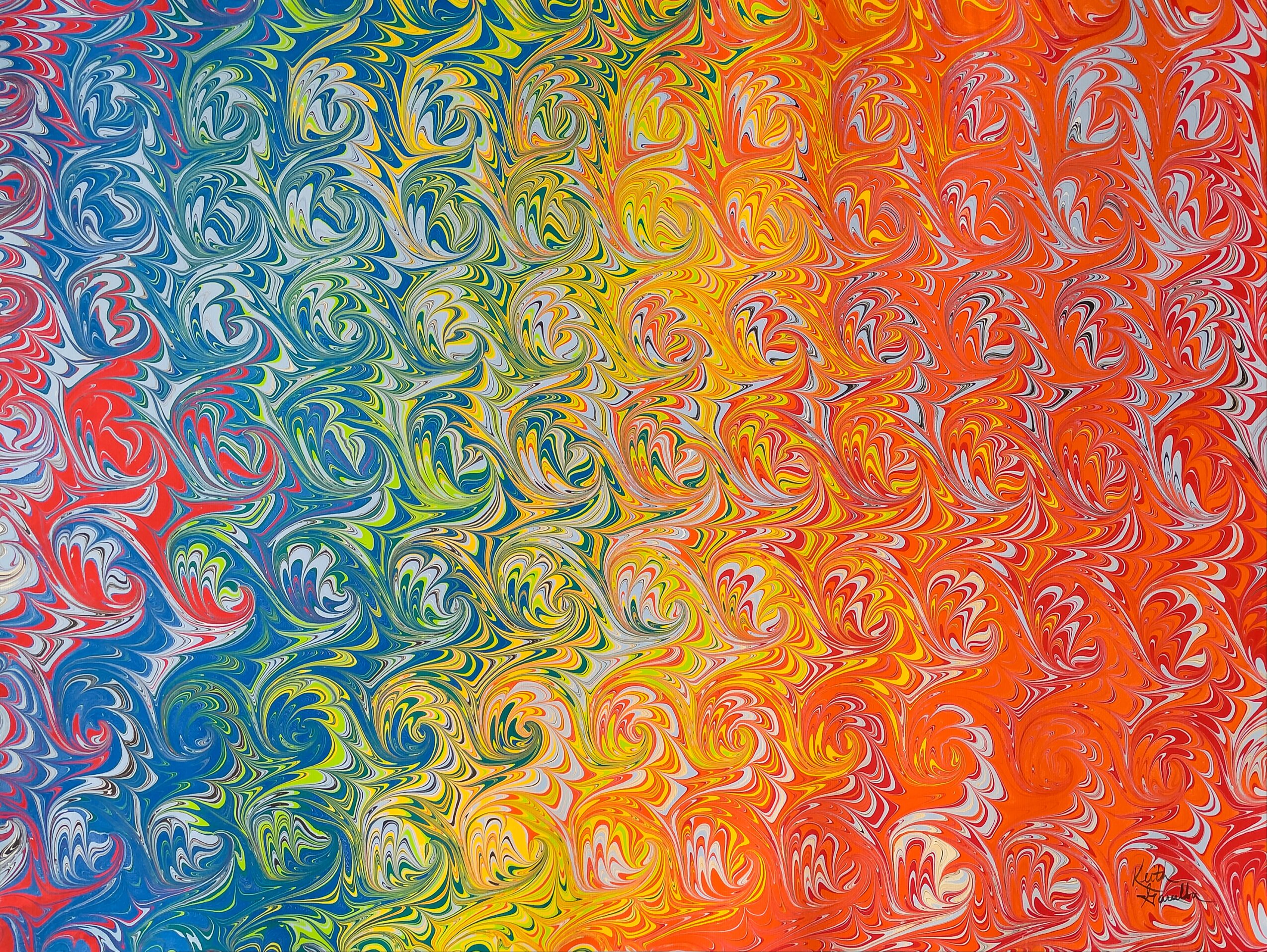
One weekend she ran an optional workshop on something called paper marbling. At the time, I’d actually been painting a series based on photos of swirling paint in my water cups, trying to capture that exact liquid moment in hand rendered paintings. When Sally showed us marbling, I couldn’t believe it: you could freeze that moment for real, on paper, just with chemistry and water. I was hooked instantly.
Marbling stayed a side fascination for the next ten years, something I’d circle back to, read about, sneak into a body of work here and there, but never the main thing.
Somewhere in the middle of my path to becoming an artist, I would experience a life-defining personal loss. Around my sophomore year of college, I lost my Uncle Ralphie very suddenly. He lived with my family, and my mom was his caretaker. He was loving and innocent, and none of us saw it coming. He passed within about a day of falling ill, on a night that began with friends gathered around, playing drawing games and laughing harder than I had in years, but devastatingly turned towards loss. We were all changed, and for me, it deeply affected how I would express myself.
I came back to school a different artist. Before that, I pursued representational work: Narrative illustration. After, everything I wanted to make was abstract: shapes, pattern, color, something closer to how grief and searching actually feel than any picture could be. Printmaking became the language for that shift, and the spontaneity and openness to nature I’d already glimpsed in Sally’s marbling workshop turned out to be exactly what I needed..
I went on to get my MFA at Ohio State, came back to PA, and started building a career as an exhibiting artist and teacher. I would teach in every context: from camps for 5-year-olds to college-level courses.
A simple video of myself marbling, posted online almost on a whim, caught the attention of an old friend running what’s now Frontline Arts in NJ, and she invited me to teach it to their community of printmakers. That class ran for years and was really my first real proof that other people wanted this as badly as I did.
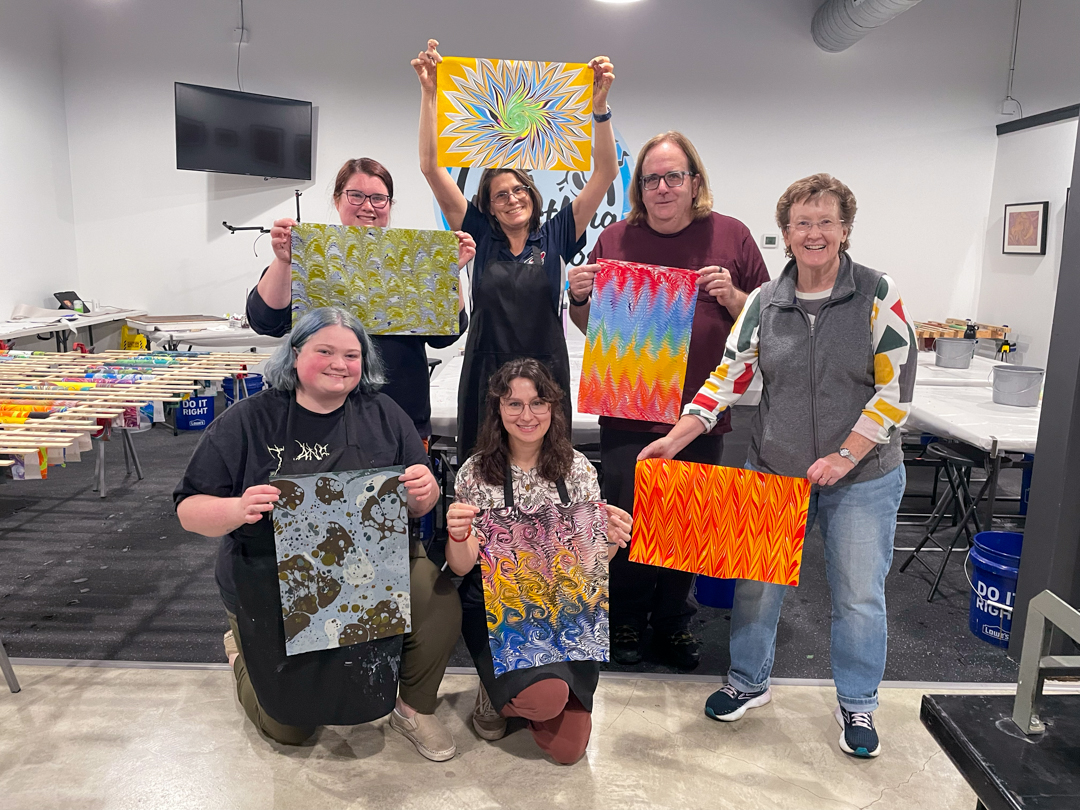
I really rooted myself as an artist of the Lehigh Valley when I became a resident artist at the Banana Factory in Bethlehem, a community art center that housed the studios of serious visual artists from the area. A friend there kept bugging me to teach him marbling. I put together a small class just for friends out of my little studio at this art center. And the response told me I’d created something special. That class became the blueprint for everything Whistling Studios is today: joy-forward, real craft, open-ended enough to build genuine confidence at any skill level.
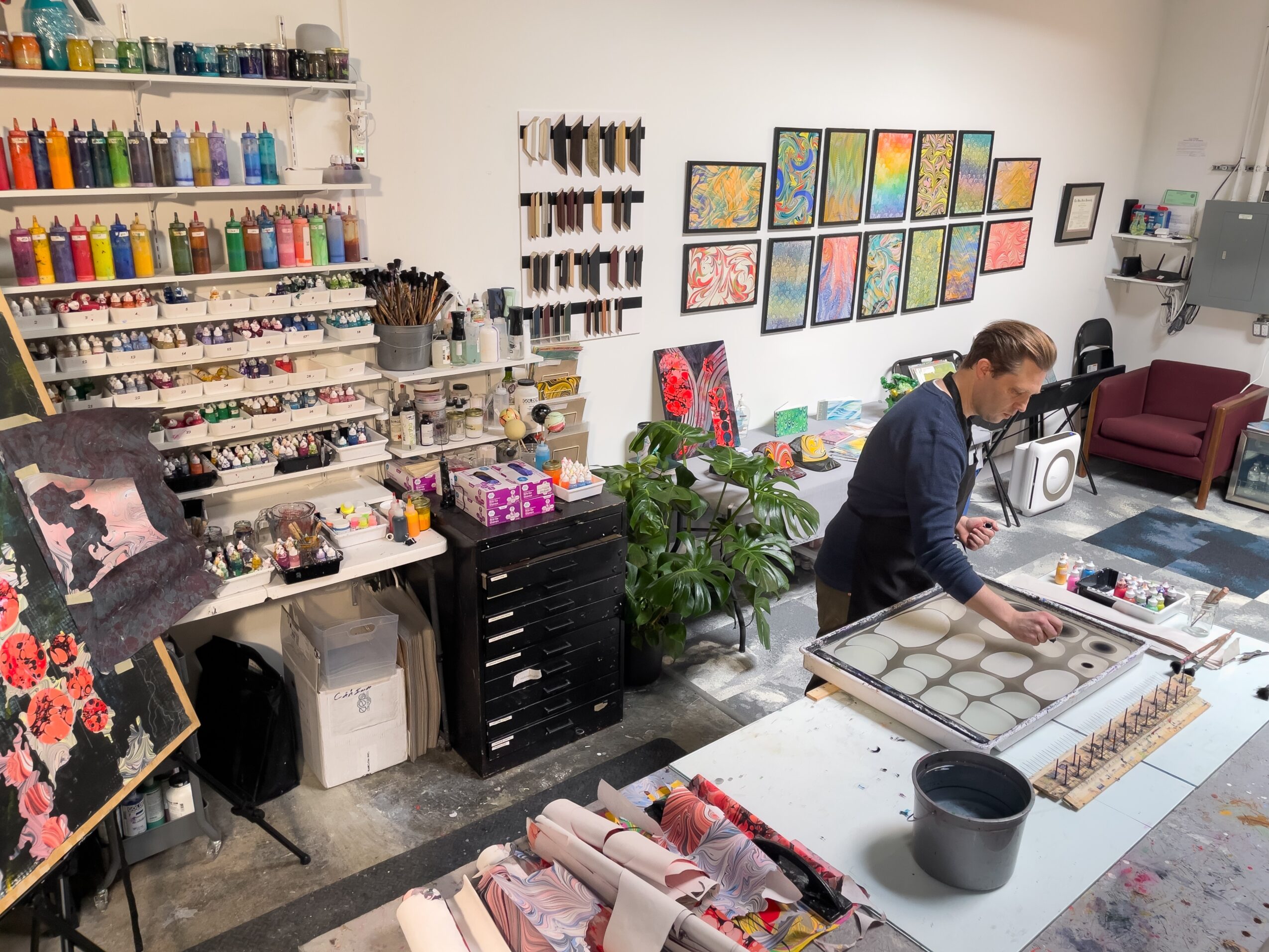
I always knew I wanted my own space and my own brand eventually, but I kept finding reasons not to leap. Young family, financial timing, just not feeling brave enough yet. Then in 2024, the Banana Factory building was slated for demolition, and suddenly the decision wasn’t mine to keep putting off. That displacement was exactly the push I needed. Whistling Studios was born that year, built to my own specs from the ground up.
What’s surprised me most since then is how much the studio has become about the students rather than my own work. People now drive in from hours away because real, advanced marbling instruction is genuinely hard to find. I started a membership club, the Marblers Club, where members come just to make work together, and watching them inspire each other has been some of the most rewarding work of my life. I make less of my own art than I used to. But art moves in seasons, and right now my season is pouring into other people’s voices. I wouldn’t trade it.
Would you say it’s been a smooth road, and if not what are some of the biggest challenges you’ve faced along the way?
Choosing to be an artist is frequently a path of repeatedly denying yourself the path of least resistance. And it is the same for a business owner. To create, to build, is often a choice of the heart more than one of logic.
Yes, there have been struggles, absolutely. My plan was really to build my art career alongside more practical choices, to do it with a soft landing. Have a safe job while building the business. But life has a way of interrupting and rerouting your plans.
In one instance, I got a job in a creative studio, thinking it would be my ticket to bigger and better things. I believed this job would be the bridge to meeting important people, traveling upward through the art world. I couldn’t believe it when I was fired. I was devastated and disappointed in myself. I thought I’d failed. But this needed to happen. It was the push I needed to rely on myself. It made me realize no one was going to hand me stability. I needed to build my career with intensity and intentionality.
What’s annoying is that life’s biggest turning points rarely wait for you to feel ready. For me, when word came that the Banana Factory would be demolished, I was incredibly vulnerable. My wife had just made a big move in her career, and the outcomes weren’t clear. We had young children, and we were already stretched thin. It was downright scary to make the choice to open my own studio. But she supported my decision, and I couldn’t be more proud. Only time will tell exactly where it leads, but I’ve never once doubted it was the right move. You have to have a sense of humor, and a bit of stubborn tenacity, to not give up.
In a creative career, burnout is often right around the corner. I’ve made bad decisions for sure that I needed to recover from. I once took a big chance on an expensive art fair, well outside my range, and it was a complete bust. I blew through my savings and my reserves of energy. Picking up the pieces from that, and finding my way forward, was really hard. Finding a new compass for when to take a big risk and when to play it safe and methodical was crucial.
Appreciate you sharing that. What else should we know about what you do?
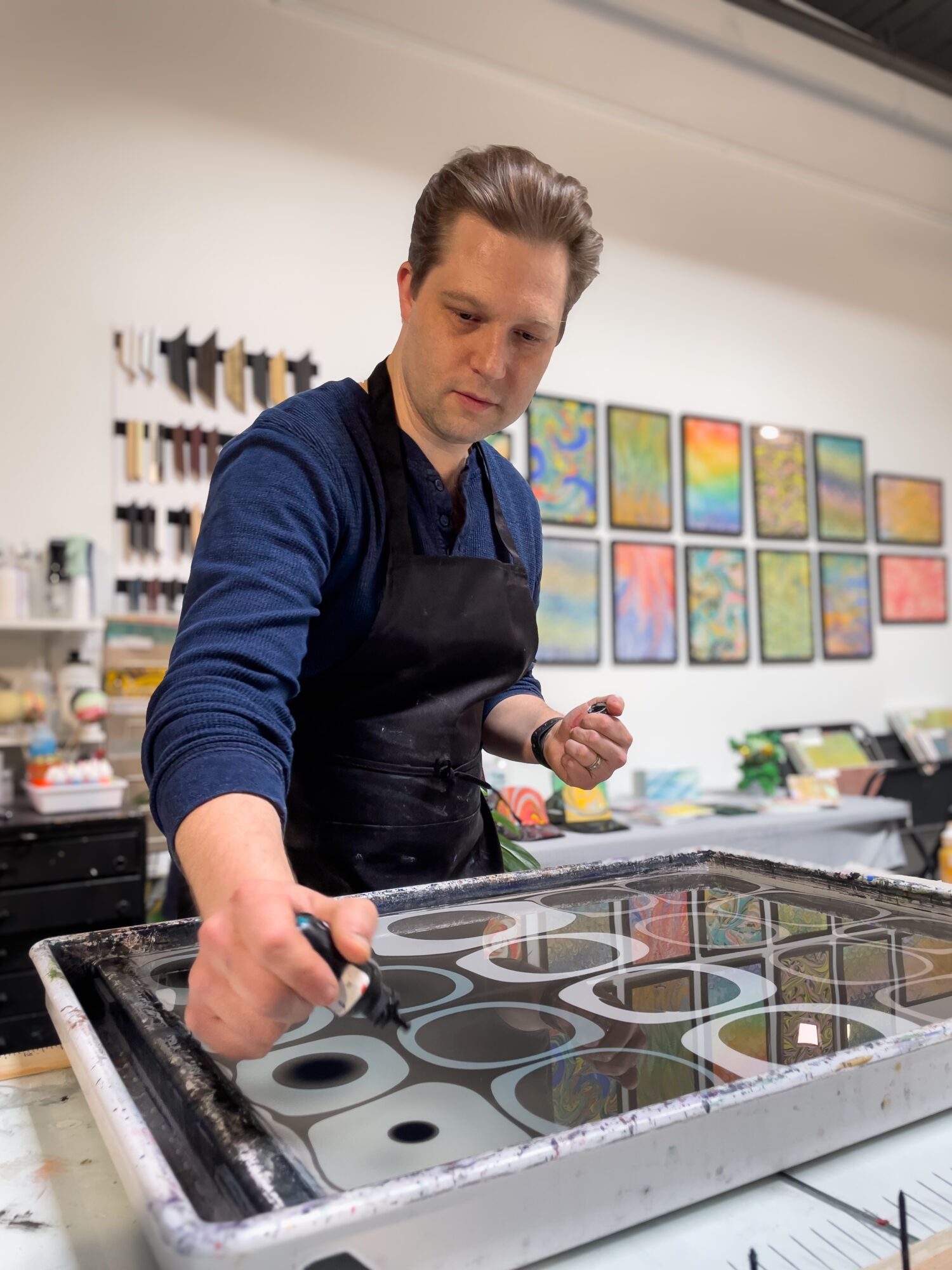
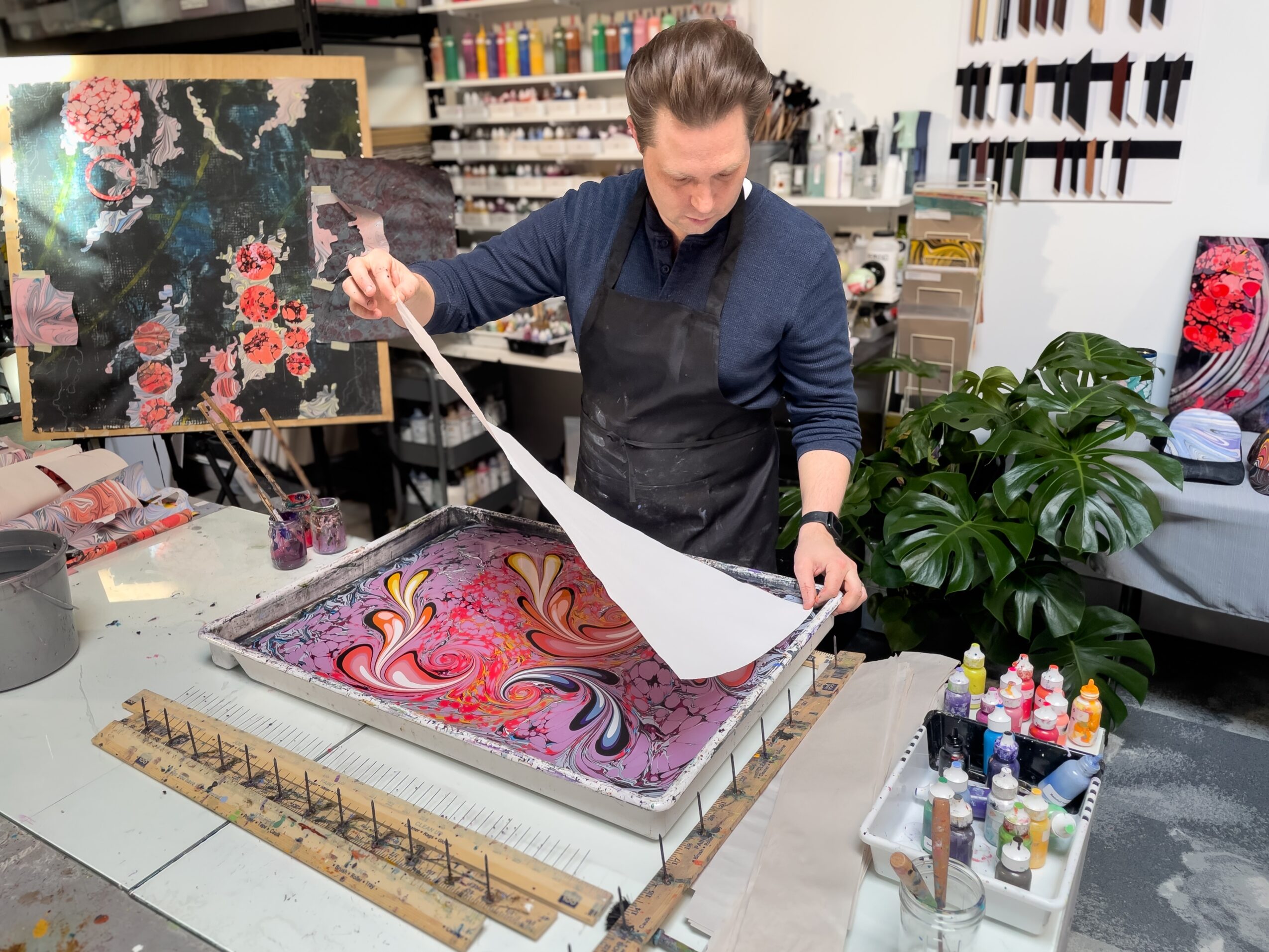
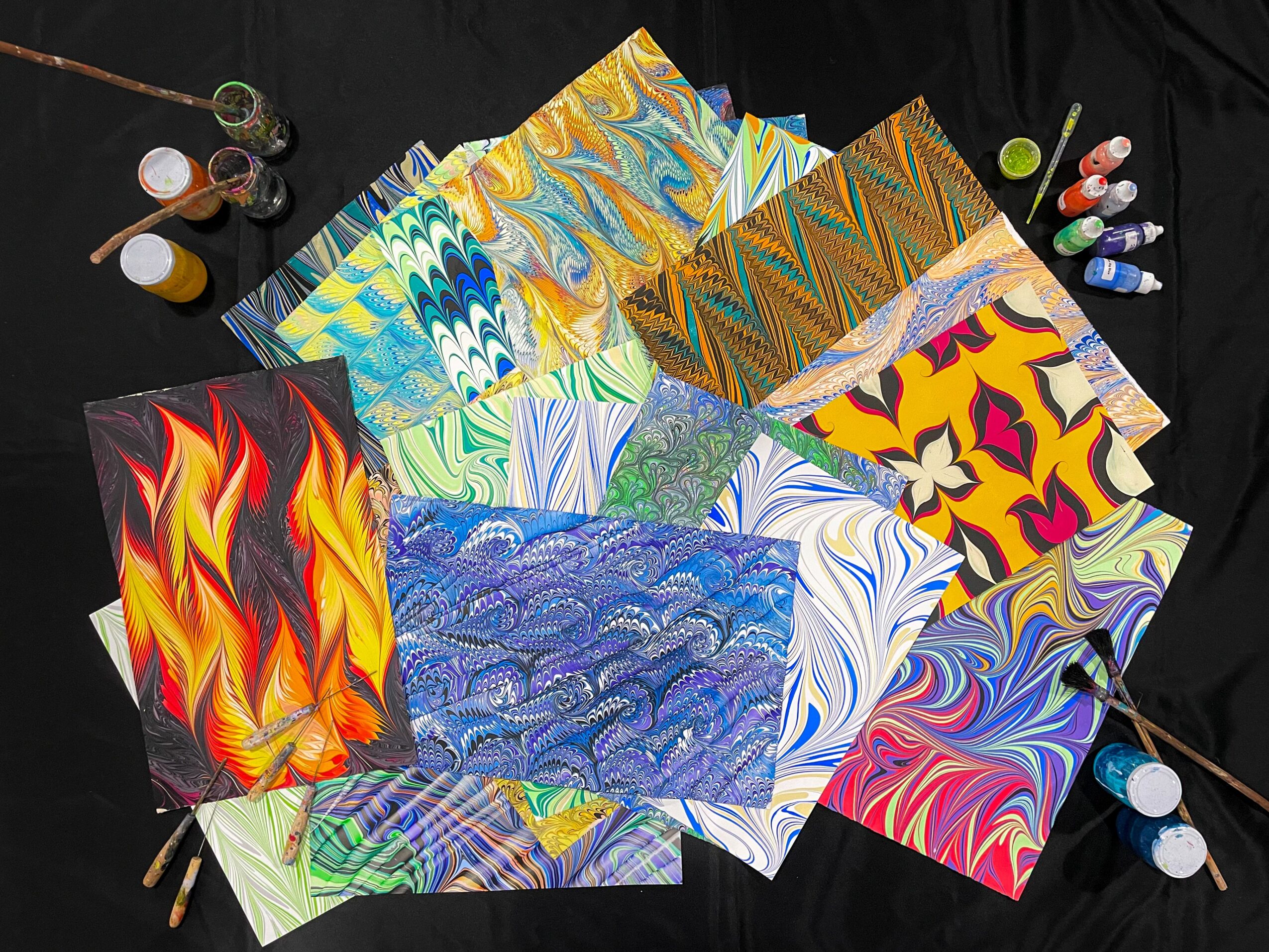
At Whistling Studios, I specialize in paper marbling, with disc dyeing and printmaking rounding out the offerings. Marbling is the heart of it though. It’s an old, slightly mysterious craft, paint floating and drifting on water, then lifted onto paper in a pattern that can never be exactly repeated. Most people have never seen it done in person, let alone learned it properly, and that’s part of what I love about teaching it. I get to introduce people to something genuinely new.
What I’m known for, I think, is depth. There’s a lot of surface-level “try marbling for an hour” experiences out there, and those have their place, but I come at it with the technical background of someone with two degrees in printmaking and years of studio practice behind it. That means when a student wants to go further than the basics, I actually have somewhere to take them. I regularly have students driving in from one, two, even four hours away, because real instruction in advanced marbling techniques is genuinely hard to find. That specialization is something I’m proud of. I built it on purpose.
What I think sets me apart most, though, isn’t the technique itself. It’s the philosophy underneath how I teach it. I don’t believe art should be approached like a discipline you grind through. I think the best work, and the best relationship to making art, comes from curiosity, play, and a willingness to lose control a little. I built that belief into every class at Whistling Studios, whether someone is picking up a brush for the first time or chasing a technique they’ve wanted to master for years.
The thing I’m proudest of, honestly, is what’s grown out of that philosophy: the Marblers Club. It’s a membership community where students come not for instruction, but just to make work together, regularly, in a space that’s become genuinely theirs. Watching people build real friendships, inspire each other’s work, and find their own voice in a medium I love this much, that’s the most rewarding thing I’ve built in my career, full stop.
Before we let you go, we’ve got to ask if you have any advice for those who are just starting out?
If I could tell my younger self one thing, it’s this: be open to the idea that your life will take a different path than you imagined. Your hopes and dreams matter, they’re part of what gets you moving in the first place, but they were never a contract you signed with yourself. They’re just one version of you speaking up early, before you had any idea what you were actually capable of.
I spent a lot of years as the Ant in that old fable, working hard, grinding, believing the bounty would come if I just stored up enough effort. What I wish someone had told me is that the most important thing you end up offering the world is rarely the thing you set out to build. What you actually give people, how you help them feel, what you help them become, that develops slowly, through living it, not through planning it out in advance. You don’t know who you are until you become it.
So my real advice is this: don’t wait to feel finished before you start. Don’t assume the goal you’re chasing today is the destination. Approach your work, whatever it is, with curiosity instead of certainty, and let yourself be surprised by who you turn into along the way. The artist, or the person, you’re becoming is not the one you promised yourself you’d be. That’s not a failure. That’s the whole point.
Contact Info:
- Website: https://www.whistlingstudios.com/
- Instagram: https://www.instagram.com/whistlingstudios/
- Facebook: https://www.facebook.com/profile.php?id=61567298297008#