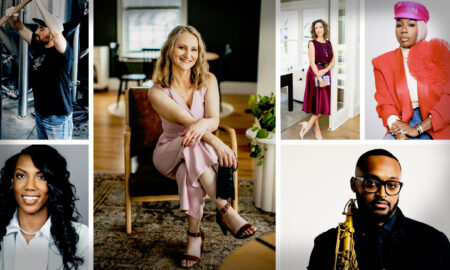



Today we’d like to introduce you to Jacintha Kruc.
Hi Jacintha, so excited to have you with us today. What can you tell us about your story?
I’ve really been doing some version of this work for most of my life. I grew up in New Mexico and Colorado, and I started painting scenery for community theaters when I was about 13. I don’t think I knew at the time that it could become a career, I just knew I loved painting, making things with my hands, working at a huge scale, and being part of a group of people making something together.
That eventually led me into scenic art professionally, where I learned traditional decorative painting techniques like wood graining, marbling, trompe l’oeil, and all kinds of faux finishes. At the same time, I was always pursuing my own work as an artist. I studied art in Colorado and later at MICA and PAFA, which is ultimately what brought me to Philadelphia.
Philadelphia really became home for me. I found my way into architectural conservation and historic preservation here for the past 13 years and it brought together so many things I had always loved without realizing they could all exist in the same career: painting, history, craftsmanship, problem solving, old buildings, and figuring out how things were actually made.
Over the years I’ve been incredibly lucky to work on historic buildings, murals, paintings, decorative finishes, and architectural surfaces throughout Philadelphia and beyond, while continuing to make my own artwork and murals. My path has never fit very neatly into one category, but I’ve actually come to really value that.
My connection to Philadelphia also goes well beyond my work. Community and taking care of people are really important to me. For the past nine years I’ve been involved with Jai CrabbeGorrell and D.O.P.E. (Doing Our Part Eclectically), serving and spending time with our friends experiencing homelessness in the city. Some of my most meaningful relationships in Philadelphia have come from simply showing up, getting involved, and being present with people, whether that has been through art, preservation, volunteering, teaching, or community work.
Eventually all of those different parts of my professional life came together and I started Preservation & Decorative Arts LLC. I wanted to build a practice that could hold all of it: conservation, decorative painting, murals, fine art, and the traditional craft skills I’ve accumulated over the years. Mmmm
I think underneath all of it, I’m really interested in connection! Connection to people, to places, to history, and to the hands that made things before us. I love that my work allows me to care for the physical fabric of Philadelphia, while so much of the rest of my life has been about caring for and being part of the community around it.
We all face challenges, but looking back would you describe it as a relatively smooth road?
It definitely hasn’t always been smooth. One of the biggest challenges has been balancing my own goals with a lot of personal and family responsibilities, while also navigating the uncertainty that comes with working in the arts and preservation. My path has also been very nonlinear, so there were times when I questioned whether I was moving in the “right” direction or doing too many different things. I ’m still figuring things out and learning every day but I think those experiences have made me more adaptable, resourceful, and more comfortable with the idea that life does not always unfold in a straight line.
Alright, so let’s switch gears a bit and talk business. What should we know about your work?
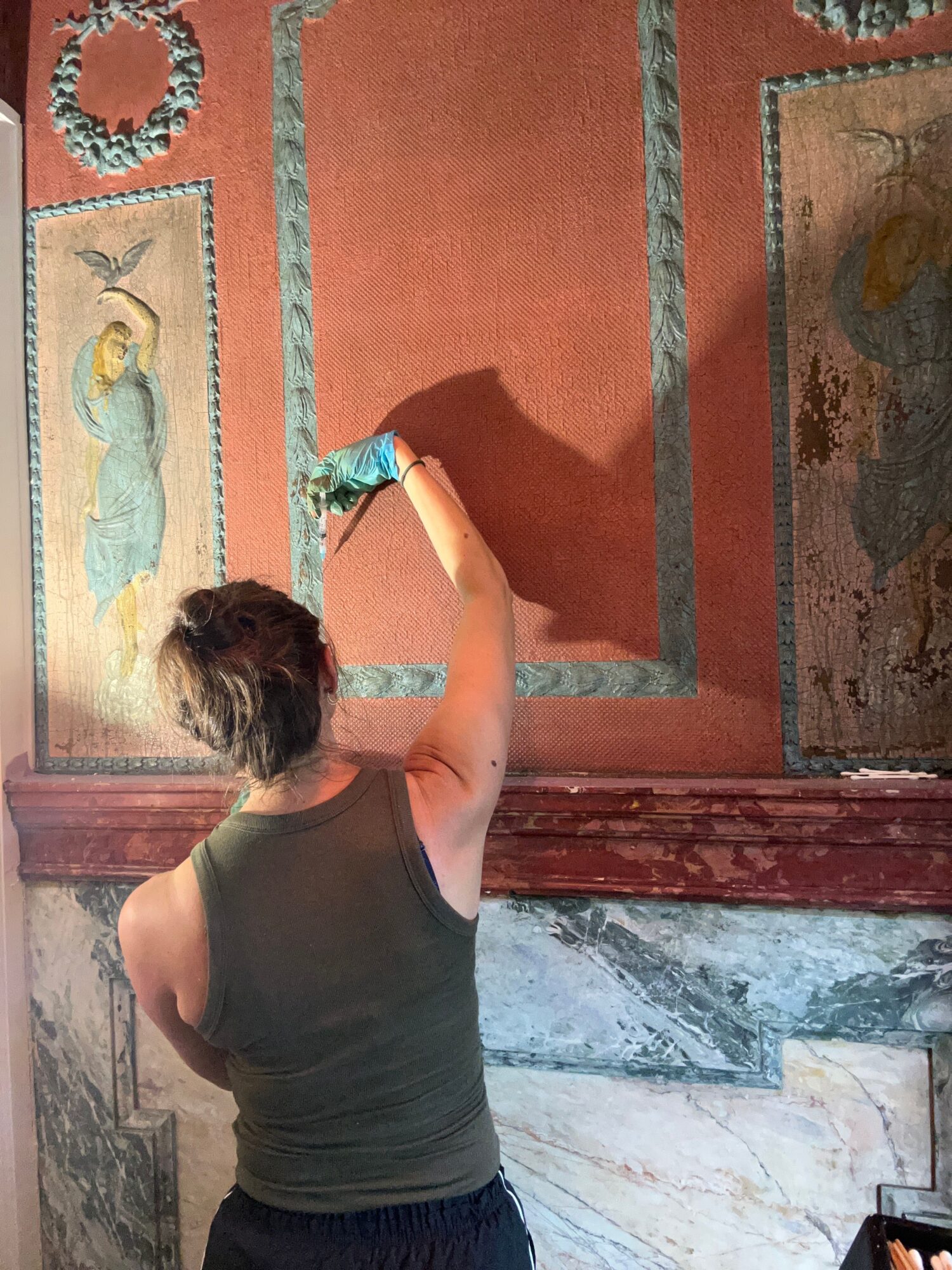
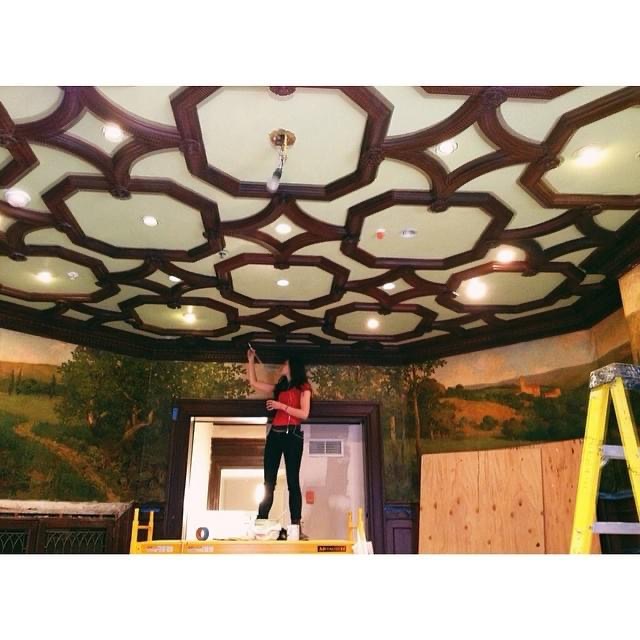
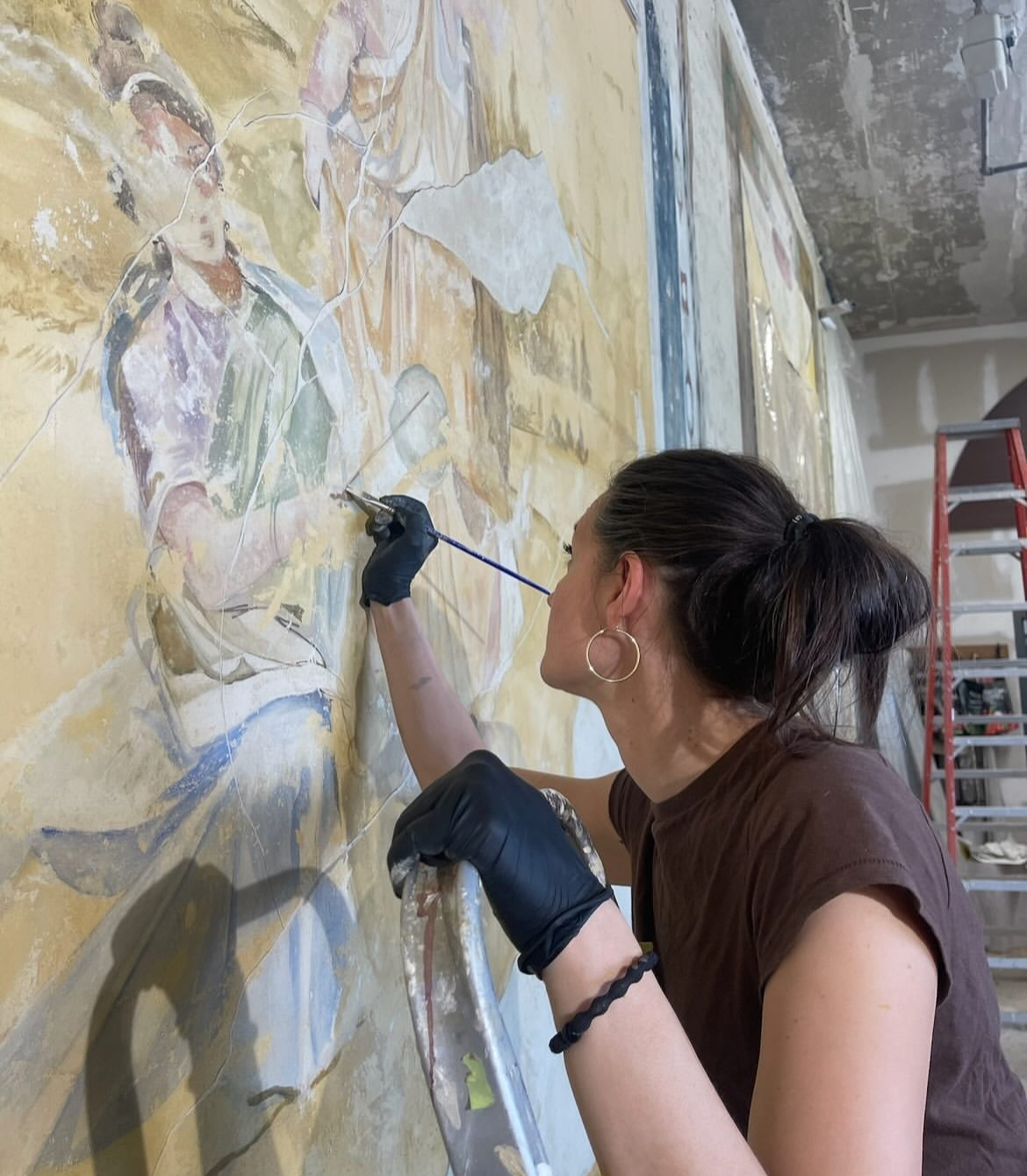
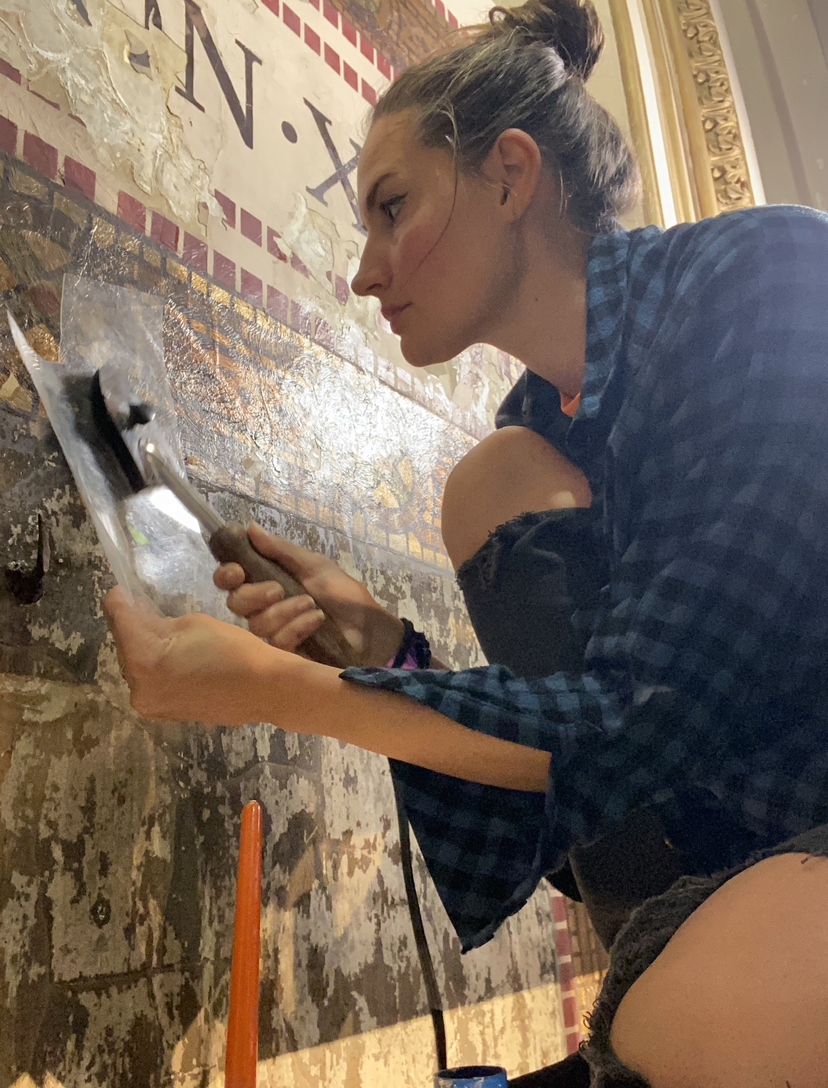
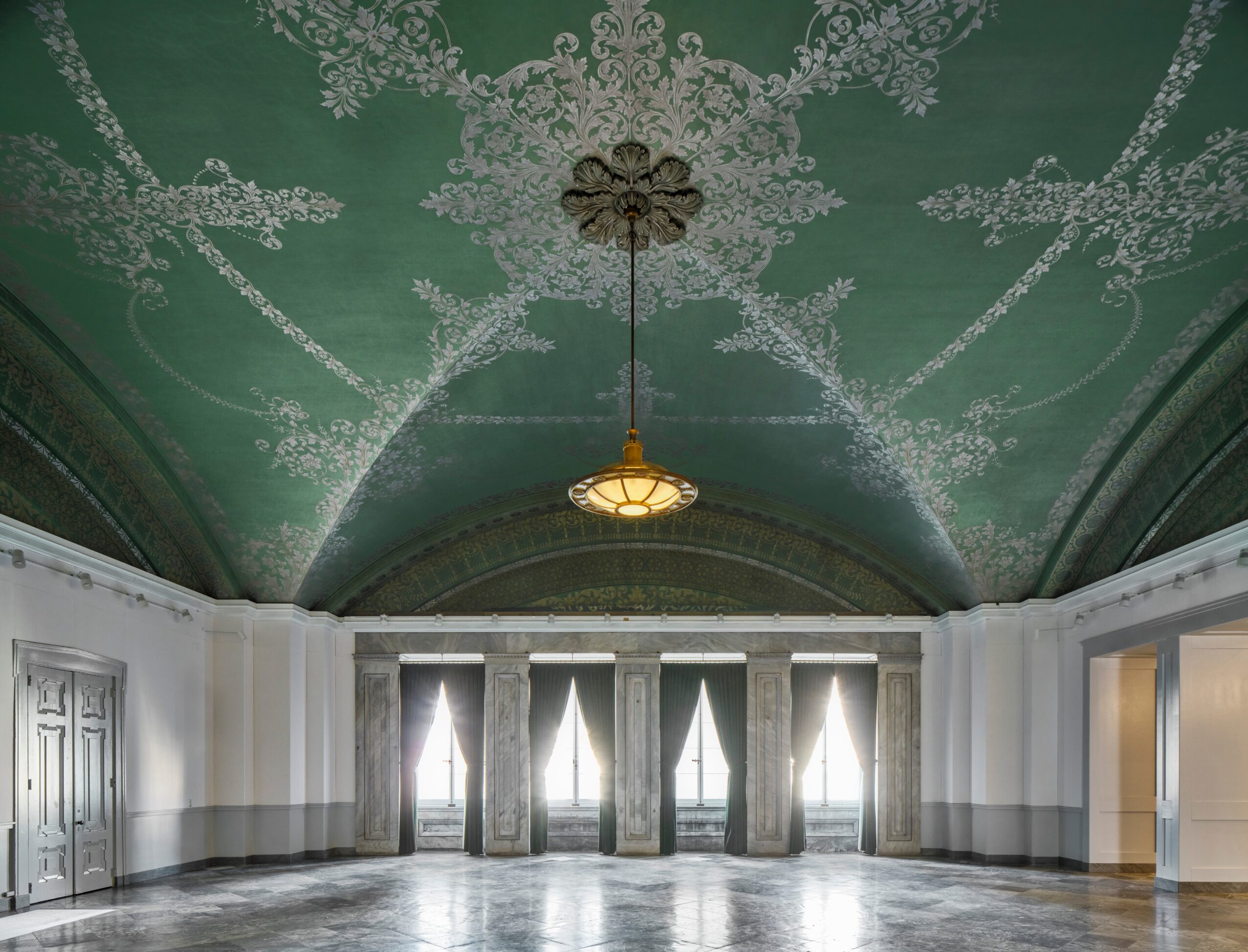
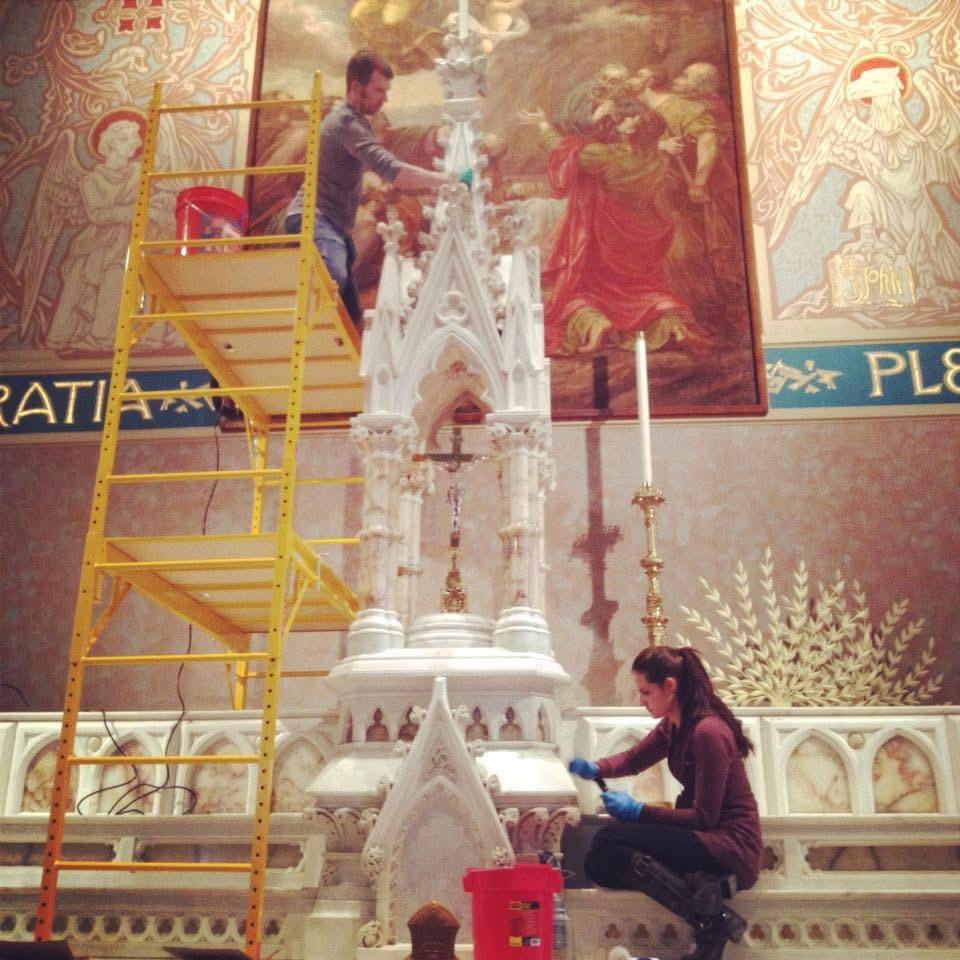
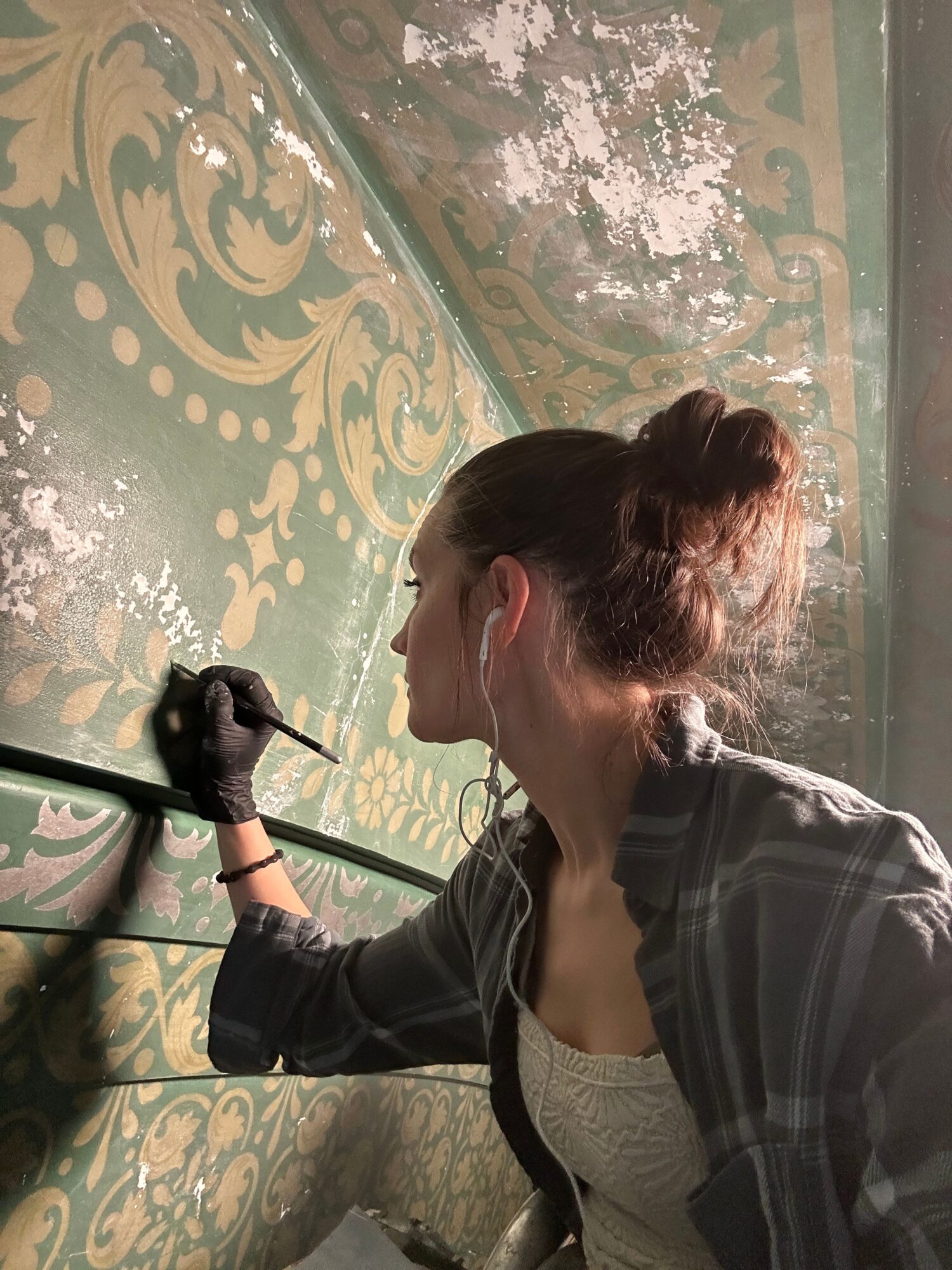
My work lives within conservation, decorative art, murals, and fine art, and I think that overlap is where I feel most at home. I’m interested both in making things and in understanding how things were made before me. I can spend one project carefully conserving an original painted surface and the next creating a completely new mural or recreating a historic decorative finish by hand. Through Preservation & Decorative Arts, I work on historic painted surfaces, paintings, murals, faux finishes, wood graining, marbling, gilding, hand painted wallpaper, and other decorative elements. A lot of what I do is very hands on and specialized, and often the projects that interest me most are the ones that do not fit neatly into one category. I’ve been fortunate to work in some incredible places over the years, including conservation projects at the Pennsylvania State Capitol, the restoration of the scagliola faux marble columns in the Bellevue in Philadelphia, the painted ceiling in Founders Hall at Girard College, and more recently the historic entrance doors at Cliveden, where I recreated a faux mahogany finish.
One of the things I love most about architectural conservation is getting access to parts of buildings and pieces of history that most people never get to see. These spaces tell stories of what was there before me.I’ve worked in places like the Governor’s Office and other historic interiors where you are suddenly inches away from original finishes, old repairs, hidden paint layers, and evidence of how a space has changed over time. There is something really exciting about uncovering those clues and then figuring out how to preserve them without erasing the history that is already there. Every project teaches me something new.
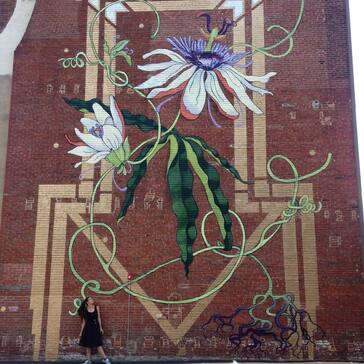
Murals, hand painted wallpapers, and other bespoke decorative work are another big part of what I do. I’ve painted in hospitals and medical spaces around Pennsylvania, including Penn State Hershey and PinnacleHealth, as well as public and community murals in Philadelphia, Harrisburg, Hershey, York, Lancaster, New York, Colorado, and elsewhere. I love the way murals become part of people’s everyday lives. Someone might pass one every morning on their way to work, encounter one during a difficult day at a hospital, or grow up with it as part of the visual memory of their neighborhood. There is something really special to me about making work that belongs to a place and becomes part of how people experience it.
What I’m most proud of is probably the range of work I’ve been able to build a life around and how much each part continues to inform the others. My background as a scenic artist and painter helps me understand how historic decorative work was physically created. Conservation has taught me to slow down, look closely, and think carefully about materials, surfaces, longevity, and what should or should not be changed. Making new work keeps me experimenting and curious.
Sometimes my job is to make my hand disappear completely so that the original artist or craftsperson remains visible. Other times, my hand is the whole point. I love being able to move between those two worlds.
Risk taking is a topic that people have widely differing views on – we’d love to hear your thoughts.
I actually think I have taken a lot of risks in my life. I didn’t follow a traditional educational path and never received a high school diploma or GED, but in 2003 I decided to enroll in community college anyway and see what I could build from there. That decision ended up changing the direction of my life and eventually led me all the way through graduate school and to earning my Masters. I also grew up as the oldest of eight in a very large family that included more than twenty foster children over the years, along with adopted and biological siblings. Leaving that family structure and eventually moving across the country from Colorado to the east coast was a huge risk for me personally. It meant leaving what was familiar and trying to create a life somewhere new.
Choosing to build a career around art was another risk. There is not always a clear path or much certainty in creative work, and I kept following the things I cared about even when they did not fit into a traditional career trajectory. Starting my own company was probably the most recent version of that. I had years of experience doing the work, but deciding to put my own name behind it and build a business around the work I love felt very different. I do not think of risk as being fearless. Most of the big risks I have taken have been scary. For me, it has been more about deciding that the possibility of building a meaningful life is worth stepping into some uncertainty. Interestingly, conservation has probably made me more thoughtful about risk. In my work, you research, test, observe, and understand as much as you can before making an irreversible decision. I think I approach life similarly. I prepare where I can, but eventually there is a point where you have to trust yourself and take the next step! I have had a lot of amazing people in my life that have also helped me with this!
Contact Info:
- Website: preservationanddecorativearts.com and jacinthaclark.com
- Instagram: @preservationanddecorativearts @jacinthamurals