


Today we’d like to introduce you to Angelica Perry.
Hi Angelica, it’s an honor to have you on the platform. Thanks for taking the time to share your story with us – to start maybe you can share some of your backstory with our readers?
My path into tattooing was definitely unconventional. I was born and raised in Albuquerque, New Mexico, and have called Pittsburgh home for nearly 12 years. My professional background is actually in technical drafting and graphic design, so I’ve always had a strong connection to design, precision, and visual storytelling, but becoming a tattoo artist was never something I had considered.
That changed when I went to another tattoo artist as a client, and they suggested that I should become a tattoo artist myself. At first, the idea felt completely unexpected, but I decided to pursue it and began my training. Once I started learning the craft, I was hooked. I quickly realized that tattooing brought together so many of the things I already loved about design while giving me a completely different way to create.
I still work a full-time corporate job, so tattooing began as something I picked up on the side. Over time, though, it has grown into a much bigger part of my creative life. What started as an unexpected suggestion from another artist has evolved into Saint Ember Ink and a very intentional pursuit of creating concept-driven tattoos that combine design, realism, storytelling, and a little bit of the strange and unexpected.
Can you talk to us a bit about the challenges and lessons you’ve learned along the way. Looking back would you say it’s been easy or smooth in retrospect?
It definitely has not been a smooth road. Tattooing is a tough profession, and it is one that comes with a lot of failure. You have to be willing to push through those difficult moments because so much of becoming a better artist comes from making mistakes, learning from them, and continuing forward.
One of the hardest parts for me is that the more you learn, the more you realize how much you still have to learn. The goalpost keeps moving. Every time you feel like you’ve answered one question, you discover three more questions you didn’t even know you had. There is always another technique to improve, another aspect of design to understand, or another way to approach the work.
The failures are especially difficult in tattooing because the work is permanent. You aren’t just making something on paper that can be erased or thrown away. You are changing someone’s body, and that carries a weight that I don’t take lightly.
At the same time, I think it’s important to accept that failure is part of the process. If you enter tattooing believing you can never make a mistake, you’ll spend your entire career afraid to grow. You have to be willing to acknowledge when something didn’t go the way you wanted, learn from it, and keep going. For me, becoming a better artist has meant learning to sit with that discomfort rather than letting it stop me.
Can you tell our readers more about what you do and what you think sets you apart from others?
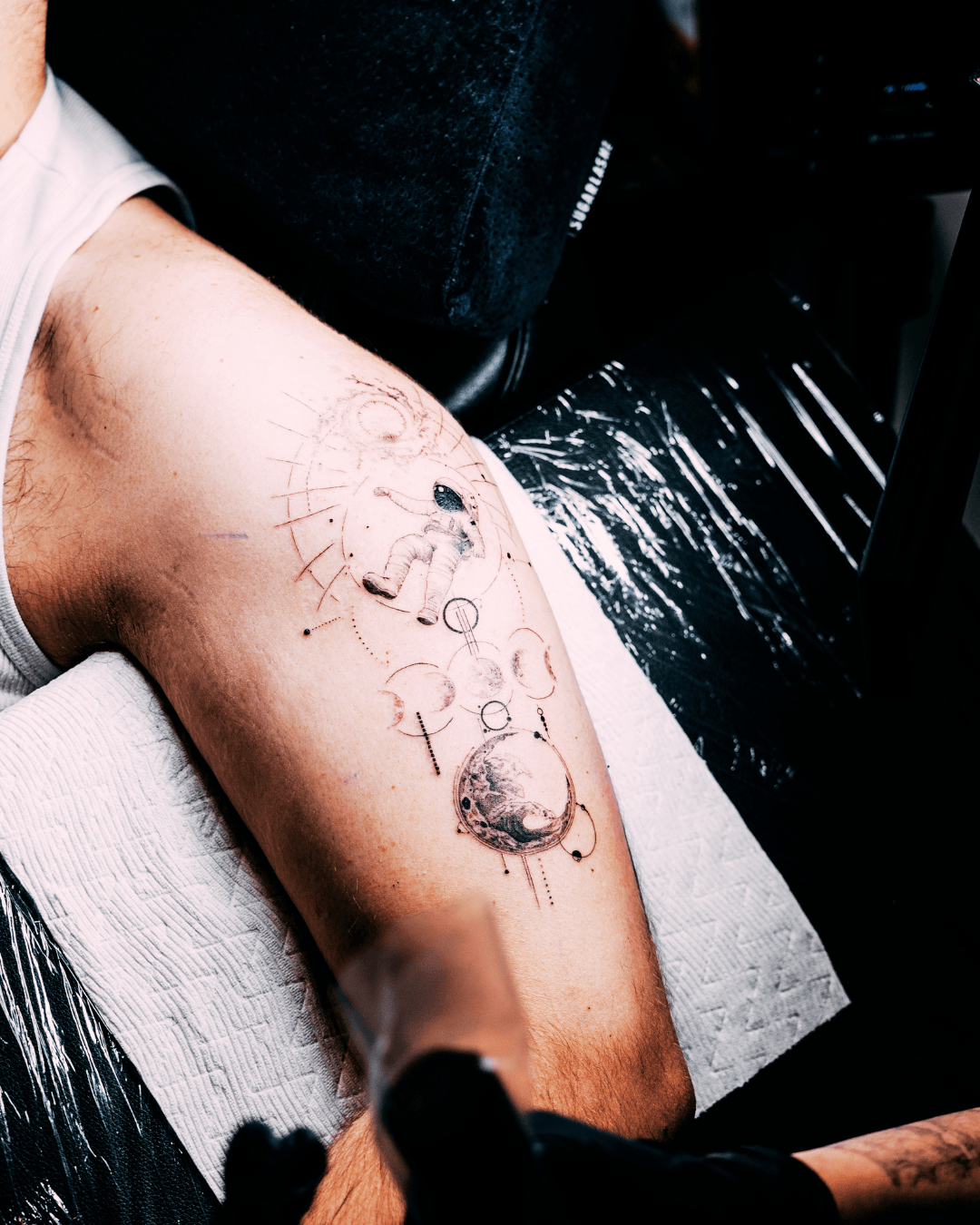
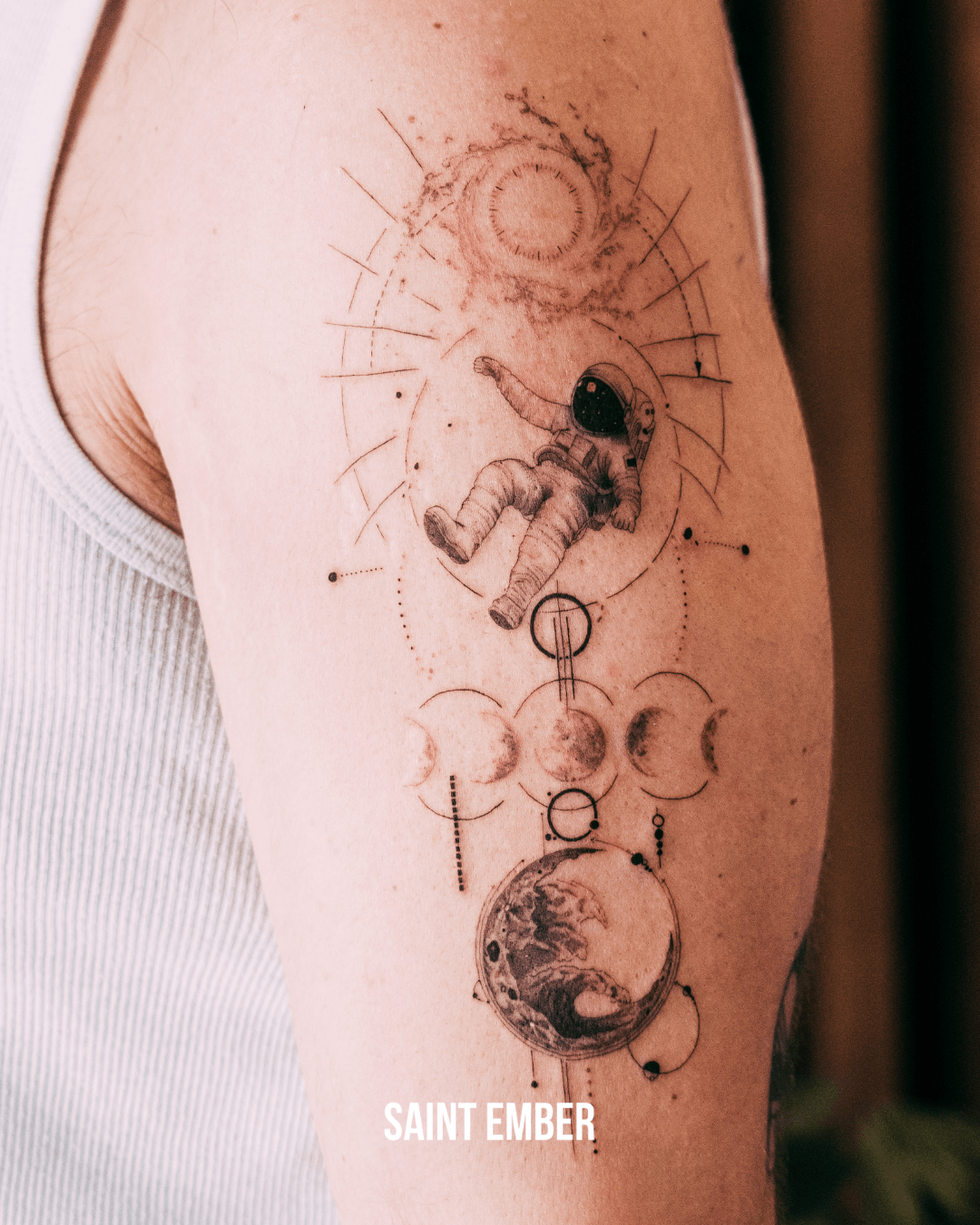
My work is centered around concept tattoos: pieces that go beyond a single image and instead bring multiple elements together to create a cohesive idea, narrative, or visual story. I’m especially drawn to magical realism, the macabre, unexpected imagery, and designs that give you something to discover when you look at them.
One of the things I’m most proud of is being able to intentionally transition my books and my style toward this kind of work. When I first started tattooing, I dreamed about eventually being able to create the kinds of large, layered, highly conceptual pieces that I’m creating now. My background in technical drafting and graphic design has always influenced the way I approach composition, structure, and detail, and concept tattoos give me the opportunity to bring all of those skills together.
What I love most about this style is that I’m not limited to simply reproducing an image. I get to actually design something. I can think about how different elements interact, how a piece fits the body, and how the entire tattoo works together to communicate an idea or tell a more comprehensive story. I think that design process is what sets my work apart.
Seeing concept tattoos become the primary focus of my books has honestly been a dream come true. I started tattooing hoping that one day I would have the skill, confidence, and clientele to make this kind of work consistently. Getting to the point where that is becoming my reality is something I’m incredibly proud of.
If you had to, what characteristic of yours would you give the most credit to?
I think the most important quality to my success has been persistence. Tattooing has a very steep learning curve, and there have been plenty of moments where I’ve questioned whether I was actually capable of getting where I wanted to go. The difference has been continuing to show up anyway.
I’m also very comfortable being a student. I don’t think there is ever a point in tattooing where you can say you’ve figured it all out. There is always something to improve, and I’ve learned to see that as exciting rather than discouraging. I’m constantly looking at my work, identifying where I can do better, taking classes, learning from other artists, and pushing myself into areas that aren’t necessarily comfortable yet.
That willingness to keep learning has been especially important as I’ve transitioned my work toward concept tattoos. I had a vision for the kind of artist I wanted to become long before I had the technical ability to execute it. Being willing to keep working toward that vision, even when the gap between where I was and where I wanted to be felt enormous, is ultimately what got me here.
Pricing:
- Concept tattoos: Starting at $250, with pricing based on the size, detail, and complexity of the design.
Contact Info:
- Website: https://www.saintember.com
- Instagram: https://www.instagram.com/saintemberink/
- Other: https://www.tiktok.com/@saintemberink/