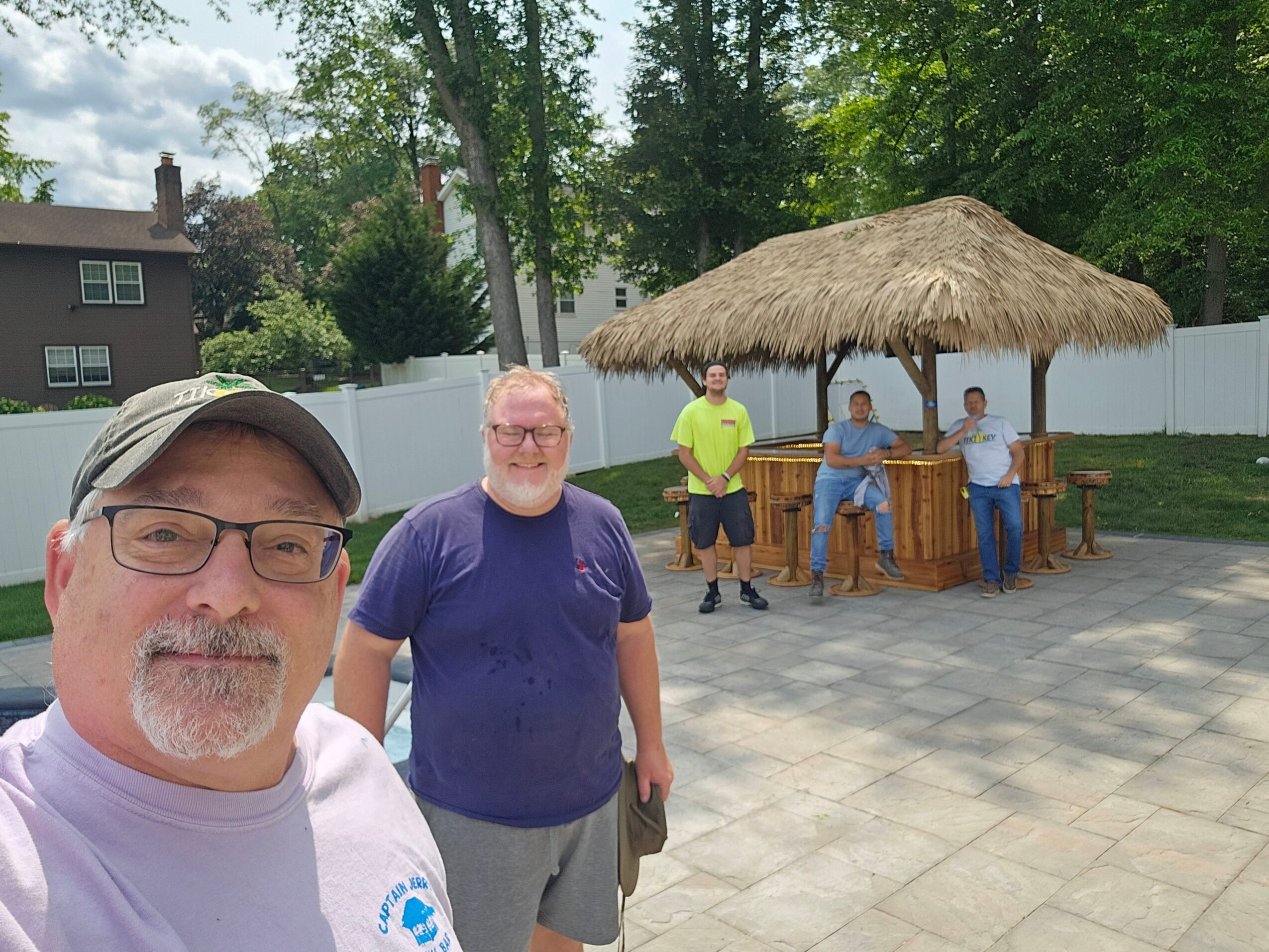



Today we’d like to introduce you to Tiki Kev.
Hi Tiki, so excited to have you with us today. What can you tell us about your story?
It all started with a trip to Jamaica in December 2000. I already owned a local construction business based in Chalfont, Pennsylvania, and had spent many years doing carpentry and construction. My wife and I took our five children—her three and my two, ranging in age from six to fourteen—to Jamaica, where we got married and spent ten days surrounded by tiki bars and thatched huts. After we came home, we welcomed a child of our own together in 2001, bringing our family to six children. That trip also inspired me to bring a little of Jamaica back to our own backyard.
In April 2001, I decided to build my first tiki bar and tiki hut. Building the bar and framing the hut came naturally with my construction background. Thatching a roof was another story. I had never done that before.
There was a guy known as Tiki Murph who was based in New Jersey at the time, so I went to see him. I bought the lumber and roughly 600 palm fronds from him, and he explained how to thatch the roof. While I was there, he asked if I was starting a business. I told him, “Absolutely not. This is just for myself.” At that point, turning it into a business hadn’t even crossed my mind.
Back home, I built the structure and got to work. About halfway up the roof, I realized I was doing something wrong. I stepped back, figured out my mistake, and continued until it was finished. To my surprise, that first roof never leaked. My construction background definitely helped, but there was still plenty to learn.
That summer, we had a party, and someone asked whether I could build them a bar and hut like mine. That was the first time I considered doing this for someone else. I thought, “Sure, why not?” I built theirs and started advertising locally. Over the next couple of years, I picked up more tiki projects while continuing my regular construction work.
By the third year, things really started taking off. In Chalfont, Pennsylvania, there were only so many people looking for a tiki bar, but suddenly I was getting inquiries from around the country. I believe my website played a big part in that because I wasn’t advertising nationally. Around 2003 or 2004, I stopped taking regular construction jobs and made tiki bars my full-time business.
What started as something for my own backyard has now kept me busy for more than 25 years.
Today, about 75 percent of my work is residential and 25 percent is commercial. Everything I build is 100 percent custom, and I don’t take shortcuts. I’m a perfectionist when it comes to my work, and I take every project seriously. Outside of work, I’m usually joking around and having a good time, but when I’m building something, I’m focused on getting every detail right. I want my customers to enjoy their bars for years, and I want to be proud of everything that leaves my shop.
Along the way, my work has appeared on the Today Show and Extreme Makeover: Home Edition. I also built a tiki bar for The Price Is Right, which appeared on the show twice before someone won it.
My work has even taken me into movie projects. In 2016, I built a tiki bar for a party scene in the movie Worthless. In return, they gave my family and me a chance to be part of the movie. Our children and one of my daughter’s friends appeared as background partygoers, dancing in the scene. I played the bartender behind the very bar I had built, and my wife, Patti, even got a speaking part. Getting to share that experience with my family made it especially memorable.
Then, in June 2026, I built another tiki bar for an upcoming movie called Slaughter. When I built that first bar in my backyard, I certainly wasn’t imagining that someday I’d be building them for movie scenes—or tending bar in one myself!
I’ve also built bars for football players and completed four for military installations: two at Bolling Air Force Base in Washington, D.C., one at Pine Bluff Arsenal in Arkansas, and one at Bellows in Hawaii.
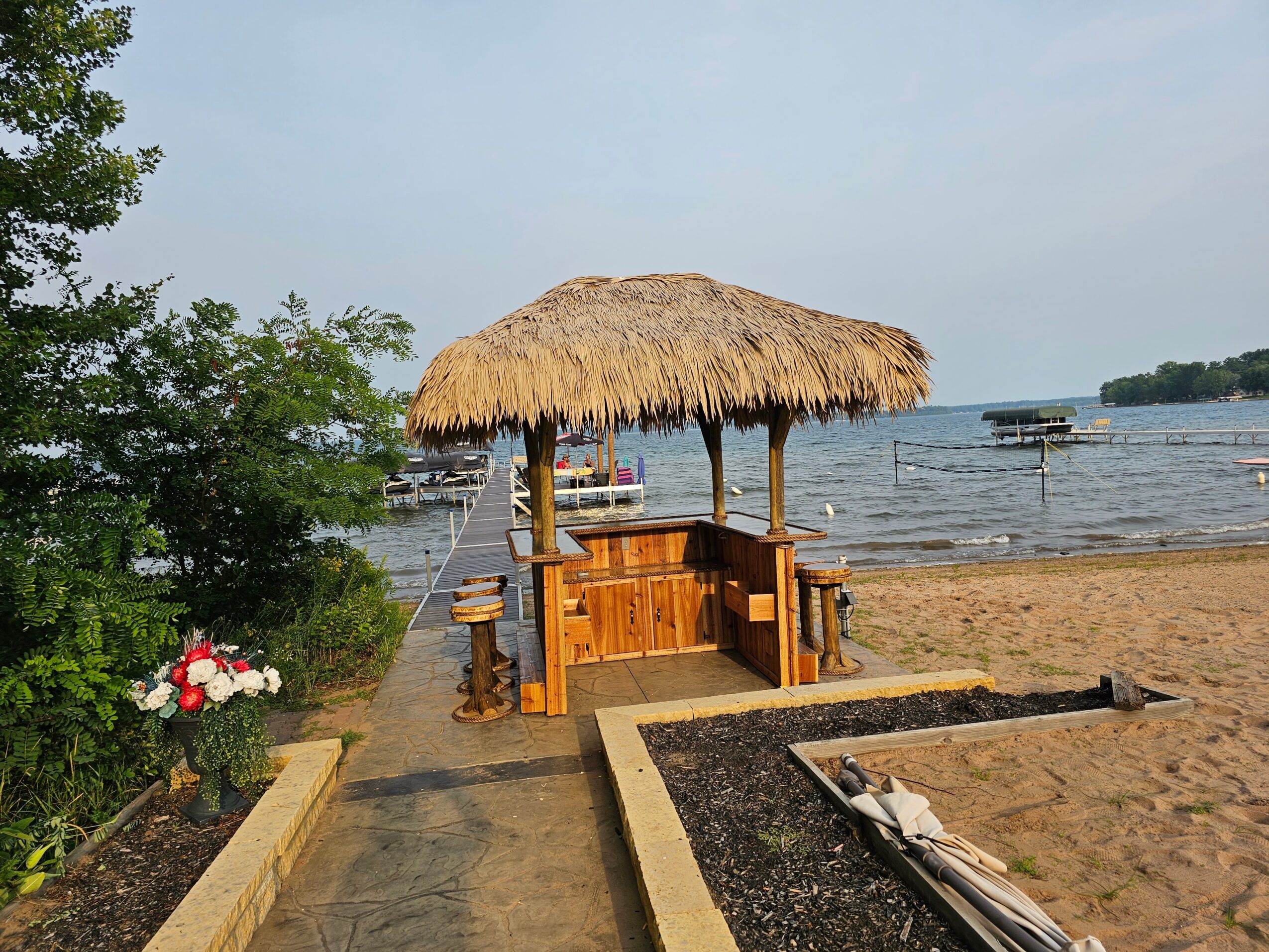
We’ve installed tiki bars in every state along the East Coast except Maine. The farthest we’ve traveled to physically install one was Nebraska, which we did this past summer. The Arkansas installation was many years earlier. We’ve also built a bar on Shell Lake in Wisconsin and completed 13 installations in Illinois, along with plenty of work in Florida, Ohio, and Michigan. We’ve shipped bars to customers in California, Hawaii, Texas, Missouri, Georgia, Florida, and other states as well, including one we shipped to Arizona this past summer.
The travel has been one of the best parts of this business. We’ve visited amazing beach towns, lakes, and places I might never have seen otherwise. Of course, plenty of our customers aren’t anywhere near a body of water. They just want to create their own little getaway at home—a place to relax, entertain, and have fun.
Meeting those people has made the work especially rewarding. We share a lot of the same interests, and they’re excited about what we’re building for them. They’re already imagining the parties, the friends coming over, and the time they’ll spend enjoying their backyard.
In all these years, I can count the truly difficult customers on one hand. Many others have become friends, and some of those friendships go back more than 20 years. That’s a pretty great thing to get out of something that started with a project in my own backyard.
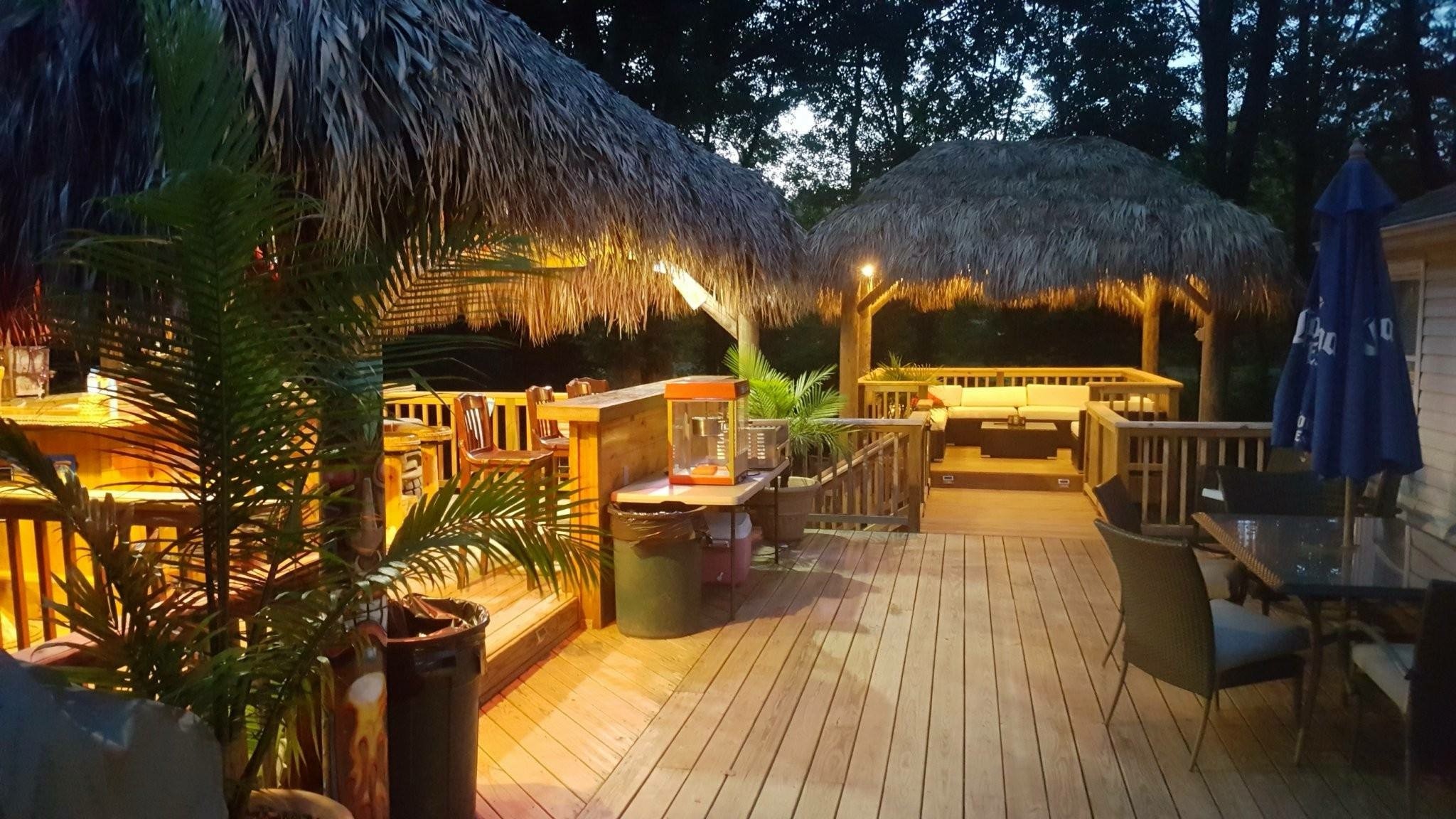
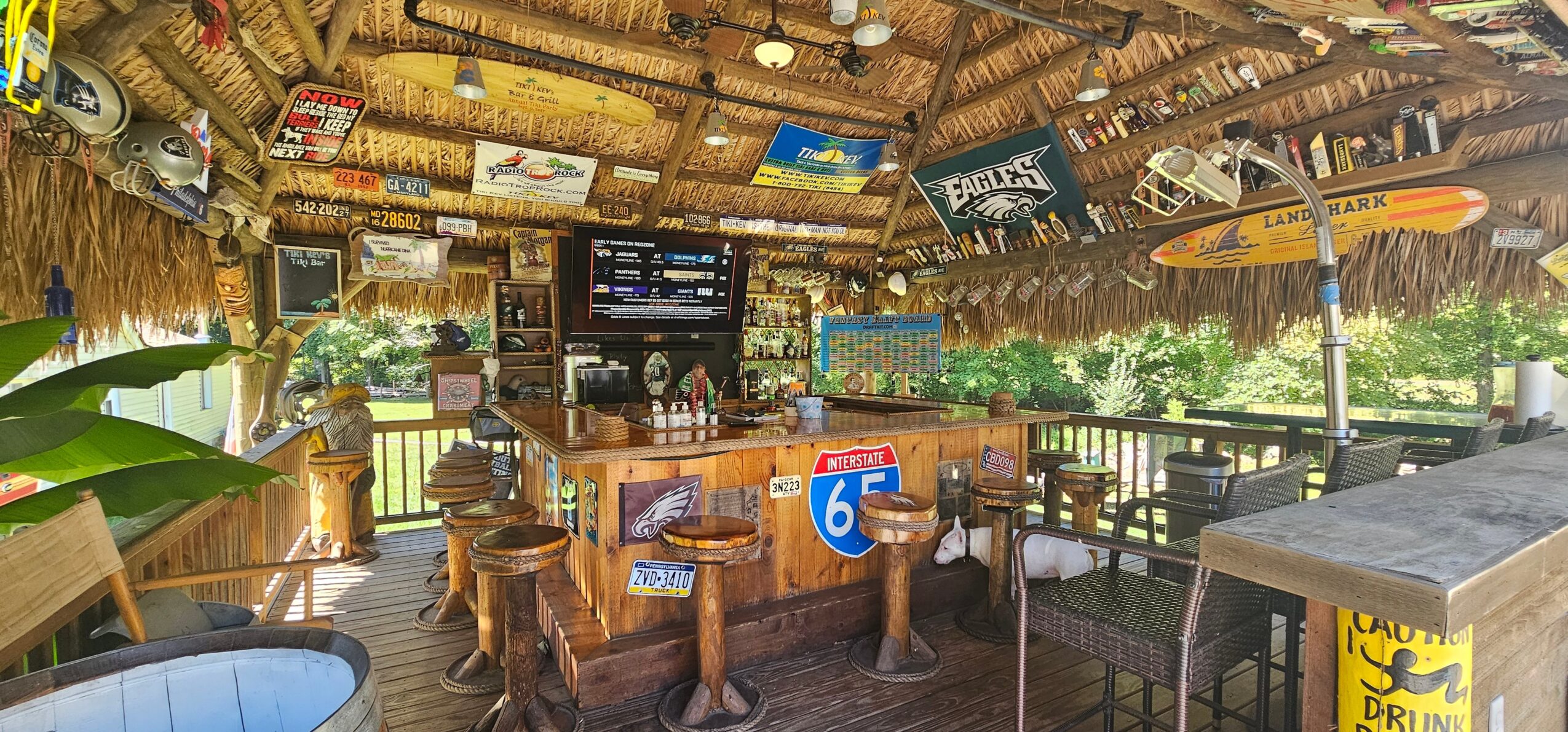
That enjoyment carries into my own life, too. My personal backyard tiki hut and bar, the Lost Island Tiki Bar, is where we get together with friends and family, watch the Eagles and Phillies, and enjoy ourselves. It’s also caused some funny confusion over the years. People sometimes come here thinking it’s an actual commercial bar where they can stop in and hang out. It’s our private backyard bar, but I take that mix-up as a compliment!
I know how much those gatherings mean to me, and I enjoy helping customers create a place for those same kinds of memories.
As the business grew, I also wrote three how-to books: one on building your own tiki bar, one on building a tiki hut, and one on building tiki bar tables and stools. Those came out in 2005 and 2007. I’m currently rewriting and modernizing all three, along with creating companion videos. I want people to be able to follow the books or build right alongside me through the videos, whichever works best for them.
Preparing for those books and videos has even meant reorganizing my entire shop. After so many years of building, there’s a lot I want to share—especially the little details that can make a project easier for someone doing it for the first time. I still enjoy building for customers, and I’m excited to help people experience the satisfaction of building something themselves.
The materials and building methods have evolved over the years, too. In 2022, I started using high-quality synthetic palm thatch. I’m very particular about the materials I use because they’re part of the quality of the finished project. The lighter roofs also make shipping more practical for customers who would rather assemble their bars themselves than have us travel out for an installation.
For those customers, I keep the assembly process as simple as possible and make a video showing them how to open the shipping crate and put their bar back together. That way, they can follow along from the moment it arrives.
We also offer local tiki bar rentals, which have turned out to be a big hit. Our usual service area is about 10 to 15 miles, but we’ve traveled 100 miles for rentals. Right now, we’re getting ready for two rentals in Washington, D.C., nearly 200 miles away.
One of the biggest challenges is managing the seasonal rush. At the end of winter and the beginning of spring, everybody starts thinking about their backyard, and everybody wants their project right away. We work on a first-come, first-served basis because we build everything in our shop and then coordinate the deliveries and installations. When those installations take us across the country, there’s a lot of scheduling involved.
Looking back, I never imagined that building a tiki bar for myself would lead to television appearances, movie projects, books, military installations, and customers all over the country. It has been a lot of work, a lot of travel, and a seriously fun ride. Heading into 2027, I’m still going strong, still coming up with ideas, and still enjoying the people I meet along the way.
Can you talk to us a bit about the challenges and lessons you’ve learned along the way. Looking back would you say it’s been easy or smooth in retrospect?
It’s been a fun and rewarding ride, but it definitely hasn’t been without challenges. The biggest obstacle has been finding and keeping employees who take the work as seriously as I do.
Because we’re building tiki bars, some people come into the job expecting it to be all fun and games. We’re creating something people associate with relaxing and partying, but building it is real work. It takes skill, focus, physical effort, and attention to detail. Everything I build is custom, and I’m particular about the quality. We can have fun while we work, but the work still has to be done right. Over the years, I’ve gone through many employees who liked the idea of the job but didn’t understand the level of commitment it required.
The second biggest challenge is finding people who can travel. Our installations can take us away for a few days or, sometimes, several weeks. That’s a big commitment, and even someone who’s a great worker in the shop may not be able to spend that much time on the road.
Travel also comes with unexpected problems. We’ve had vehicle breakdowns and bad weather leave us stuck somewhere longer than planned. When that happens, the hotel bills keep adding up because I have a crew away from home who still needs a place to stay. Those unexpected expenses can be a tough pill to swallow, especially when we’re delayed and can’t move forward with the work. There’s a lot more involved in an out-of-state installation than just getting there and building the bar.
Then there’s the seasonal rush. At the end of winter and the beginning of spring, everybody starts thinking about their backyard, and a lot of customers want their projects at the same time. We have to balance building everything in the shop with traveling to deliver and install it. I work on a first-come, first-served basis and try to set realistic expectations, because I’m not going to rush a project and cut corners just to get it out the door.
In the early years, I was also building the tiki business while still running my regular construction business. It took a few years before there was enough demand to make tiki bars my full-time work. Having a construction background gave me a strong starting point, but there was still plenty to learn, beginning with that very first thatched roof.
Fortunately, difficult customers have been rare. Most people are excited about their projects, and many have become longtime friends. The toughest parts have been maintaining a dependable team, handling the surprises that come with travel, and managing the workload while keeping the quality where I want it. The finished bars may be all about relaxing, but a lot of serious work goes into making that happen.
As you know, we’re big fans of Tiki Kev’s Tiki Bars LLC. For our readers who might not be as familiar what can you tell them about the brand?
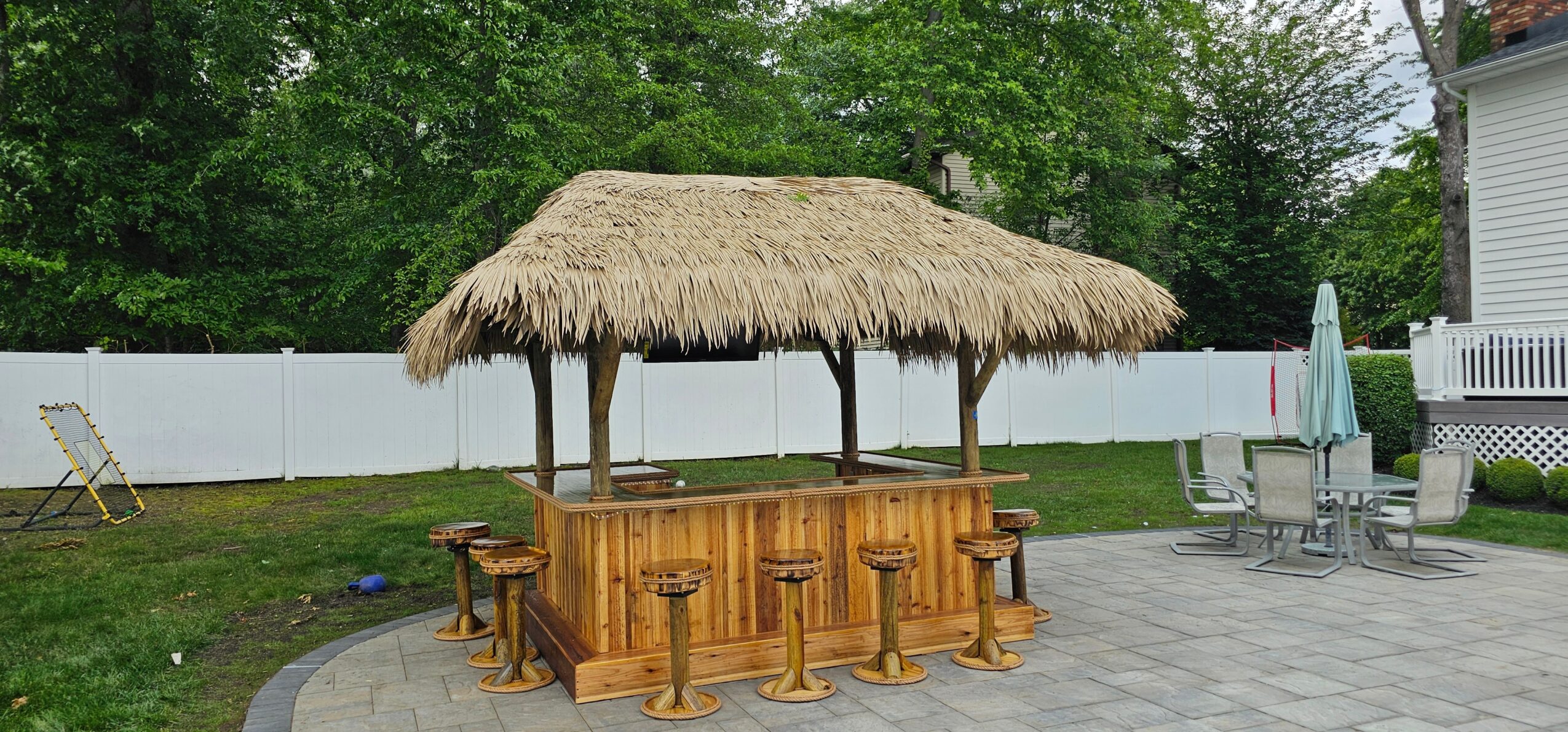
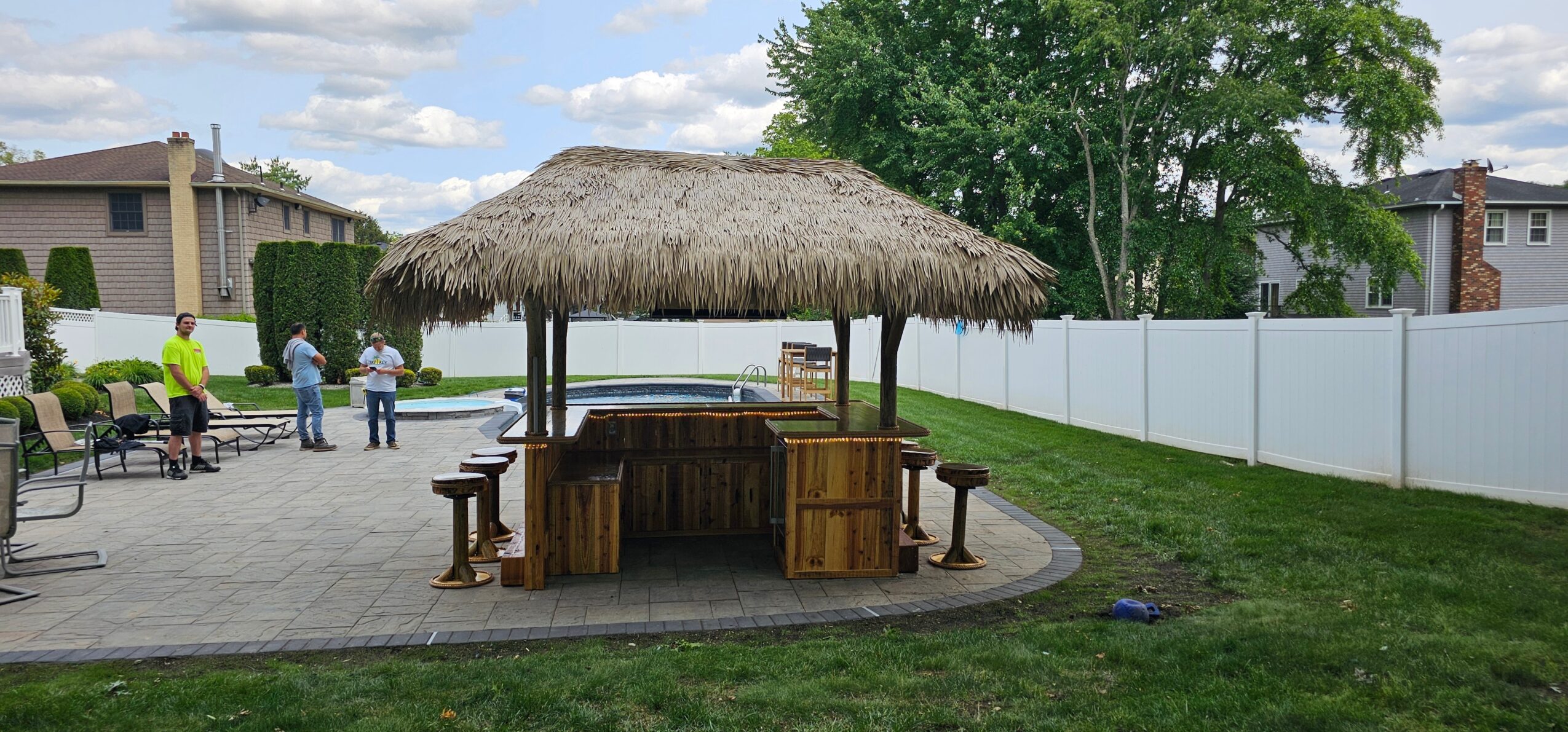
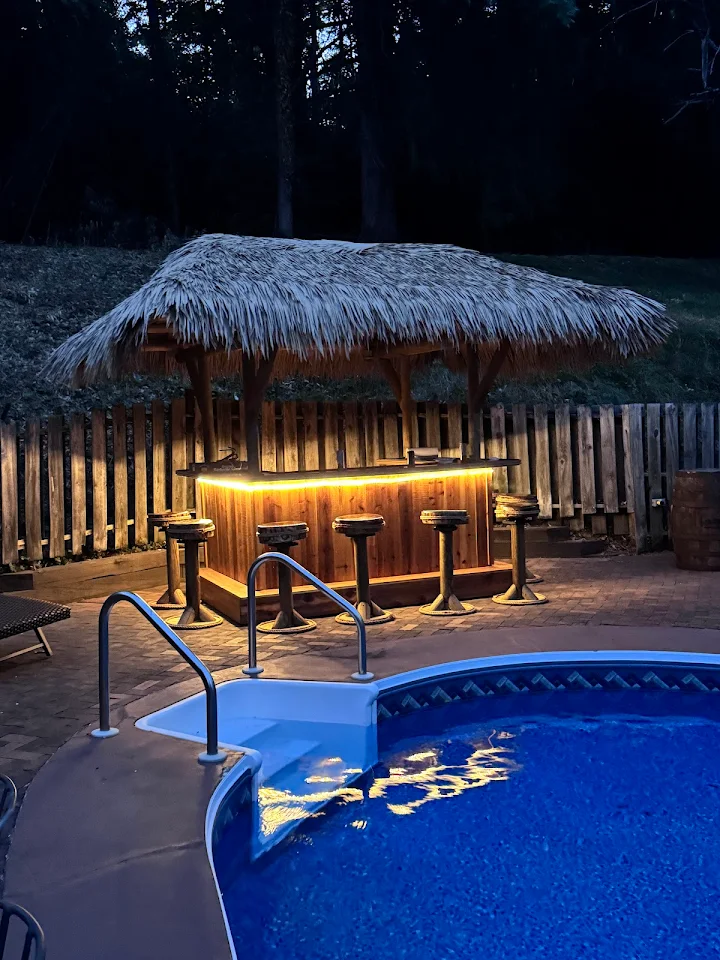
Tiki Kev’s Tiki Bars LLC specializes in custom tiki bars and tiki huts for residential and commercial customers. We’re based in Chalfont, Pennsylvania, but our work has taken us across the country. About 75 percent of our projects are residential and 25 percent are commercial.
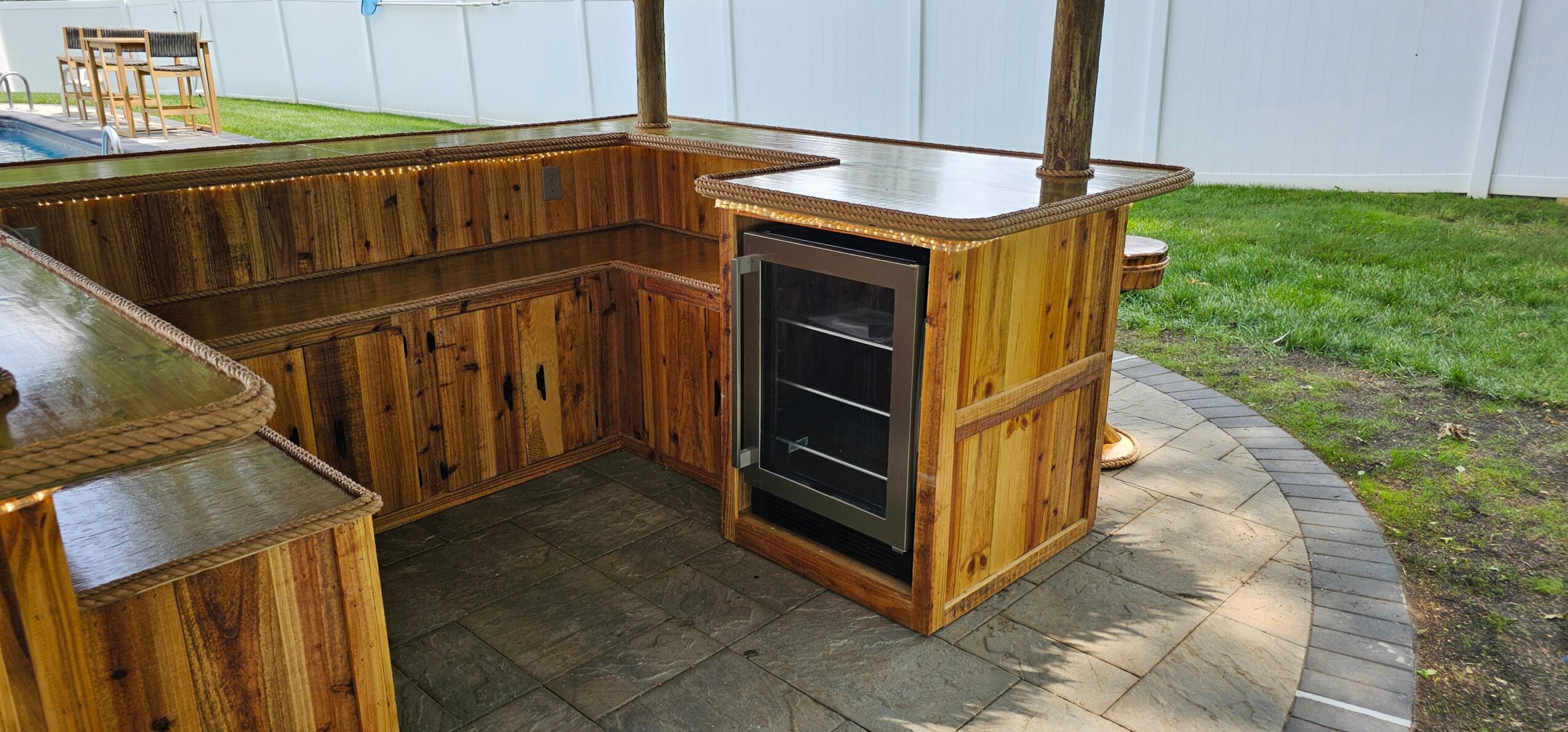
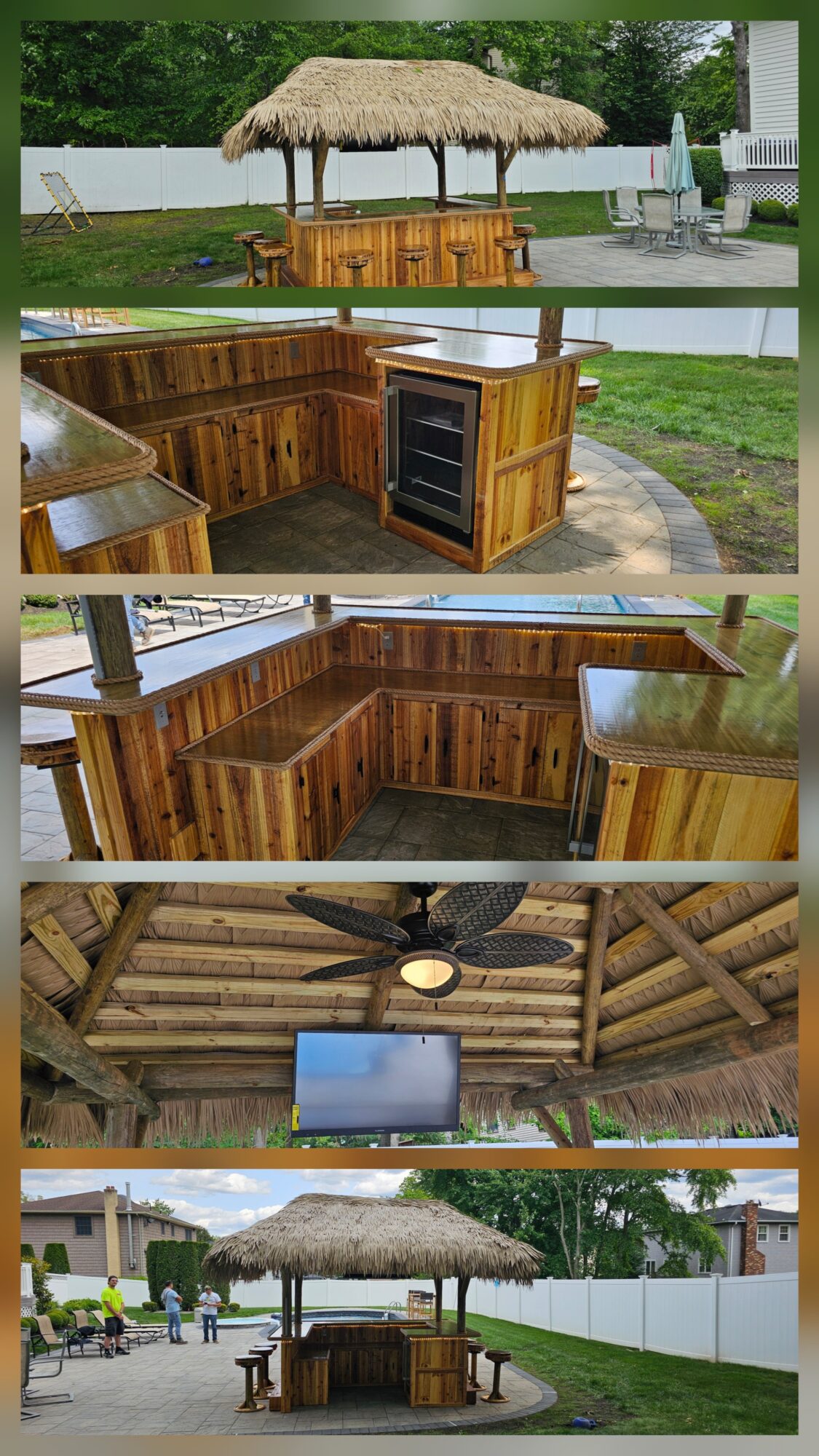
Everything I build is 100 percent custom. I work with customers to understand what they have in mind and create something that fits their space and how they want to use it. Whether it’s a backyard gathering spot or a commercial bar, I bring the same attention to detail to the project.
What sets my work apart is the combination of decades of carpentry and construction experience, more than 25 years of building tiki bars, and a refusal to take shortcuts. I’m a perfectionist about my work. The tropical look is a big part of the appeal, but the craftsmanship underneath it matters just as much to me. I want to be proud of everything that leaves my shop.
Since 2022, I’ve used high-quality synthetic palm thatch for our roofs. The lighter roofs also give us more flexibility when shipping projects. Customers can have us deliver and install their bars, or we can ship them for assembly. For shipped bars, I make a video showing how to open the crate and reassemble the bar, keeping the process as straightforward as possible.
We also offer tiki bar rentals, primarily in our local area, for people who want that tropical atmosphere for an event without purchasing a permanent bar.
For people who enjoy building things themselves, I’ve written three how-to books covering tiki bars, tiki huts, and tiki bar tables and stools. I’m currently updating all three and creating companion videos so people can follow along with me through the building process.
I’m proud of the opportunities this business has brought me, including television appearances, movie projects, and military installations. But I’m just as proud of the customers who have become friends and are still in touch years later. Knowing that something I built has become a place where people gather and make memories means a lot to me.
I enjoy that same experience at my own private backyard bar, the Lost Island Tiki Bar. It helps me understand why customers want these spaces in the first place. They want somewhere they can unwind, invite people over, and feel like they’re getting away without leaving home. Helping them create that is my favorite part of the business.
Is there any advice you’d like to share with our readers who might just be starting out?
My advice is to take your work seriously, stay open-minded, and don’t expect success overnight.
No matter how much experience you have, there’s always something you can learn. If someone shows me an idea I haven’t thought of, I’m not going to pretend I already knew it. I’ll say, “Wow, that’s a great idea. How can we incorporate that into what we do?” Listen to suggestions and recommendations from others, and don’t be afraid to admit you don’t know something. You can miss out on a lot by trying to act like you know everything.
I already had years of construction and carpentry experience when I built my first tiki bar, but I still had to ask someone to teach me how to thatch the roof. Then I made a mistake partway through and had to figure out what I was doing wrong. Asking questions and correcting mistakes are part of learning, no matter how long you’ve been doing the work.
Don’t take shortcuts just to finish faster or make a sale. Your name is attached to what you put out there. Build something you’re proud of, be honest with customers about what you can do, and give them realistic expectations about when you can do it.
Give yourself time to build the business, too. I continued doing regular construction while the tiki work grew. It took a few years before I had enough demand to make it my full-time business. You don’t have to do everything at once.
Something worth understanding early is how much goes into a job beyond the actual building. Travel, scheduling, finding dependable employees, and unexpected delays all take time and money. A vehicle breakdown or bad weather can mean extra hotel nights for an entire crew. Leave room in your planning and budget for things that don’t go according to plan.
Finally, enjoy the people you meet along the way. Some of my customers have become friends I’ve stayed in touch with for more than 20 years. Do good work, treat people well, and stay open to opportunities. I told the man who helped me with my first tiki hut that I had absolutely no intention of starting a tiki business. More than 25 years later, here I am.
Pricing:
- Every project is custom-built and individually quoted; there is no fixed price list
- Pricing depends on the design, size, materials, features, and interior setup.
- Bars with the same exterior design can have different prices depending on the options selected.
- Delivery location and whether the project is shipped or installed also affect the total price
- Contact Tiki Kev’s Tiki Bars LLC to discuss your project and receive a personalized quote
Contact Info:
- Website: https://tikikev.com/
- Instagram: https://www.instagram.com/tikikevstikibars/
- Facebook: https://www.facebook.com/tikikev/
- LinkedIn: https://www.linkedin.com/in/tiki-kev-68b53b4
- Twitter: https://twitter.com/TikiKev
- Youtube: https://www.youtube.com/@TikiKev