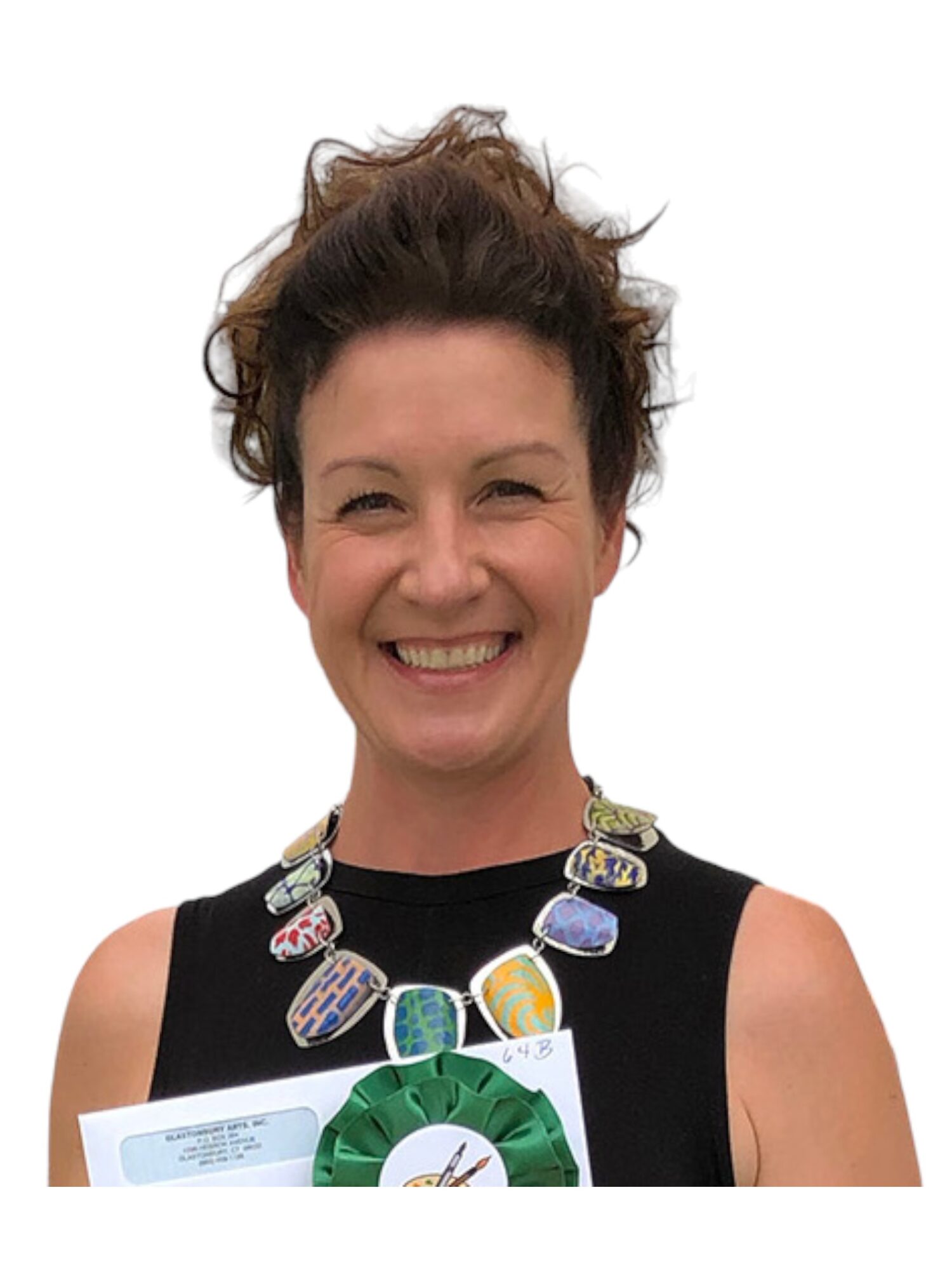



Today we’d like to introduce you to Dawn Lombard.
Hi Dawn, please kick things off for us with an introduction to yourself and your story.
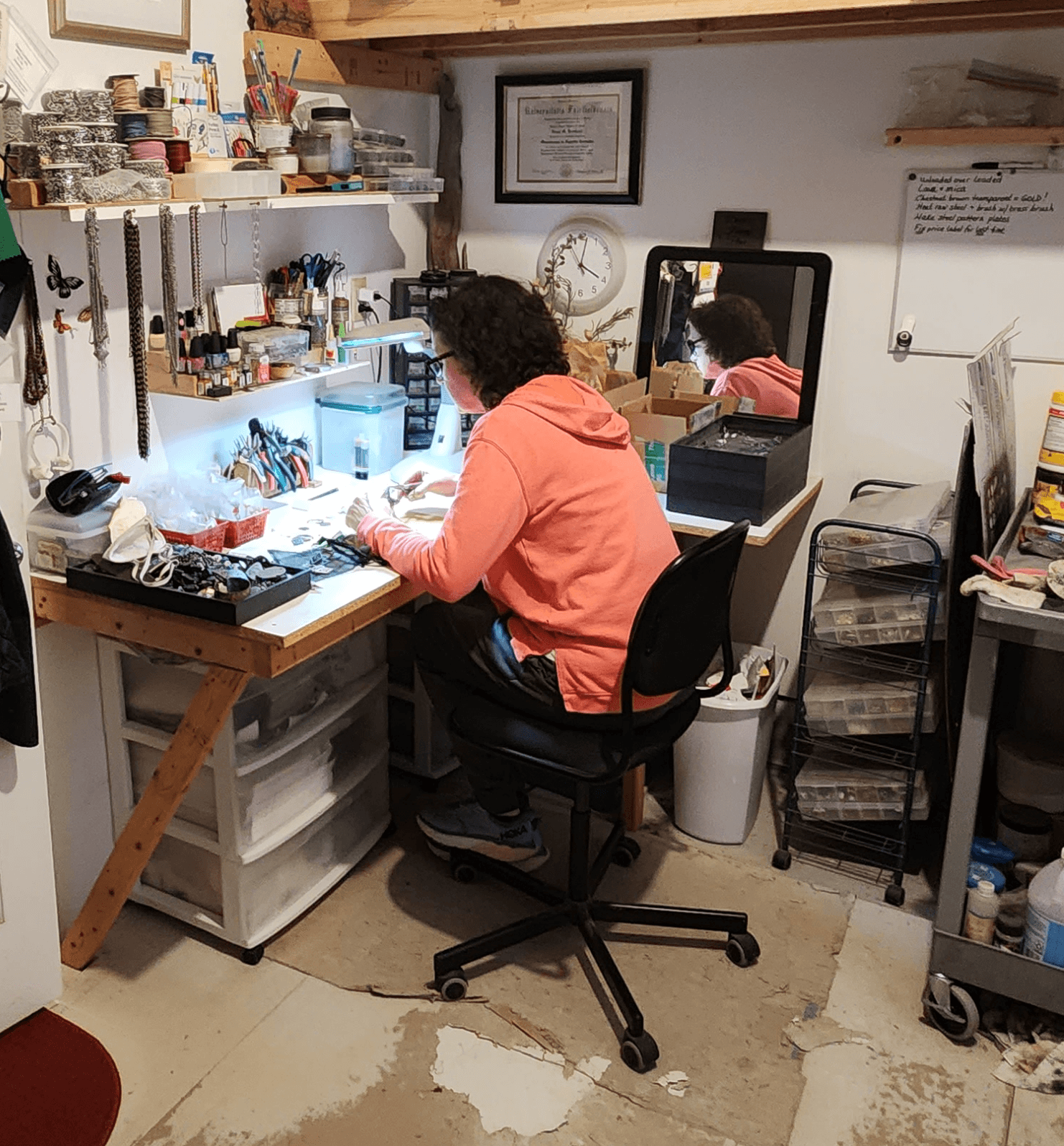
My path to becoming a jewelry artist wasn’t exactly a straight line. Before I became a full-time artist, I spent many years in the corporate world, building a career and doing what I thought I was supposed to be doing. I learned a tremendous amount from that experience—about business, marketing, selling, communication, and, perhaps most importantly, how to make things happen.
But I always had this other side of me that needed to make things. I’ve been creative for as long as I can remember, and eventually that need became impossible to ignore. I started experimenting with different materials and techniques, and when I discovered enameling, something clicked. I became completely fascinated by the process and by the possibility of transforming fairly ordinary materials into something unexpected and beautiful.
What began as a creative outlet gradually grew into Dawn Lombard – Glass & Metal. I eventually made the leap from corporate life into running my own creative business, which was both terrifying and incredibly liberating. There was no roadmap—I had to learn how to be the artist, designer, manufacturer, marketer, salesperson, and CEO all at once.
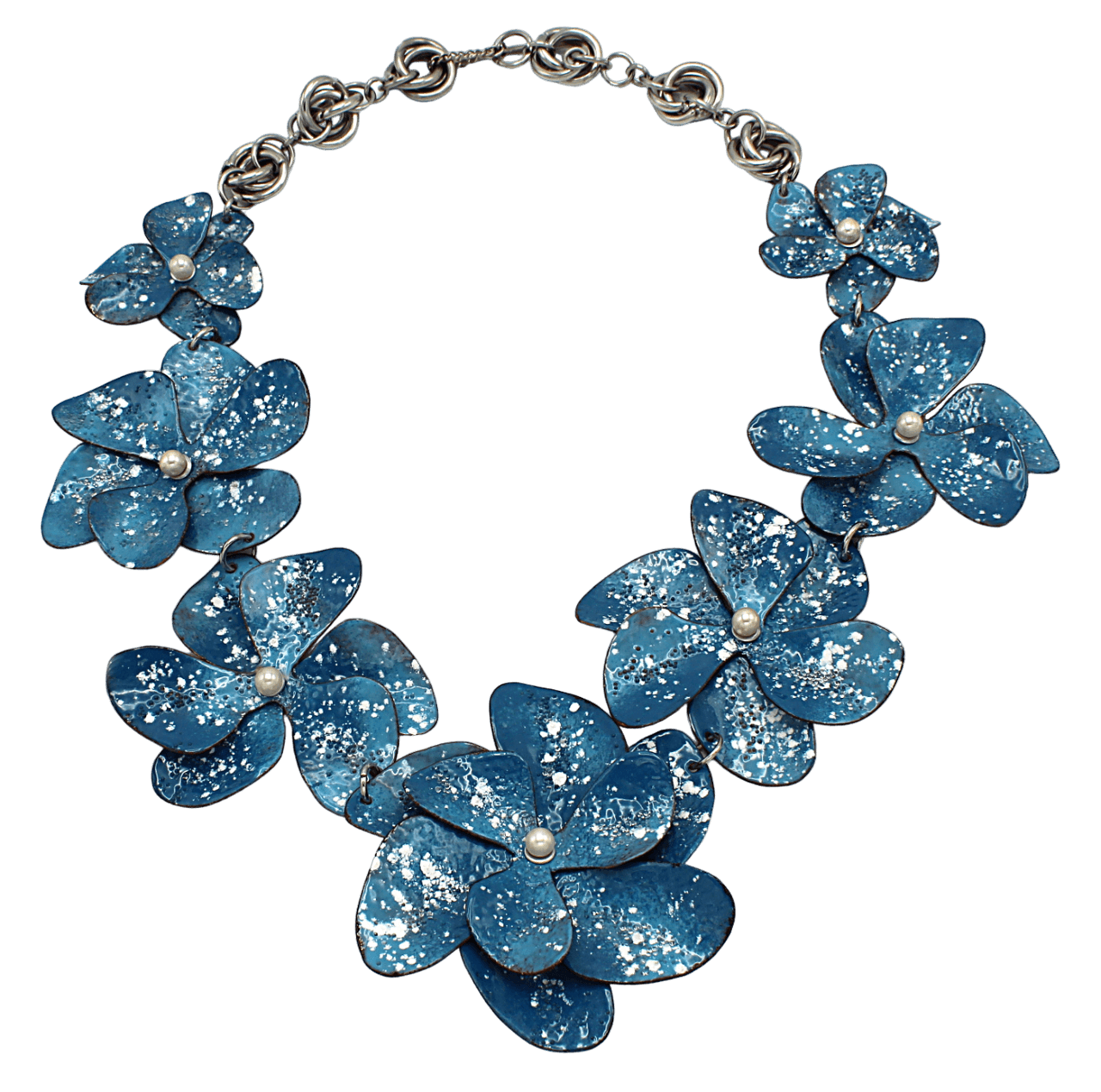
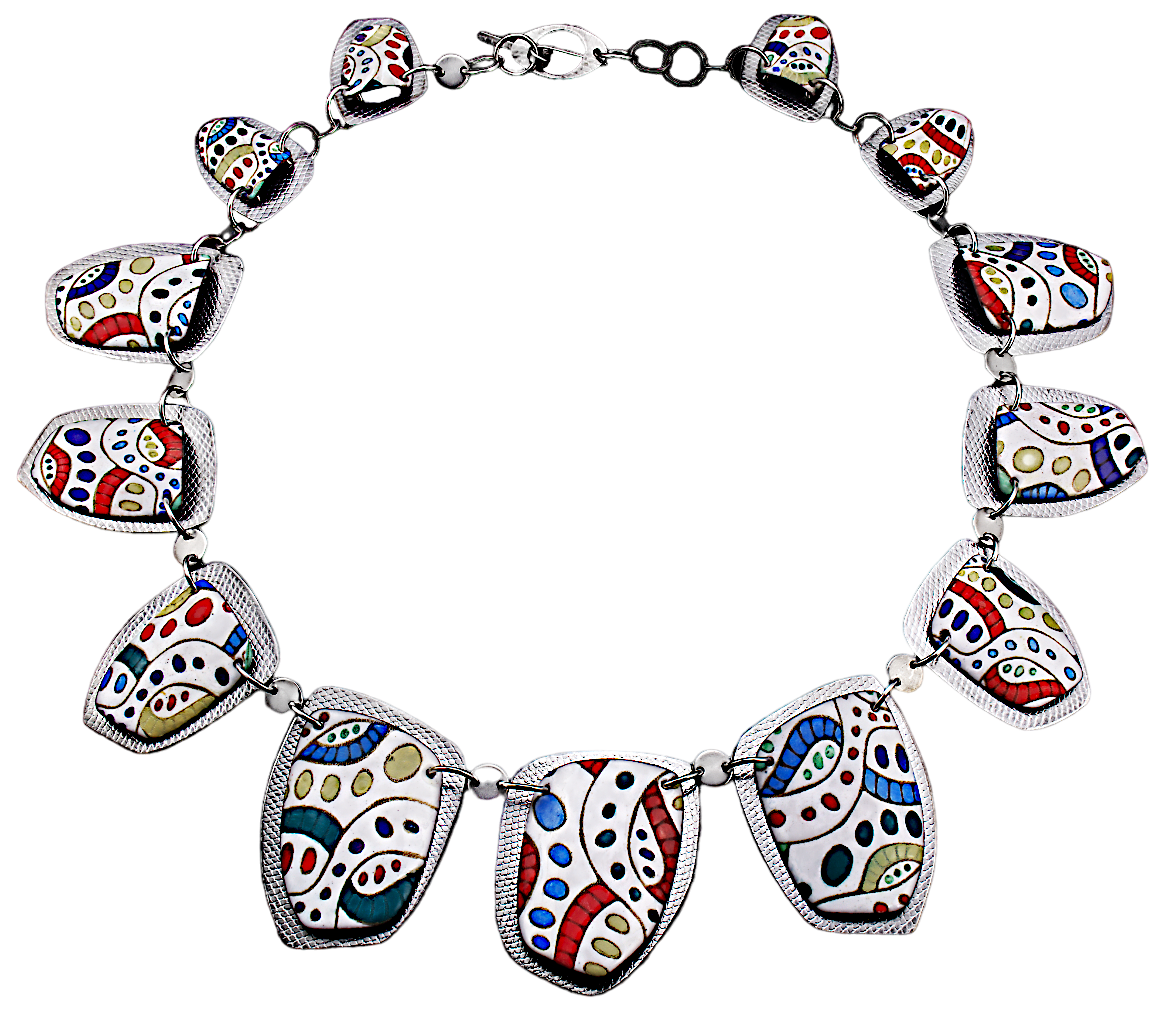
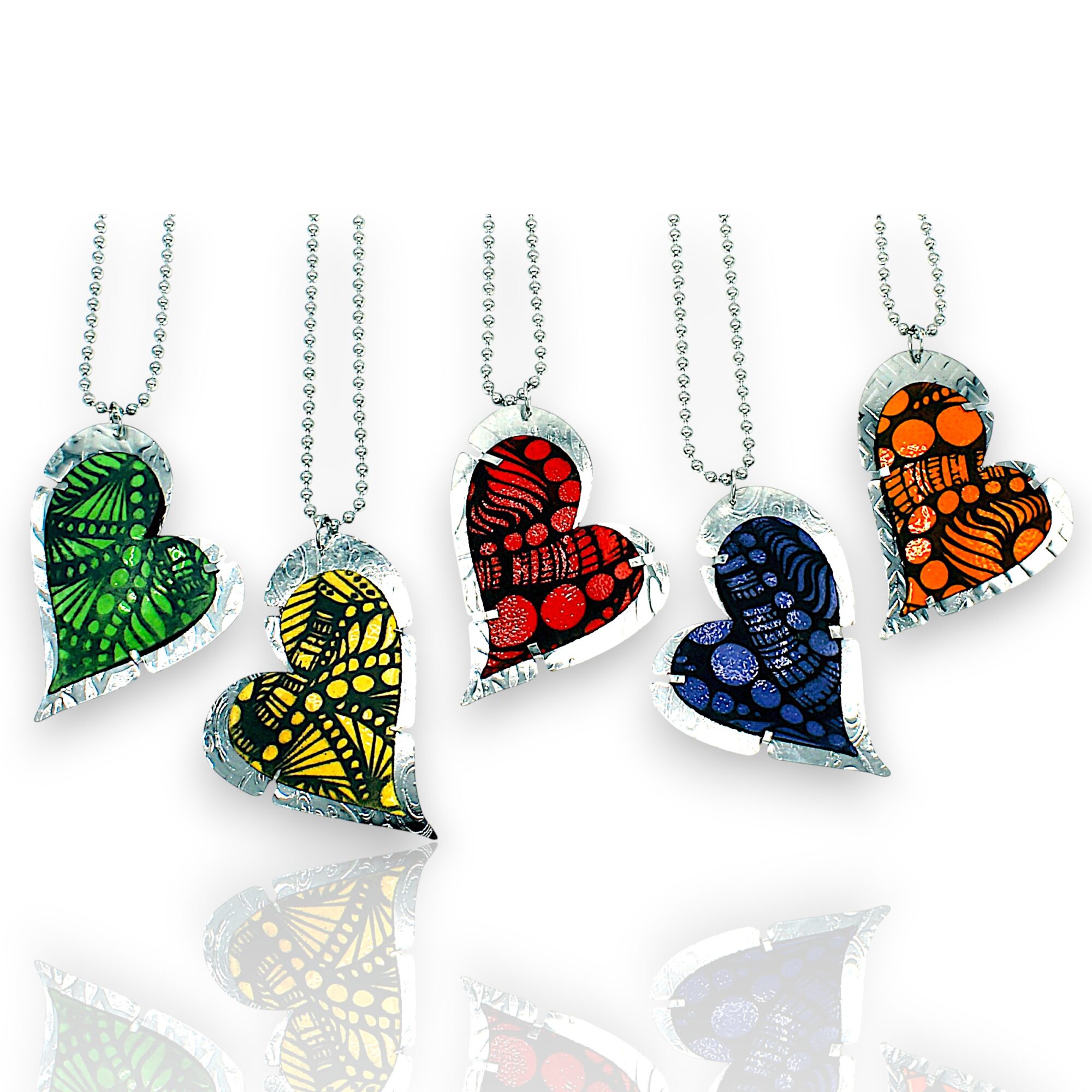
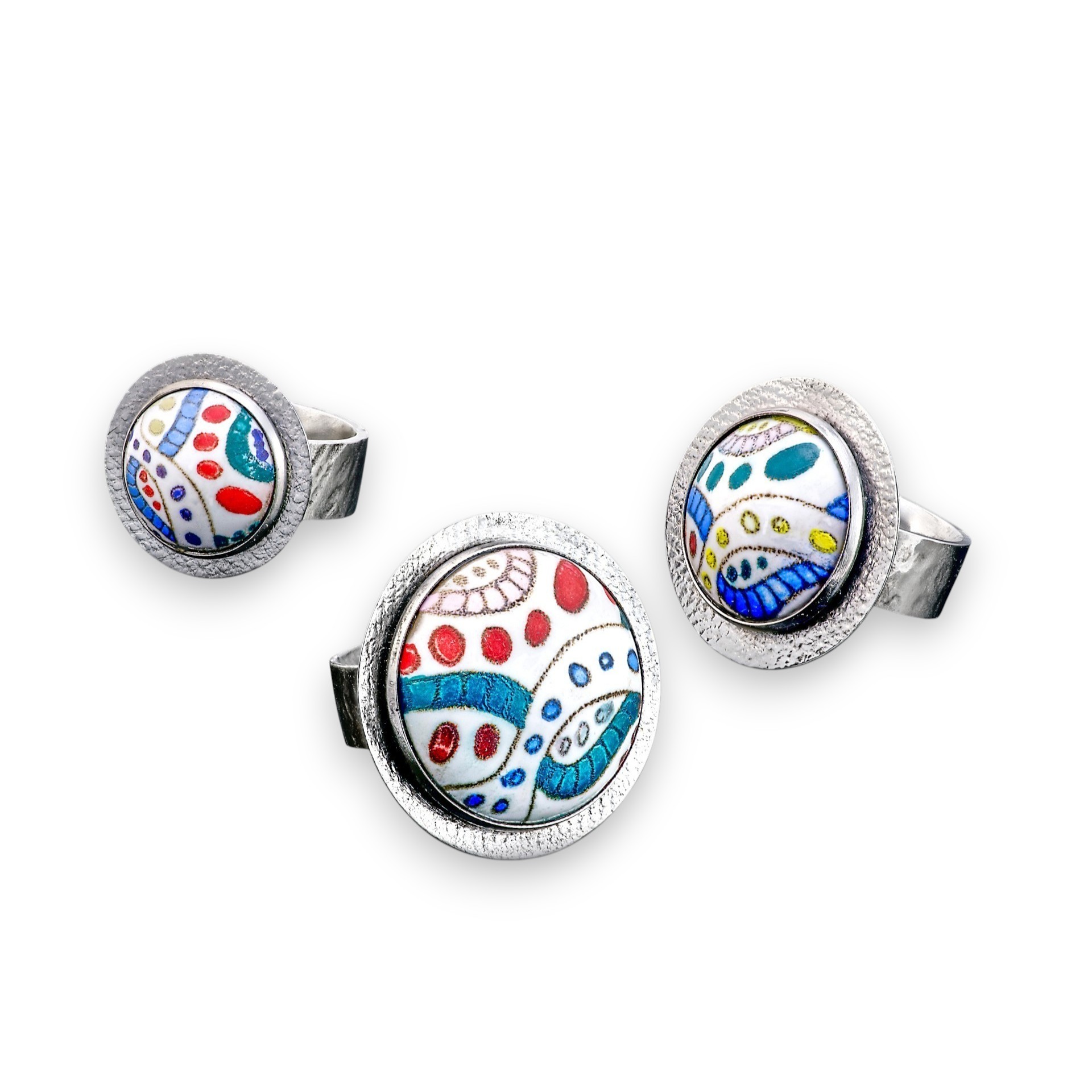
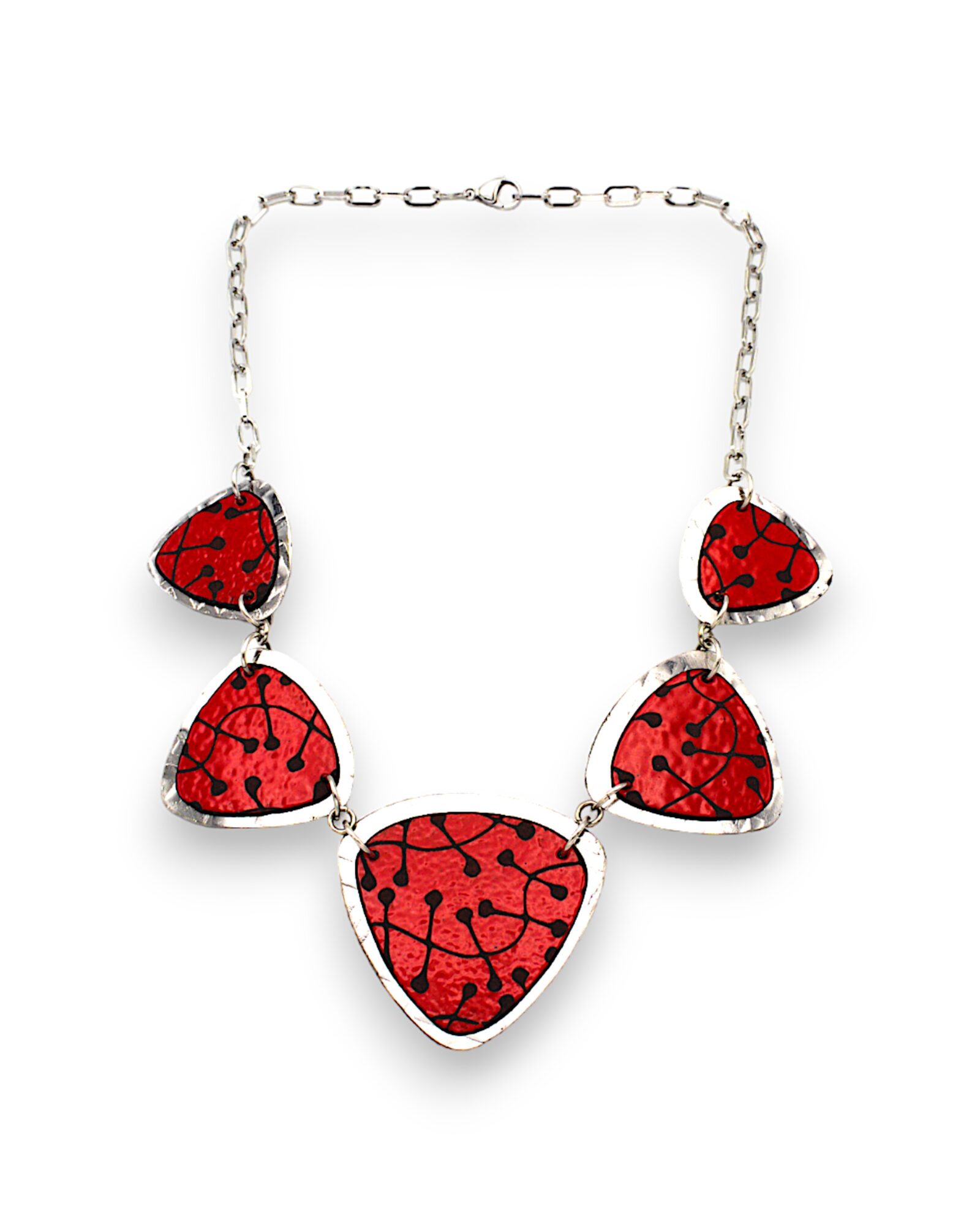
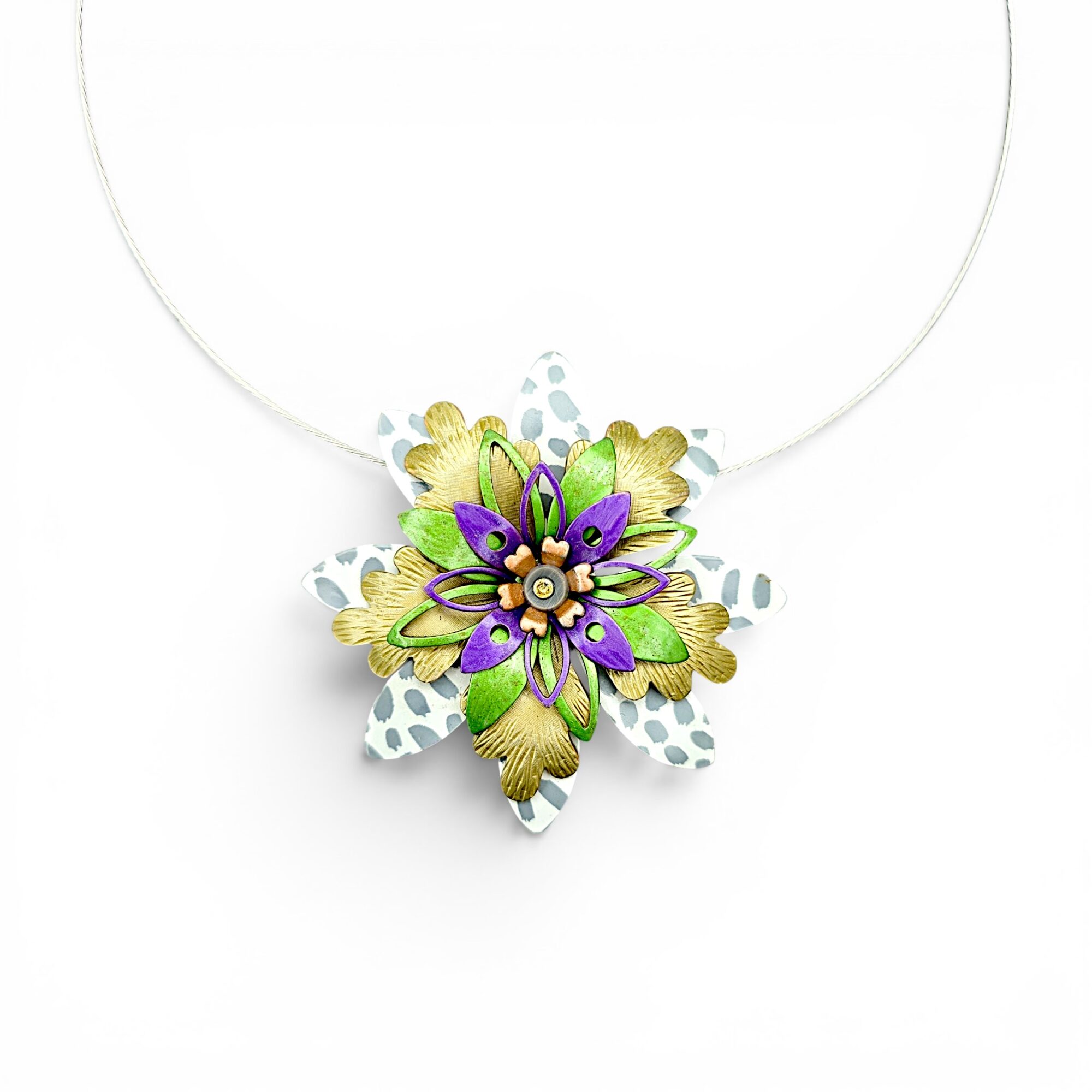
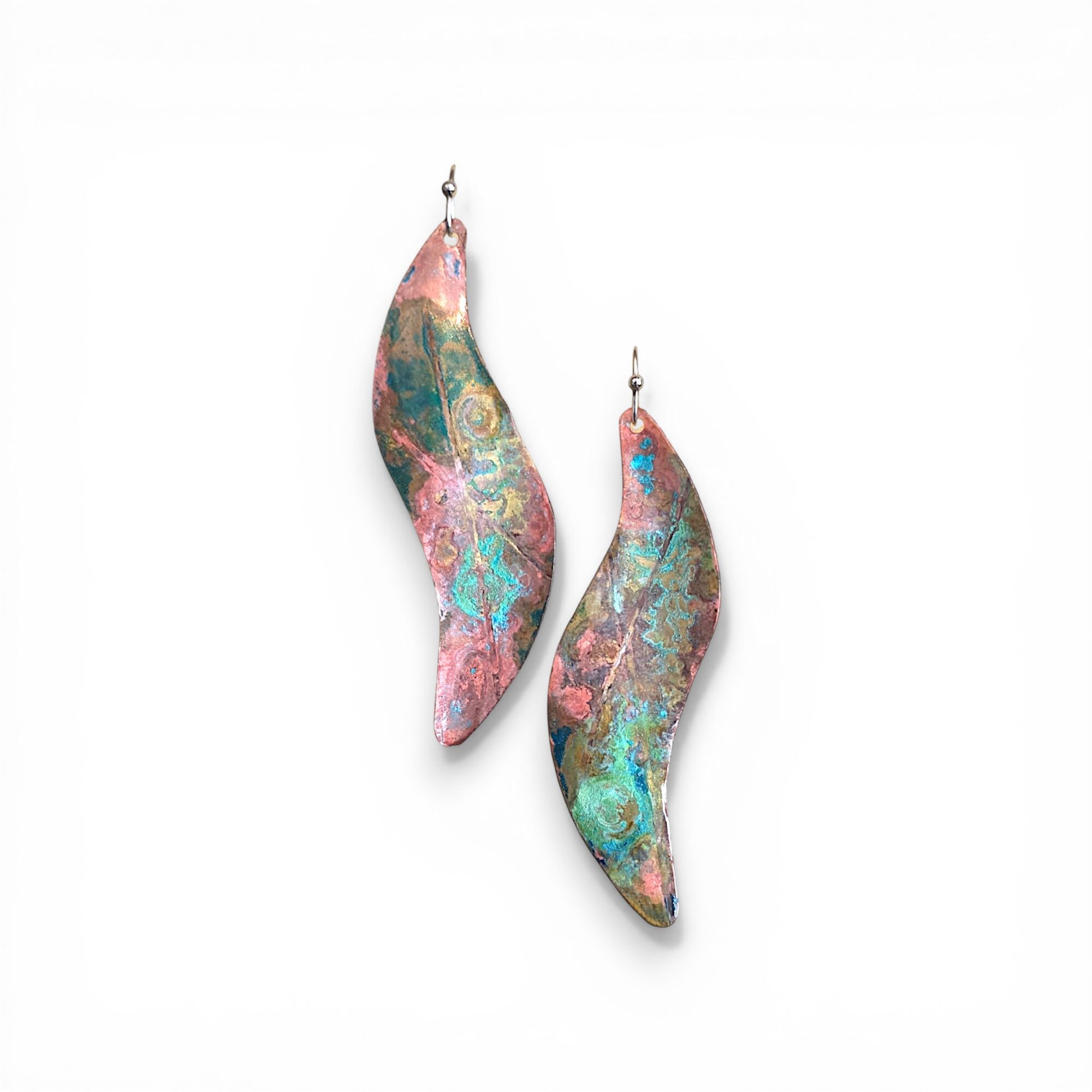
Over the years, my work has evolved into what I think of as wearable art. I work with recycled metals, enamel, powder coating, patinas, laser-cut elements and whatever else sparks my curiosity. I’m much more interested in creating pieces with personality than making jewelry that simply blends in.
Today, I sell through my own business, juried art shows, wholesale and Artful Home, and I’m continuing to push the work in new directions. In many ways, I’m still doing what I was doing when I first started experimenting: asking, “What if?”
The biggest difference is that now I get to build an entire life around that question.
We all face challenges, but looking back would you describe it as a relatively smooth road?
Definitely not. And honestly, I think anyone who tells you building a creative business is a smooth road is either incredibly lucky or leaving out a few chapters.
One of the biggest challenges was making the transition from a predictable corporate career to an unpredictable life as an artist. In corporate life, there were clear goals, responsibilities and a paycheck. As an artist, I had to create the product, figure out who wanted it, convince them to buy it, market it, price it, manufacture it, and then somehow find the energy to do it all over again.
There have also been plenty of periods when I questioned whether I was on the right path. Trends change. Retail changes. Shows that used to be successful stop working. Wholesale relationships change. What people respond to creatively can be completely different from what you thought they would love. There have been slow sales periods, disappointing shows, projects that didn’t work, and plenty of moments where I’ve wondered, “What the hell am I doing?”
But those struggles have also forced me to evolve. I’ve learned to pay much closer attention to what is actually working rather than simply continuing to do something because it’s the way I’ve always done it. I’ve become more protective of my time, more selective about opportunities and much more willing to experiment.
I think the hardest lesson has been accepting that there is no finish line. You don’t get to a point where you’ve “made it” and everything becomes easy. You just get better at navigating the uncertainty.
And maybe that’s actually the part I love. I’m still figuring it out. I’m still taking risks. I’m still making things I’ve never made before. The road has definitely not been smooth—but it has been mine.
Can you tell our readers more about what you do and what you think sets you apart from others?
I make contemporary wearable art for women who don’t want to disappear into the crowd.
My work is primarily jewelry—statement necklaces, cuffs, earrings and other sculptural pieces—but I’ve never thought of it as simply making jewelry. I’m interested in creating small pieces of art that happen to be wearable. I work with materials including enamel, recycled metals, patinas, powder coating, laser-cut elements and gemstones, and I’m constantly experimenting with ways to combine them.
Color is a huge part of my work, but so is contrast. I love putting refined, almost luxurious elements next to something unexpected or industrial. I might take recycled metal or a material you wouldn’t normally associate with fine jewelry and transform it into something bold and sophisticated. I’m interested in the tension between those things.
I think what sets my work apart is that it doesn’t really fit neatly into one category. It can feel architectural, organic, colorful, sculptural and a little bit rebellious all at the same time. I’m not trying to follow traditional jewelry rules, and I’m definitely not interested in making something simply because it’s “pretty.”
What I’m most proud of is developing a visual language that feels unmistakably mine. After years of experimenting, failing, changing direction and trying again, I can look at a piece and know when it feels like a Dawn Lombard piece. That is a really satisfying place to arrive as an artist.
But perhaps what I’m proudest of is the reaction I get from women who wear my work. I love hearing that someone put on one of my pieces and suddenly felt more confident, more visible or more like herself.
That’s ultimately what I want the jewelry to do. I want it to make you stand a little taller and think, “Yep. This is me.”
Where do you see things going in the next 5-10 years?
I think the jewelry industry is going to change dramatically over the next 5–10 years, and honestly, I find that exciting.
AI and new technology are going to make it easier than ever to design, manufacture, market and sell jewelry. I’m already using technology in my own studio—from laser cutting to digital design—and I think that boundary between traditional craft and technology is going to become increasingly blurred. AI will also change how consumers discover products and how small brands market themselves.
At the same time, I think that will make originality and a strong point of view even more valuable. When technology makes it possible for almost anyone to produce something quickly, the question becomes: Does it have a reason to exist? Who made it? What is the story? What makes it different? I think consumers will increasingly seek out artists and brands with a recognizable voice rather than simply buying whatever the algorithm puts in front of them.
I also see sustainability and transparency becoming much more important. Consumers are asking more questions about where materials come from, how things are made and whether products are made to last. That is particularly interesting to me because I already work with recycled metals and incorporate processes that allow me to transform materials that might otherwise be overlooked.
I think we’re also going to see an even bigger shift toward buying jewelry as a form of self-expression rather than simply as something reserved for special occasions. Jewelry is becoming part of how people communicate who they are.
And I think the traditional retail model is going to continue changing. Independent artists can reach collectors directly in ways that simply weren’t possible when I started. The downside is that there is an enormous amount of competition for attention online. The upside is that a small artist with a very distinctive voice can potentially find her people anywhere in the world.
So if I had to predict the future, I’d say there will be more technology, more personalization, more direct relationships between artists and customers—and an even greater premium on authenticity.
For me, that’s actually encouraging. I’m not trying to compete with mass-produced jewelry. I’m interested in making things that couldn’t have come from anywhere except my studio.
Pricing:
- Jewelry prices generally range from $60–$525, depending on the piece, materials, size and complexity.
- Earrings: approximately $60–$140
- Rings: approximately $125–$165
- Cuffs/bracelets: approximately $125–$235+
- Necklaces: approximately $90–$525
Contact Info:
- Website: https://www.dawnlombard.com
- Instagram: @dawnlombardjewelry
- Facebook: Dawn Lombard – Glass & Metal
- LinkedIn: Dawn Lombard