


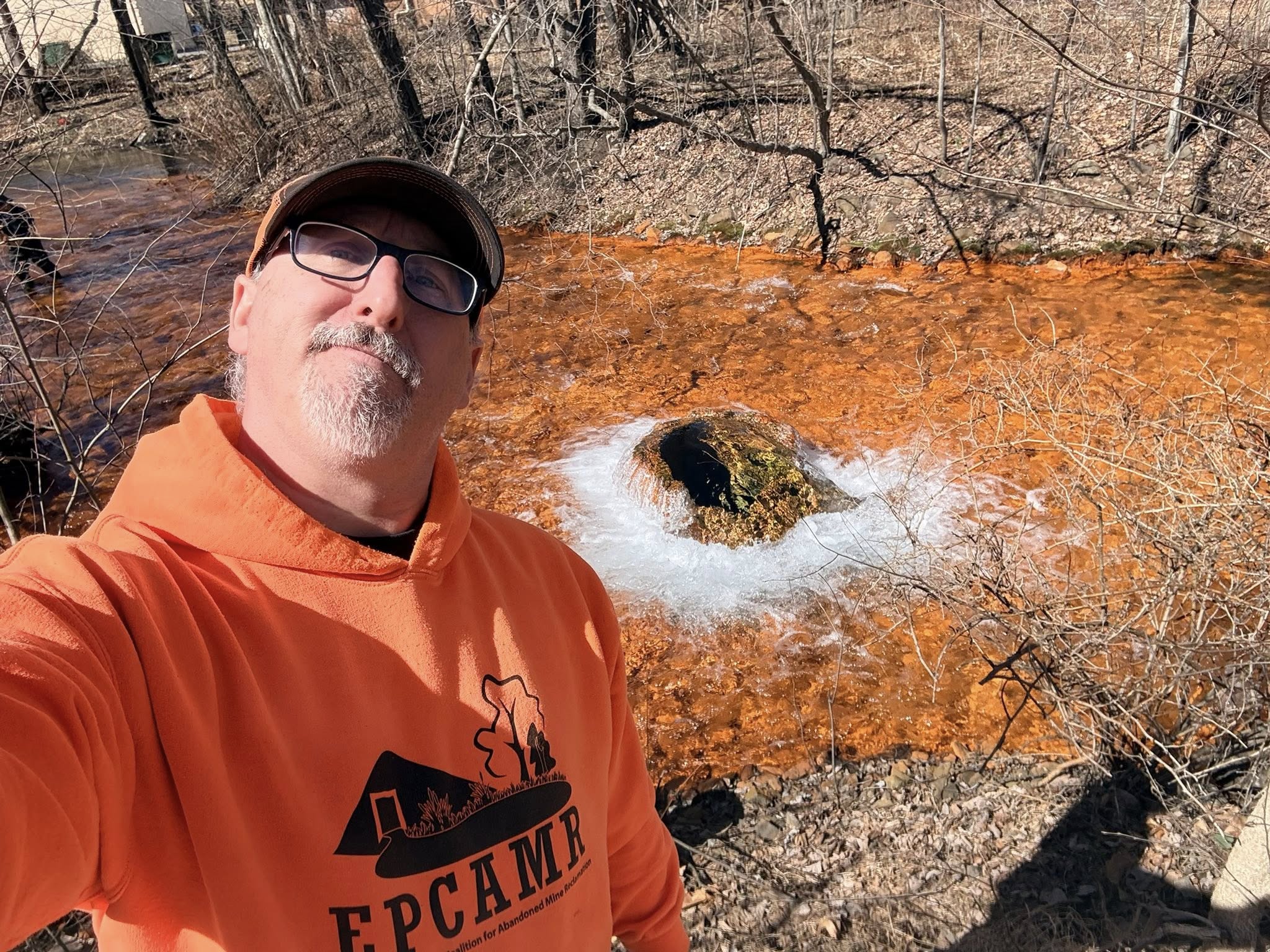
Today we’d like to introduce you to Bobby Hughes.
Hi Bobby, can you start by introducing yourself? We’d love to learn more about how you got to where you are today?
Robert (Bobby) Emerson Hughes was born in Wilkes-Barre, at the First Valley Hospital, out of the floodwaters wrath, Mercy Hospital on June 23, 1972, during Hurricane Agnes, was flooded with seventeen (17) feet of water from the North Branch of the Susquehanna River and numerous mothers to be and patients were transferred to the other hospital on higher ground out of the floodplain. He attended Heights Elementary, then, the Grand Army of the Republic High School from seventh grade to mid-way through tenth grade when he transferred to E. L. Meyers High School and graduated in the college prep program in June 1991. Through junior and senior high schools, he actively participated in school sports, including basketball, baseball, cross country, track, and football. He was chosen as his graduating class, District II, Male Scholar-Athlete Award Recipient.
He graduated from The Pennsylvania State University in Environmental Resource Management in May 1995. He attended the Wilkes-Barre Campus of Penn State for the first two years to take his core courses. He received a full academic scholarship to Penn State and through numerous academic scholarships became the first person in his family to graduate from college. While at Penn State he earned 12 credits via completing internships with the Bureau of Abandoned Mine Reclamation Pennsylvania Department of Environmental Resources (now the Pennsylvania Department of Environmental Protection (PADEP), and the Hawk Run District Mining Office (now the Moshannon District Mining Office) and was able to graduate early. As part of his internships, he created a computerized abandoned mine reclamation database with over 40,000 public complaint investigation sites. This invaluable database was the first comprehensive, computerized database developed in the region. This work required extensive travel and coordination with local officials, retired miners, and mining engineers throughout the anthracite region to inventory and document the abandoned mine facilities. The database has evolved into the Reclaimed Abandoned Mine Land Inventory System (RAMLIS) that his current employer, the Eastern PA Coalition for Abandoned Mine Reclamation (EPCAMR) uses to this day. In addition, he completed numerous training courses for professionals and earned certifications.
Bobby grew up in the O’Karma Terrace, a low-income housing project in the Heights Section of Wilkes-Barre from early childhood through high school. Throughout his childhood he ventured into the abandoned anthracite coal mine complexes surrounding the city and the surrounding Wyoming Valley with his friends. The complexes largely sat idle resulting from the major downturn after World War II in the hard coal industry in the anthracite region. They explored and played in the idle coal processing structures, acid mine drainage-laden water bodies, coal refuse disposal areas, and coal mine shaft and pits. From these and other local experiences he gained a first-hand knowledge of the environmental, social, and economic ravages of the coal industry. Over decades, the anthracite mining industry grew, peaked, and declined, leaving an overwhelming legacy of severe: joblessness; housing, commercial, and industrial area blight; crime levels; social-economic problems; and a host public safety and environmental problems throughout the Northeast Pennsylvania Region.
While gaining his knowledge, experience, and knowledge of the anthracite region landscape, Bobby was drawn to learning how to assess and remediate the coal mining impacts on surface and groundwater, and fish and wildlife habitats. His childhood experiences, his degree in Environmental Resource Management, his internships, and training courses provided the foundation for his sharp focus and life-long commitment to abandoned mine reclamation in Eastern Pennsylvania.
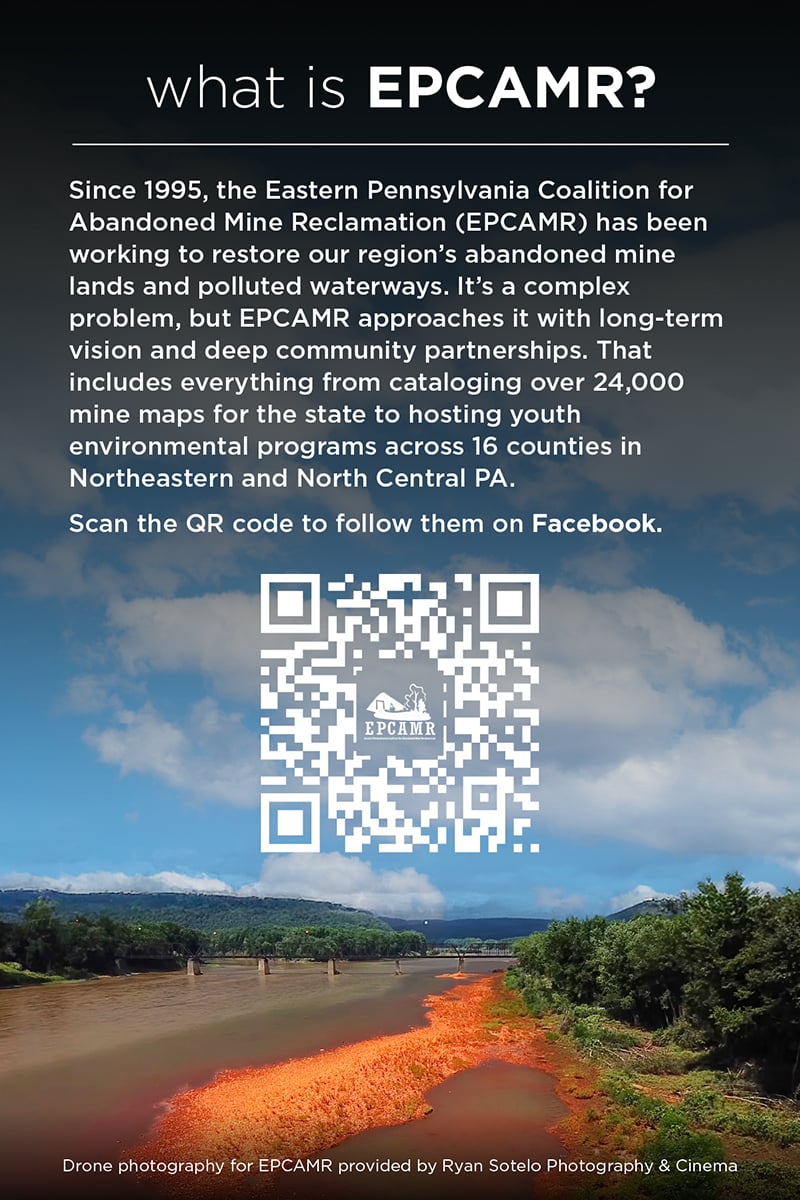
As a result of the experience and professional relationships Bobby gained from his PA DEP internships and his reputation, he had the opportunity to become the first technical staff person in the Eastern Pennsylvania Coalition for Abandoned Mine Reclamation (EPCAMR) Office in Wilkes-Barre in 1996. In pursuing that opportunity, he wrote the grant application which ultimately provided funding and his first full-time professional job as the Regional Coordinator.
In that position he strived hard for and built EPCAMR into a driving force advocating for and leading the acquisition and spending hundreds of millions of state and federal dollars for remediation in the anthracite region centered in Northeast Pennsylvania. Building EPCAMR involved: creating a strong and readily-available technical knowledge base; gaining credibility and trust in the coal industry and the host of government entities in the region; promoting and guiding research and development of state-of-the-art remediation technologies; educating youth, remediation consultants, contractors, and government officials; networking and partnering with other environmental organizations, municipal officials, state and federal agencies; establishing and implementing environmental monitoring programs to measure and document the effectiveness of remediation projects; preparing and submitting grant applications and advocating for funding; and celebrating and rewarding successes.
Bobby became the EPCAMR Regional Coordinator in May of 1997, while working for the Schuylkill County Conservation District, one of the sponsoring Conservation Districts of EPCAMR, located in Pottsville, PA. He is well-known and highly respected in the public sector and private sector coal mine reclamation industry throughout Northeastern and Northcentral Pennsylvania, Pennsylvania, the Northeast U.S., the U.S., and Internationally by colleagues nationally, through the National Association of Abandoned Mine Land Programs (NAAMLP), and National Association of State Land Reclamationists (NASLR), and internationally, through recognition by members and colleagues from the International Mine Water Association.
He’s traveled to Utah, Colorado, New Mexico, Wyoming, Florida, West Virginia, Virginia, Maryland, Washington DC, New York, Georgia, Iowa, Tennessee, Georgia, Wisconsin, Kentucky, California, Texas, Louisiana, New Jersey, Connecticut, Rhode Island, and Niagara Falls and Ottawa-Canada, internationally. He would love to travel to Iceland to learn about their geothermal systems and Germany and the UK to learn about their mine pool geothermal work.
He credits his reputation for getting things done to his community organizing skills, particularly when helping underserved coalfield communities have a strong voice; he strongly encourages communities to take pride in their legacy and efforts to improve their environment; his impartial, passionate, and can-do positive attitude; his long track record of finding innovative and affordable approaches to remediation; his strong outreach and education program development and deployment; his lasting friendships; and reluctance not to say no or to never say it can’t be done. He insists that there are always ways around an obstacle. Also, he believes that is essential to inspire kids and future generations to improve and take pride in their surroundings.
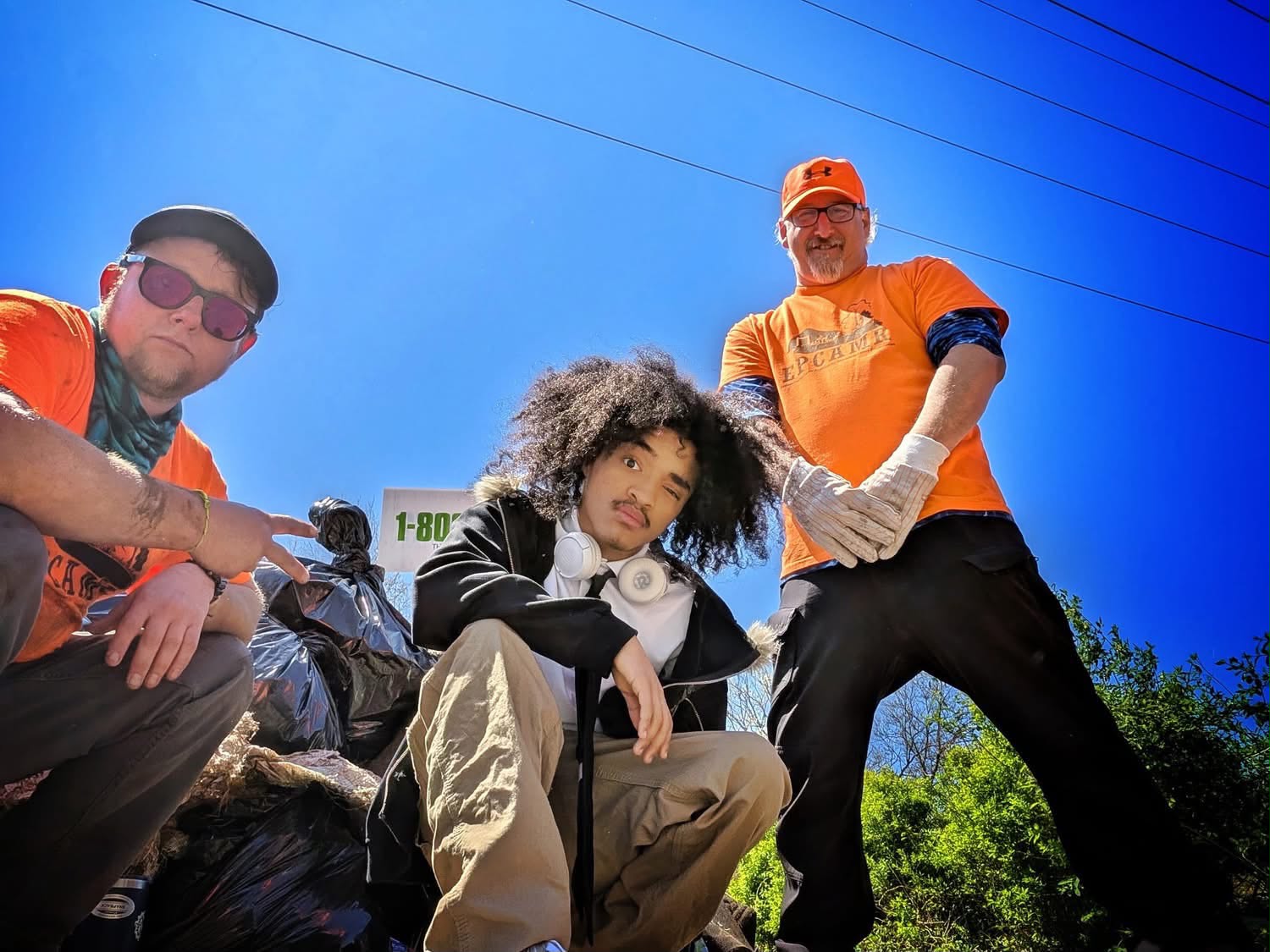
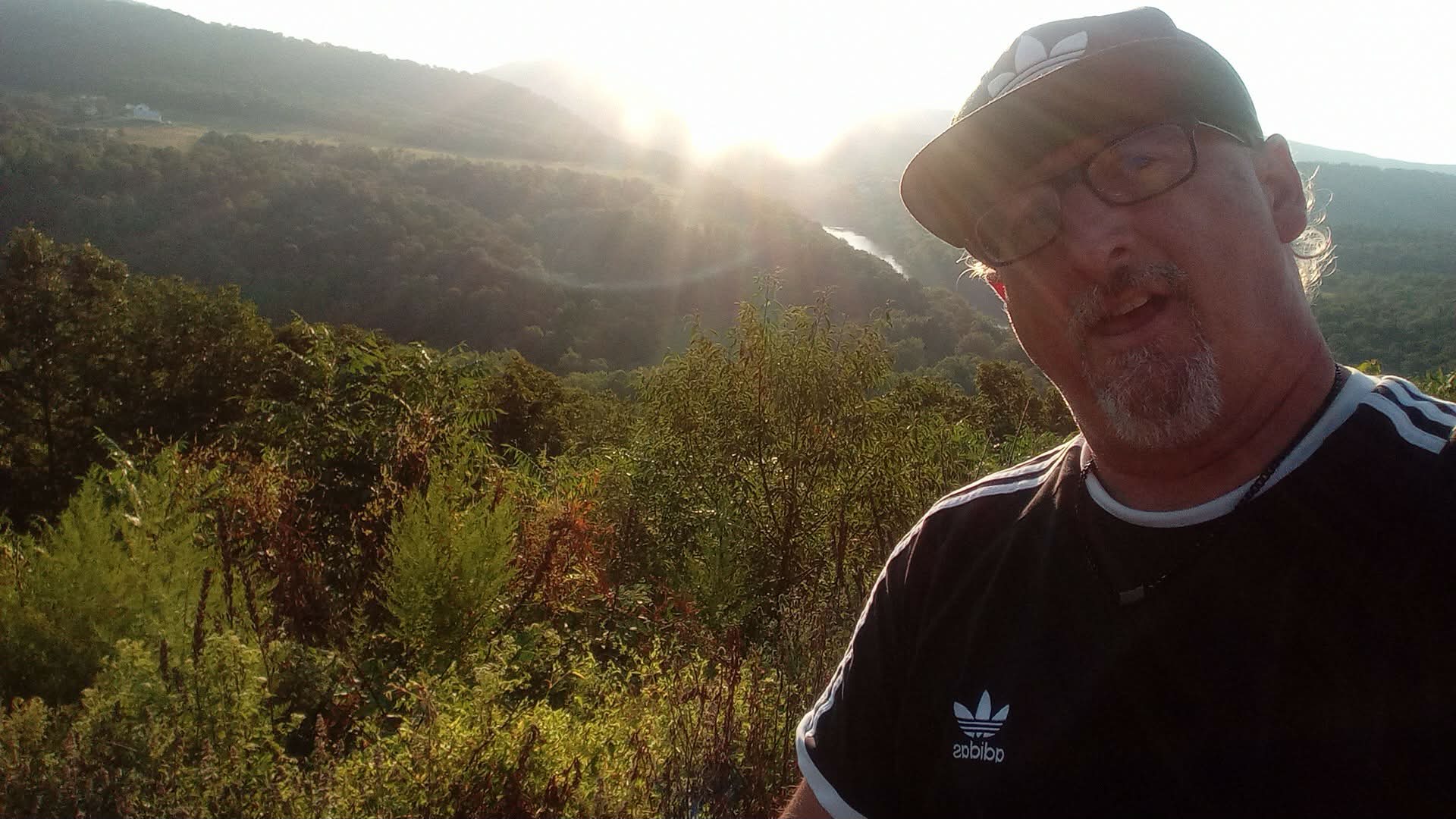
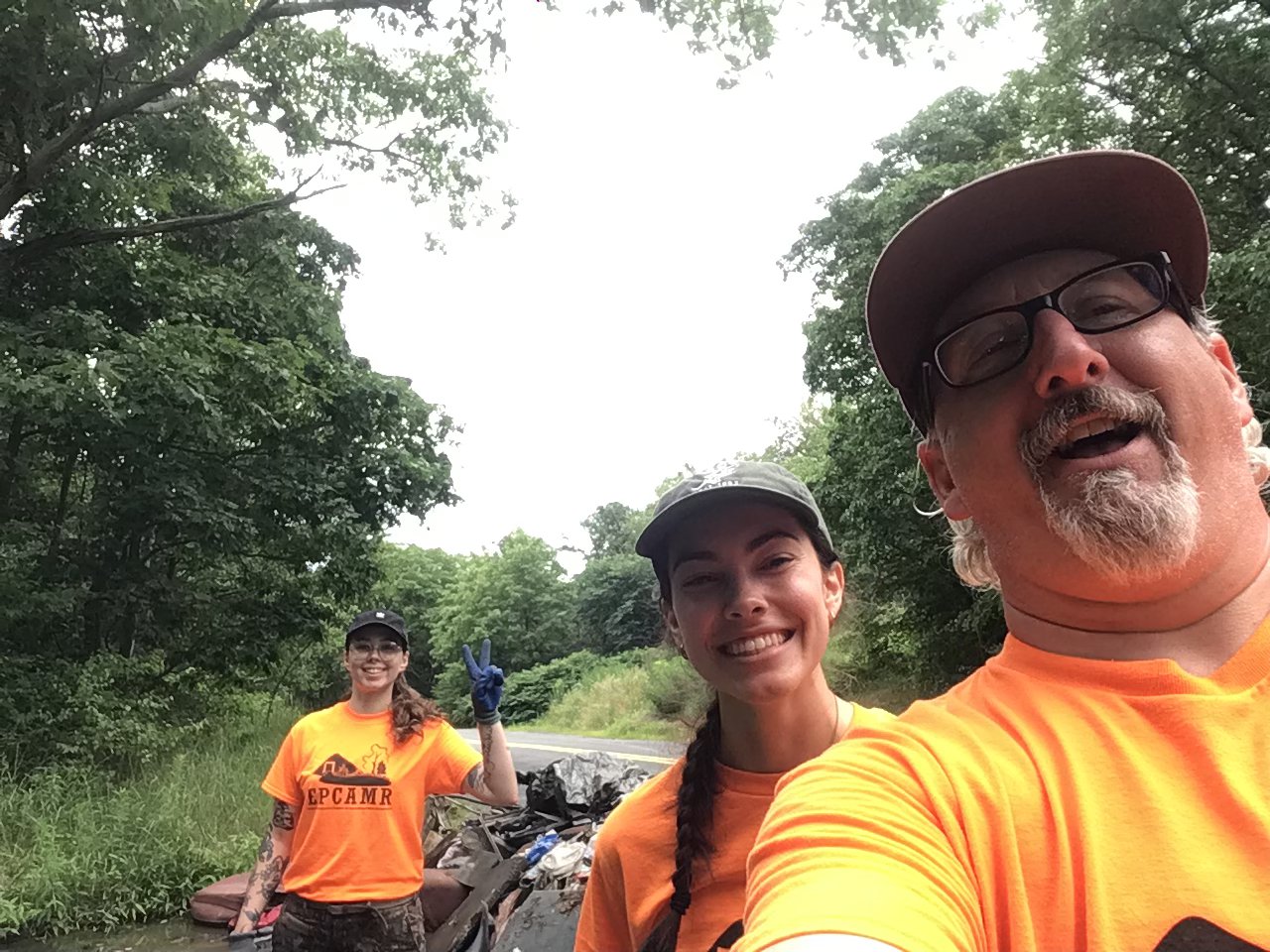
Some of his hobbies are: Hiking, Rock Collecting, Plant Identification, Naturalist skills, Birding, Nature Photography, Art, Drawing, Community Volunteerism, Picking up trash and tires in our coalfield communities to improve the landscapes and waterways, Flying a drone as a certified FAA UAS Remote Pilot, Reading, Masonic and Sacred Geometry teachings
His wife’s name is Tara. They’ve been married since 1993 and had dated since they were 13 and 15 years old in Junior High School. They have 3 children. His oldest daughter’s name is Hayley Marie and she has two children, Cali Aspen and Lincoln James, their two grandchildren. His oldest daughter is engaged to be married to Ryan Colleran. She has a degree in Early Childhood Education and has been a Para-Educator. She also is an entrepreneur and website and social media developer and graphic designer. His oldest son’s name is Dawson Alexander Hughes. He’s a RN in Manhattan, NY and currently furthering his education to become a Medical Doctor at Fordham University. His youngest son, Ethan, is going into the 11th grade, and is very artistic, is into fashion, anime art, voice impressions, and loves attending Comic-Cons and Anime-Cons throughout the Northeast with his father and his older Brother on occasion. He currently attends Commonwealth Charter Academy.
His children and family are fully supportive of his profession and interests. They have grown up right alongside of him attending cleanups, stream surveys, water testing, educational workshops, AMD Tie-Dye workshops with youth, professional environmental education trainings, and on hikes and tours with me throughout PA. He would hope to think that they are very proud of him and his contributions to our environmental and legacy work that he continues to do in the coalfield communities. His daughter often says that everyone that she runs into that knows me refers to her as Bobby’s daughter, and will forget to mention her name, first. They say he’s on the news, in numerous documentaries, in the papers, and have been the recipient of enough awards for his good work that it’s hard not to forget that their Dad is a leading environmental conservationist and community leader in PA.
Bobby greatly appreciates the many mentors and supporters who have greatly influenced and enabled his professional development. Among them are:
• Russ Johnson, Pennsylvania Environmental Council Northeast Region Office
• Mario Carrello, PA DEP Hawk Run Mining Office
• Kim Snyder, Gary Greenfield, Sue Ghoweri, and Mike Ferko, PA DEP Bureau of Abandoned Mine Reclamation (BAMR) Wilkes-Barre
• Craig Morgan, Schuylkill Conservation District
• Ed Wytovich, First EPCAMR President
• Bernie McGurl, Former Exécutive Director-Lackawanna River Conservation Association
• Joe Simons, Current EPCAMR Président
• John R. Dawes, Founder and Former Executive Director-Foundation for Pennsylvania Watersheds
• Louise Dunlap, Dunlap & Browder Associates Attorney-Abandoned Mine Reclamation Funding Advocate
• Dr. Marianne E. Krasny, Professor and Director of the Civic Ecology Lab in the Department of Natural Resources and the Environment at Cornell University Cornell University
• Ms. Elizabeth “Libby” Stephens, (elder in the O’Karma Terrace that mentored Bobby on resources to learn about fossils and Anthracite coal mining history and the industry in his youth)
• Mark Killar, former Regional Coordinator for the Western PA Coalition for Abandoned Mine Reclamation (WPCAMR)
Can you talk to us a bit about the challenges and lessons you’ve learned along the way. Looking back would you say it’s been easy or smooth in retrospect?
I copied the majority of my remarks from a recent speech written for some national AmeriCorps volunteers at their annual Cohort training just a few short weeks ago in Leesburg, VA. I think you will find some great information below. I talk about the struggles and hurdles that I’ve had to overcome growing up in Coal Country and providing them a sense of pride, place, and
My element is being IMMERSED in my coalfield communities where I was born and raised that I feel the most comfortable. Despite all of what most would call problems or societal ills, I have decided to see them as unmet needs and opportunities.
On behalf of (EPCAMR), it is a pleasure for me to talk with all of you about how we have tackled the legacy environmental problems in our region related to abandoned mine reclamation and mine water pollution through a placed-based environmental education approach. EPCAMR has achieved 30 years of resilience and sustainability this year. We support the efforts of community groups, local governments, educators, both traditional and non-traditional, and watershed organizations to reclaim abandoned mine lands, restore rivers and streams impacted by abandoned mine drainage, preserve historic abandoned mine land features, and redevelop former mining industry locations for recreation, residential development, alternative clean energy economic development, industrial reuse, and educational opportunities.
I am also proud to be speaking to all of you as a native of the Wyoming Valley, in PA, where I have spent the majority of my life Growing Up in Coal Country. I’m also proud to say that I have been able to make a career and living out of my job, which really isn’t a job to me, it’s been more of a divine destiny and calling honestly. I’ve made the choice even though it wasn’t really a choice at all to decide to give my time, talents, and treasurers to the coalfields that I call HOME, to settle and raise my family.
In many corners of the State, there are often pressures for local communities and regions that find themselves up against a wall due to:
• Economic constraints;
• Loss of job opportunities;
• Urban Sprawl;
• Unemployment;
• Out migration of youth;
• Land Use conflicts;
• Educational systems with below average academic tests scores, and
• Degraded environmental landscapes.
These stressors tend to devalue the local traditions, historic preservation efforts, the importance of land reclamation, economic redevelopment, and cultural and ethnic identities that are common throughout Appalachia.
In my part of Northeastern PA, habitat loss, water quality degradation from AMD and even episodic acid rain deposition, stormwater runoff from increased sprawling land development patterns, increased impermeability of surfaces due to pavement, combined sewer overflows into the Susquehanna River and its tributaries, sedimentation pollution from agricultural lands in need of stream bank stabilization or stream bank fencing, timber harvesting and land clearing, warehouses, urban blight, and data centers, and 10s of 1000s of acres of unreclaimed abandoned mine lands and mountains of culm, are widespread.
These environmental issues may even be a problem in your State or service area. While I am not trying to paint a picture that shouts out, “The sky is falling, the sky is falling!”, the conditions of our surroundings, that only WE ARE most familiar with, our, SENSE OF PLACE, leave our local community leaders, teachers, residents, business leaders, the environment, and each of YOU, as AmeriCorps VISTAs, in a delicate quandary.
In my work throughout Northeastern PA Coalfield Communities over the last 30 years, from Tioga County south, to Dauphin County, I can tell you firsthand, that the relationships that exist in these PLACES are DEEPLY tied to their environment and the waterways and it is INHERENT.
The people that live in these communities, with backgrounds from 26 different European countries that settled in the Anthracite Region alone, that have been left to deal with the environmental degradation from the legacy of past coal mining practices, both Anthracite and Bituminous, are RESILIENT, strong-willed, protective, and are cautious and skeptical of “outsiders”, “flatlanders”, even “academics”.
They also WORK TOGETHER as a community, are PROUD of their heritage, and are a WEALTH OF KNOWLEDGE, when it comes to their local surroundings, and have a diverse network of non-profits, both locally and regionally, that provide added assistance and fill gaps where they are needed. Therefore, it’s not too hard to draw the conclusion that a community’s health and well-being of both it’s people, and the natural environment, SUFFERS, when it is not taken care of, or it’s ignored, not prioritized for funding, doesn’t make the cut, or is sometimes seen by community members as sacrifice zones, and oftentimes, can create a sense of HOPELESSNESS.
As the Executive Director for EPCAMR, and on behalf of our Staff and Board of Directors, it is our belief that the trail to building a serene co-existence with our environment starts with a fundamental image of our WATERSHEDS. WATER connects us all on the landscape. What happens to the land, affects the water.
Our communities, the societal, cultural economical, historical, and environmental foundations upon which they are built, occur within the context of a DEEP LOCAL KNOWLEDGE of PLACE within their watershed close to a river or a stream.
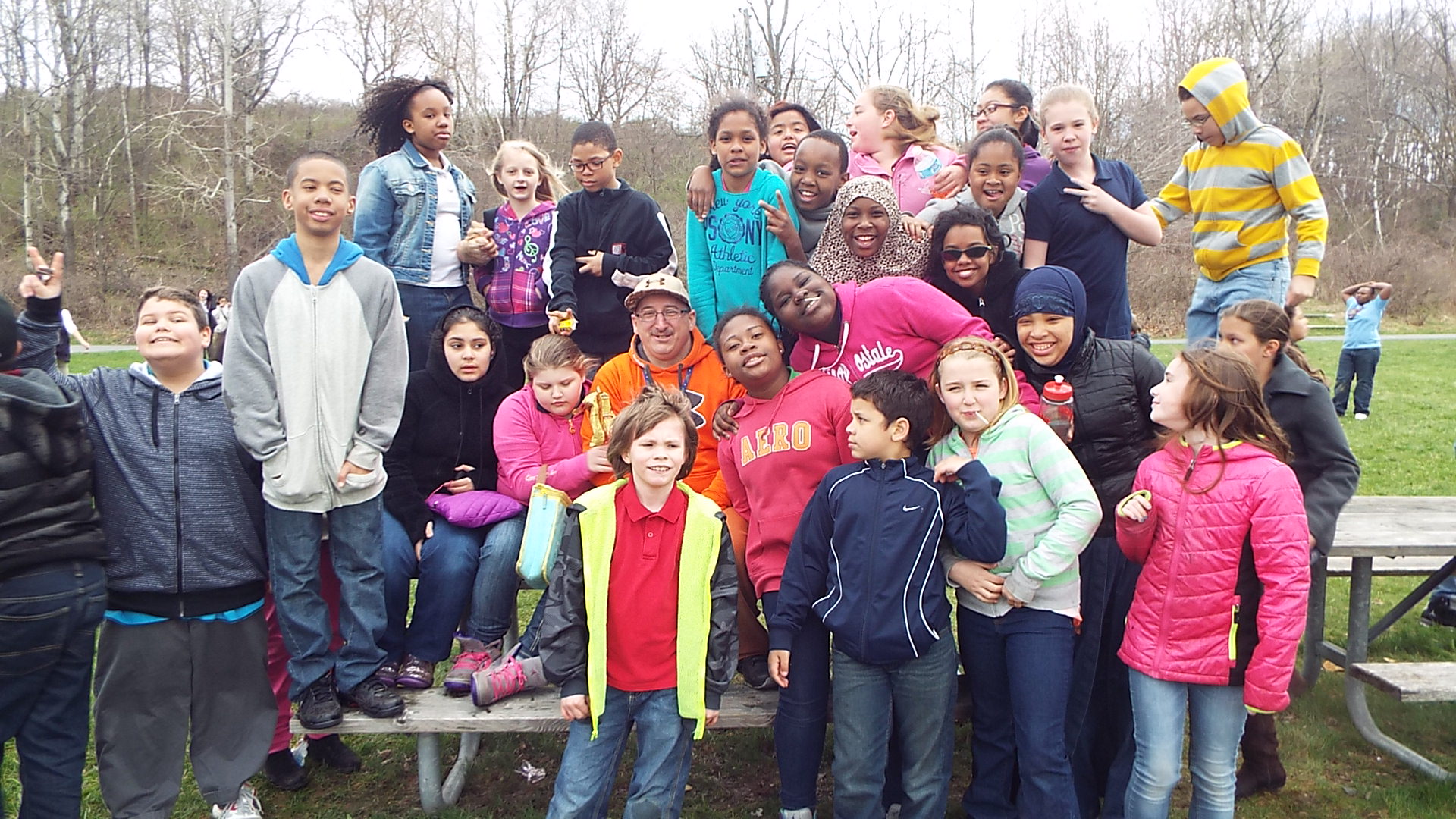
It has always been EPCAMR’s HOPE that when we go into the school systems throughout our region and work with students, or conduct teacher-training workshops for elementary, high school, and collegiate level educators, that we leave them with a better understanding of not only the definition of a watershed and its environmental pollution problems related to abandoned mine lands and water quality, but also information on it’s natural pristine headwaters, wetlands, wildlife, waterfowl, flora and fauna, native trout fisheries that once dominated nearly every stream in PA.
More importantly, we find ourselves discussing many of the components that are not usually touched upon in schools, but also within the community at large, unless it’s a historical or cultural society, such as:
• Local culture; Historical significance of the community;
• Historical buildings; Natural Recreational Areas;
• Famous people; Street Names; and
• A direct line to numerous local resource agencies and other non-profit groups that we might be able to add to their knowledge of place-based environmental education and meaningful watershed education experiences
EPCAMR and I believe that the solutions to many of our environmental problems can be found in such a way that allows for us to INFORM, EMPOWER, HAVE A GOOD TIME, EDUCATE, and FOSTER a local community’s assets, be it one’s culture, art, history, preservation efforts, architecture, community resources, and the natural environment. Schools Boards and Superintendents that have the authority to allow for such inclusion of specific local or regional environmental issues into the State Standards for teachers should be ENCOURAGED to play a central and critical role in this process.
It is rather ironic and sad to say, but, when I was in elementary school and even throughout high school, year after year, I was taught about the American History through 1877 in my history/civics class and no further. Not once, was I educated on The Great Depression, WWI and WWII era, Coal Mining History, the Civil Rights movement, the History of Appalachia, the Environmental movement, let alone PA History.
One of the most significant reason’s why PA’s Coal Regions, as well as other States in Appalachia still suffer are from decisions that were made by our Government during a national crisis to extract the mineral resources from beneath our feet to fuel the Industrial Revolution to save lives at the expense of our environment. A discussion on the Labor Union movement that was and still is, so vital to the history of our region was unheard of in the classroom and therefore, I was uninformed, of their importance, until recently.
Our mining scars today are slowly, but surely, being reclaimed for
• Economic redevelopment;
• Creation of mixed use industrial development parks;
• Trail corridors linking communities that had been disconnected for decades and the establishment of recreational waterways, kayaking, and river festivals;
• Recreational facilities such as soccer fields and multi-purpose recreational fields, and
• Expansions of existing residential communities.
The scars have only begun to heal since 1977, when the Surface Mining Reclamation Control Act was passed into law. If you truly want to gain a better understanding of the law, the reasons for it, what led to its enactment, and what led to the formation of the national VISTA Program, I STRONGLY ENCOURAGE each of YOU to pick up a copy of UNEVEN GROUND, APPALACHIA Since 1945, by Ron D. Ellers.
It’s no surprise that our air, land, water, and the environment, as well as our regional identities are interconnected to our culture and way of life. How our land is being used and has been used historically, truly effects how we see ourselves and how we relate to one another, our values and life lessons we pass on the our children and future generations, and the meanings that we give to our quality of life itself.
Dense forests in our mountains on our ridgetops, headwaters of clean, productive trout streams, abundant wildlife, lakes, ponds, and public lands leading to our valley creeks and productive, fertile floodplains all give a sense of hope, peacefulness, and confidence in looking ahead. Legacy mine-scarred landscapes, mine fires, 5560+ miles of streams that we know of polluted by abandoned mine drainage (AMD) and underground mine pools filled with BILLIONS of gallons of polluted mine water, can and does give an impression of desolation, hopelessness, limited possibilities, and a sense of despair. It doesn’t have to be this way. We need a new land and CONSERVATION ETHIC.
It can be changed and has been changed with successes by many leaders from our communities, however, we have to become MORE ENGAGED and active WITHIN them, and be included in the public debate and community dialog and engagement about what we think might be best for OUR communities and the people who you will soon come to know as FRIENDS for life as some of the most HUMBLING people on earth. We still have a long way to go, but in order to not have history repeat itself, we can learn from earlier experiments in governance and civic, democratic engagement. We need more people involved in local government decision making as public servants.
I know… this sounds like a book report and review that could go on Amazon, but it’s MORE THAN THAT. It’s about the parallels that we’ve faced as a society and country, with Appalachia being the place where our Great Society was supposed to be represented post-War as having been successful in addressing poverty and modern economic development and growth for good.
I think the GROUND is still UNEVEN right here in the Anthracite and Bituminous Coalfields, and we will always be a part of Northern Appalachia. We still have societal issues that need additional attention just like any other part of the country. This is a book worth picking up, to know where VISTA’s ROOTS have come from, at a minimum.
If there was ever the mention of the word “COAL”, it was in the context of fossils, and never in the context that
• PA is the 4th largest producer of coal in the Nation;
• The largest deposits of ANTHRACITE COAL in the United States are found in 4 COAL FIELDS, in a 474 sq. mile area of Northeastern PA;
• Over 400 Coal Breakers were once lined up and down the Lackawanna and Wyoming Valleys alone;
• COAL fueled the Industrial Revolution during WWI and WWII;
• At one time COAL cornered the home heating market in PA;
• The geology of the Anthracite and Bituminous Coal Fields are VERY different; The majority of central and southern Appalachia is Bituminous.
• The geology of the Coal Fields influence the characteristics of the mine drainage pollution that coats our rivers and streams hues of white, orange, yellow, and red
I didn’t find any of these facts out until I began pursued my career in ERM at Penn-State, interned with the PA DEP BAMR, and subsequently, at the Hawk Run DMO in Western PA, and soon educated myself, working for EPCAMR when I became the Founding Director.
While I don’t entirely fault the educational system for my lack of knowledge during my younger years, it may have helped me to make a decision much earlier as to whether or not I was going to STAY in PA and put my FAITH in creating a better HOMETOWN, or GO AWAY to find some life-fulfilling job opportunity that would allow me to raise my family and be a productive, contributing member of society, SOMEWHERE ELSE,… JUST NOT HOME.
When I talk about Placed-based Environmental Education, I am talking about an approach that redefines communities impacted by abandoned mine lands and AMD into watersheds that support the formation of community groups that integrate residents, students, and children, both young and old, into the future restoration and revitalization of our older mining communities into “renewed neighborhoods” that can instill HOPE into the minds of our YOUTH, that they don’t have to necessarily leave, their HOMETOWN, PLACE”.
COAL, not only is LIFE in a concentrated mass of extinct plant materials that once dominated our world. It was in fact, “A WAY OF LIFE” for the people of the Wyoming Valley and thousands of other mining communities throughout PA and in other hollers, hills, and fertile floodplains, of Appalachia. That LIFE, was a vicious cycle of life and death, certainty and uncertainty, tolerance and intolerance, rich and poor, waves of development and blight, but through it all, we, as a society, have PERSEVERED, as good people often do. Miners and their sons sacrificed their lives to supply the Nation with fuel. Miners and their families should be remembered and honored for their symbol of great strength and fortitude.
EPCAMR likes to encourage our community members to PRESERVE pieces of our past, through education, reuse, interpretation, and preservation. We prefer to educate the youth about our HISTORY, and our ROOTS, that is a common thread through many of the communities that many of YOU will work in, across Appalachia.
I was born and raised in Wilkes-Barre, in the Wyoming Valley, on a day when one of the most significant environmental flooding disasters occurred, on June 23, 1972, and Hurricane Agnes swelled the Susquehanna River out of its banks to a height of nearly 43’, putting hundreds of thousands of people’s lives at stake, flooding the underground mine workings for good in the Northern Anthracite Coal Fields. Growing up hearing and reading about the monumental tasks taken to rebuild our community during those HARD TIMES, it is not surprising to see why the people of the Wyoming Valley have been given the reputation of our PLACE in the world, as the “VALLEY WITH A HEART”.
At the time of the Disaster, we found that people helped strangers, before they helped themselves. We see this repeated over and over on the news in other communities that have suffered a similar fate. We take care of our neighbors and each others children. I learned this life’s lesson from my parents at a very young age and I am proud to say that I have been able to pass it on to my children as well. I tell kids sometimes, to treat the ENVIRONMENT, like you would treat your friends and family, with DIGNITY and RESPECT. EPCAMR believes that we can help OUR people and OUR children, in OUR Region, understand the seriousness of our ecological problems related to AML/AMD, through the emphasis on creative discovery of the ties that connect us with the environment and FAMILIAR surroundings of our own communities based on watersheds.
For example, I would venture to say that many of the following rhetorical questions apply across the service areas of each and every VISTA. If ABANDONED MINES aren’t the issue, maybe FARMING, TIMBERING, MANUFACTURING, WAREHOUSES, DAMS, FLOODING, DATA CENTERS, or some other land use.
Some of the simple questions, for example that we ask when we go to the schools, that we bring out into the field on a watershed tour are as follows:
• What Region of PA are we in?
• What Coal Region of PA are we in?
• Which Coal Field of PA are we in? How many are there?
• What is the Geology of the area? What kind of rocks do you find outside of your school? Did you ever pick up a rock outside of the classroom?
• What kind of trees do you see growing on that culm bank?
• What is the name of the stream that flows by your school?
• What is the “real name” of the stream that flows by your school?
• What is a watershed? What watershed are we in? Which River Basin?
• Why is the water Orange? Red? WHITE? Yellow? Clear?, w/ NO FISH or aquatic life? Does it have FISH? If so, what species?
• What was the name of the mine that operated in your community?
• Where are the Canal Locks along the Susquehanna River that used to carry COAL to market before the construction of RRs?
• What are the names of the RRs that are now abandoned that run behind your homes?
• What are the names of some of the Coal Breakers and Mine Company Collieries that dotted the landscapes during the heyday of mining?
• Where are some of the historic buildings in your community?
• Who are the people who are named for the streets in your town?
• What makes your community unique?
These questions often elicit responses from teachers and students alike that make them process in their mind images of their FAMILIAR SURROUNDINGS, and PLACES they have been within their community, buildings they have walked through, roads they have traveled daily, streams they may or may not have crossed, mountains or culm banks they have scaled or traversed. All of these questions are asked to help them to begin to understand that THEY ARE IN FACT, a part of their community, not just a back seat passenger, or some tourist, just passing through taking pics, selfies, snaps, or Tik Toks on their phones.
However, when they don’t know some of the answers to the questions that are presented, and they seem a little caught off guard. I find that mostly the adults, have a much better appreciation for their environment and community once they have been informed of a particular PLACE in their community. If I had only had a nickel for how many times that I have talked with teachers and students who have said to me after our presentation or tour, repeatedly, “I drive by that PLACE everyday and never knew that it was really THERE!” or “I’ve SAW IT, but I never really SAW IT, SAW IT!” or “I never knew that the stream had any other name than SULPHUR CREEK, BLACK CREEK, STINKY CRICK.”
I am sure that many of you can figure out the last nickname for a crick impacted by AMD, the infamous 4-LETTER WORD…It starts with the LETTER S…., ends with the LETTER T, and rhymes with PIT, another abandoned mine land feature, commonly referenced by COAL FIELD community residents.
EPCAMR has even tried to instill some “OLD SCHOOL” language into the “NEW SCHOOLS” that we visit on occasion. We’ve redefined the ALPHABET! “A” is for Anthracite, not for Apple. “B” is for Bituminous, not for Boy. “C” is for Community, not for Cat. “D” is for Drift, not for Dog. So our ALPHABET SOUP is a bit different. However, I can guarantee you that by the time that I am done repeating all 26 letters, I will have expanded the teacher’s and the student’s vocabulary, by 26 words related to abandoned mines that they could now identify in their community. It’s not a difficult technique to pass on to students, and it’s rather enjoyable, to pass on the language of my grandfather, in terms of their historical context.
In Luzerne County, 9/12 Public School Districts are located within a watershed that is impacted by hundreds of acres of surrounding abandoned mine lands to prove it, along with streams that have either disappeared into the underground mine workings or are directly impaired by AMD. The outdoor classroom experience on these abandoned mine lands and along these streams impacted by AMD provide more of an opportunity to allow students, teachers, and community members alike, to experience first-hand, hands-on activities and environmental projects or community service related projects that will directly relate to the impacts on their surrounding community.
Many students and teachers across the Commonwealth have the opportunity to take students on field trips to rivers and streams or State Parks that are relatively pristine or have other environmental impacts to a lesser degree than those teachers who are in our environmental justice communities.
Surprisingly, some teachers that I have talked to, actually dread the idea of taking students to such locations because they are filthy, dirty, smelly, dangerous, are littered with debris and trash, and granted, can be areas where health and safety hazard precautions have to be taken into consideration.
I often dispel their concerns to some extent, with the idea that if we continue to LOOK AWAY from our mining scars, they are always going to be there, no matter how hard we try to ignore them on our landscapes. The smell of the AMD isn’t going to go away just because we wind up our windows every time we cross a bridge. If we can ENGAGE the students and community members to become stewards of their local environment and actively participate in the cleanup and restoration or remediation of these lands, and get a little dirty, then we are, by default building a better community. They may eventually grow up to STAY and make their community an even better place for the next generation. Who knows? I did and I am proud of the decisions that I have made in my life for the benefit of my Valley, my HOME TOWN, and my COAL REGION.
If people don’t believe that they are part of the community and a have a stake in protecting, preserving, or reclaiming it, then they become UNATTACHED, APATHETIC, NUMB, DEMORALIZED, and the community can suffer from the BROKEN WINDOW THEORY and slowly decay and succumb to blight over time. YOUTH, I believe, and have witnessed it firsthand for years, will become INVOLVED, as long as you give them an OPPORTUNITY, some guidance, and a CHANCE. CULTIVATE THEM! HELP THEM GROW!
If people aren’t aware of these features, such as an abandoned water filled stripping pit and its location, and remain IGNORANT to the fact that they do pose serious health and safety threats, then, unfortunately, as has happened so many times before, death or serious casualties can become the end result.
EPCAMR has been a partner in the National MSHA “Stay Out-Stay Alive!” Campaign in PA for many years now that stresses the importance of not venturing on these abandoned mine lands without permission because of the possibilities of accidents and unfortunately, deaths occurring at these locations. Many people are unaware of the features that are contained within an abandoned mining site that pose a threat to a wandering individual, who is not familiar with their surroundings. Sometimes, it’s too late. Familiarity with our surroundings should put people in a “COMFORT ZONE”, that makes them feel SAFE and SECURE and have a CONNECTION to their COMMUNITY. Which leads me to one of the best State Programs implemented by the PA DCNR Bureau of State Parks.
The PA DCNR has taken the lead and done an excellent job in the NE in partnership with Intermediate Units, School Districts, CDs, Regional Community Watershed Organizations, Historical Preservation Groups, Land Conservancy Groups, and EPCAMR to provide a “Community Connections: Watershed Education PG” to students and teachers who learn about watersheds and many different types of environmental problems, solutions, resources, and PLACES, that are in their own backyards. They promote EPCAMR’s concept of placed-based environmental education, and I am not sure that they truly realize, what a breathe of fresh air it is to see others implementing the same ideas. It just goes to show that THIS APPROACH WORKS! IT IS ESSENTIAL to the learning experience and environmental literacy of students at all levels of education.
It is a comprehensive environmental education PG and it is encouraging to see that more and more emphasis is being placed on getting the students outdoors and into their communities to learn first-hand what the environmental community leaders of today are dealing with. This approach to environmental education undoubtedly has lead students to:
• Increase academic achievement;
• Develop stronger ties to their community; Seek out mentors; Volunteer
• Enhance students appreciation for the natural environment, and
• Create a sense of commitment to serving as an ACTIVE, productive citizen in the community TODAY, rather than in the FUTURE.
We can’t afford to turn our backs these days on our rivers and streams. It was the rivers and streams that provided the sustenance for life, commerce, trade, and bartering along the Susquehanna River and others across the Commonwealth, be it the Allegheny, Ohio, Delaware, Yough, the Mon, Clarion, Juniata, and many others. Riverfront redevelopment is happening right before our eyes here in the Wyoming Valley, as we speak. Through a balanced focus on economic development and environmental restoration, the communities along the River and its businesses are becoming revitalized. Just to our north the City of Pittston has already completed a Riverfront Park along the Susquehanna. The US Army Corps of Engineers have almost completed the Wyoming Valley Levee Raising Project that includes a hiking and biking trail along the Levee that includes historical interpretive signage kiosks developed by the Delaware & Lehigh National Heritage Corridor Commission related to Anthracite Coal. Millions of dollars are being proposed for CSO and stormwater separation.
Reclamation of AML and remediation of streams impacted by AMD continue to improve the water quality of the Susquehanna River and the once barren lands surrounding our communities. Farmlands are being preserved along the Susquehanna River in areas where the soil is rich for harvesting crops. Nature trails can be found in the floodplain across the Market Street Bridge in Kirby Park, Nesbitt Park, and further south along the River, near the Susquehanna PPL Power Plant, at the Susquehanna Riverlands. ALL is not LOST!
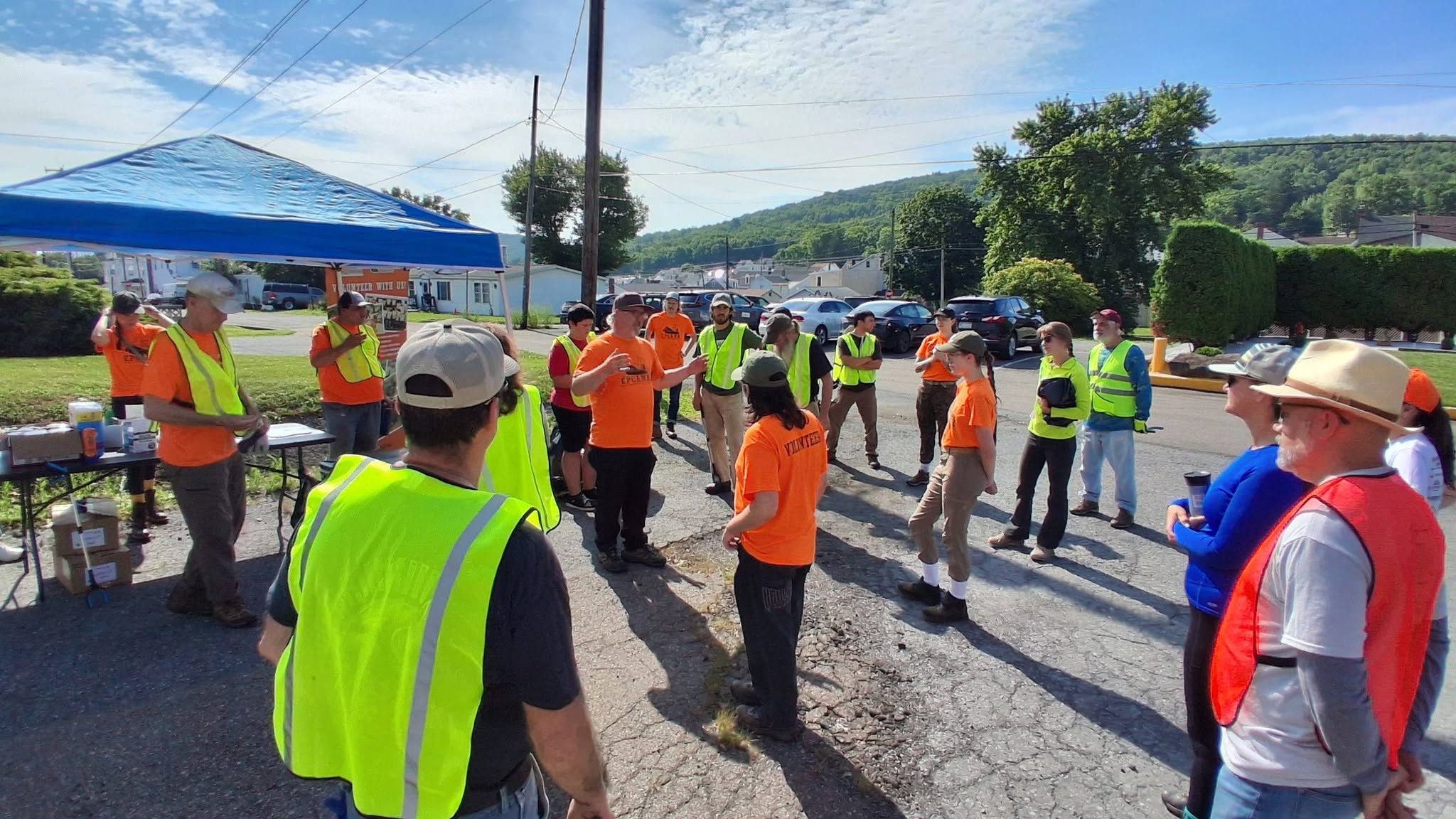
AML are being converted to recreational facilities along Rte 29, preventing the formation of more AMD from getting into Sugar Notch Run. College students and community members participate in cleanups of illegal dumping grounds in our State Parks, State Forests, on abandoned mine lands, and in streams, and along our rivers and streams, through EPCAMR’s partnership with Keep PA Beautiful as an Affiliate partner. These are all fine examples of community members that are INVOLVED and TAKE A TRUE INTEREST in their communities. We need more of them. We support them, and most importantly, we DEPEND on them. The real world settings for our community volunteer leaders and youth are right before our very eyes, we just need to SLOW DOWN, and take a closer look at OUR communities.
All too often we are shown exotic marketing and advertising images of far away places, when we have yet to experience a local hike or excursion along some of the most beautiful ridge tops in our own Valleys, Historic Canal Locks, State Parks, Game Lands. Yes, even a smelly, yet colorful mine discharge that is spewing forth more AMD in a day than one can imagine is enticing for some. There are priceless opportunities to learn in YOUR OWN community and the communities that you will be working in. You will be surprised by what you might find. Create your own destination.
Talk to and ask community members and the youth about their personal thoughts and feelings about their neighborhoods. LISTEN to what their perceptions are of their surroundings and their community. I was once told that “perception is reality” to people who are misinformed or uninformed. If we are to change that paradigm, then we should start by allowing ourselves to find truth in our ROOTS together. So, as I close, I would encourage all of YOU, as AmeriCorps VISTAs, to begin to talk to the youth, community leaders, volunteers, business leaders, historians, and other partners, not just about the good-ol’ days, but about what they can remember about their neighborhoods and their local environment.
Here are some parting questions for you to think about…
Where did each of you grow up? Where did your parents work? What part of the world did they emigrate from? Why did they choose to come here? Where are some of the PLACES that you remember spending most of your time as a teenager? Show the youth some of the unique buildings around town or others that are now abandoned that can bring floods of memories to some people’s mind.
Who were some of the famous people that you could recall that were eventually remembered on a local street sign, the name of a downtown building, a community park, and even a school?
I am positive that you will find that after you give it some thought, the PLACE in which you grew up, is the PLACE where YOU have the most core memories of your life. Share a piece of THAT PLACE…with others and they will remember you for it. Listen for stories and tell YOUR story.
David Sobel simply put it best when he said, “Place–based Education is about connecting people to people [communities], as well as connecting people to nature” [environment].
Thanks – so what else should our readers know about your work and what you’re currently focused on?
I’ve dressed as Santa Claus for my family and for my surrounding communities since I was in High School and picked it up after College and returning home to the Wyoming Valley. I coached youth sports (basketball, soccer, baseball, and football for decades. I go to my hometown elementary school as Santa for breakfasts, sing-alongs, and to provide free pictures and donated toys and coloring books that I am able to obtain every year. I have done it in the Nanticoke Elementary schools as well. My wife and I open our doors every year to friends and family to bring their children and babies for their first picture with Santa and for donated gifts that we purchase and have received from other friends that like to pay it forward. All of my children at one time or another has been an elf helper as they’ve grown up and Dawson has even played Santa at one Elementary School in Nanticoke at the same time I was playing Santa for the Kindergarten and 1st & 2nd grade classes.
I’m an entertainer and comedian of sorts. I have enjoyed being the life of the party at our annual state-wide conferences on abandoned mine land reclamation conferences to encourage networking, encouraging people to let their professional guard down and relaxing around others to just be themselves, and not so buttoned up. Iwon the inaugural cornhole tournament at our conference a few years ago and fell short the last 3 years (due to the nature of the random pairing of partners) by making it all the way to the finals each year. I tend to make a grand entrance in full costume and with walk-on music that tends to get everyone laughing and somewhat fearful of my game and trash talking.
I have an alter ego superhero that I’ve created that is in a coloring book/activity book that we created through a grant back in 2003 named the “Limestone Cowboy”. The cartoon-like character can be found on ou rwebsite under the AMD Avengers vs. The Pollution Posse coloring book that can be downloaded free online by youth. I also designed and have created two trout puppets under another grant, Brooky and Rainbow, along with numerous other character outfits and costumes for additional characters that are found in the coloring book.
I’ve written curriculum and lesson plans that teach youth about ways to incorporate our recycled iron oxide pigment into art for schools. (https://education.epcamr.org/wp-content/uploads/2023/11/STEAM-Iron-Oxide-Hexagon-UNIT-Plan-1.pdf)
and (https://sites.google.com/gapps.liu18.org/liudepeegrant2026/home?pli=1)
I am an author as well. I co-authored a chapter (Chapter 4) in a book, printed by Cornell University Press, entitled Grassroots to Global: Broader Impacts of Civic Ecology (https://cornellpress.cornell.edu/book/9781501721977/grassroots-to-global/#bookTabs=1);
Can you talk to us a bit about the role of luck?
I don’t believe in luck. I believe that everything in life happens for a reason. I believe that everyone has the ability to help others and should utilize their time, talents, and treasures, to give back to their very own communities in every way possible. It builds communities through relationships, friendships, and community service. I manifest things that I want to do and see done and just do them. I try and go through life with a high, positive, vibration, and optimistic outlook on life. Smiles, handshakes, hugs, compliments, lending an helping hand, lifting someone up, offering assistance and help to those in need, never asking for anything in return, and acting out of kindness and love is a great way to live a life that is fulfilling. I try not to look at things in a negative light. If there happens to be a hurdle, impediment, resistance, or obstacle in front of me, I see it as a challenge and an opportunity to find a way around it, over it, under it, or through it to get to the other side.
Contact Info:
- Website: https://www.epcamr.org
- Instagram: https://www.instagram.com/epcamr/
- Facebook: https://www.facebook.com/EPCAMR/
- LinkedIn: https://www.linkedin.com/in/robertehughes
- Youtube: https://www.youtube.com/@epcamr
- Other: https://www.facebook.com/bobby.hughes.23/