


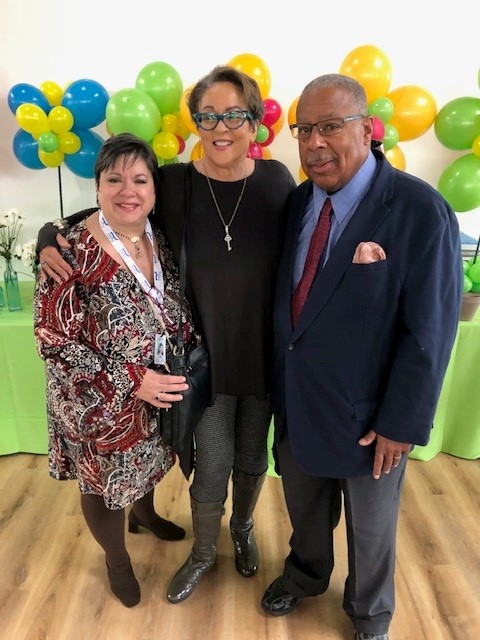
Today we’d like to introduce you to Pamela Diaconis.
Hi Pamela, so excited to have you on the platform. So before we get into questions about your work-life, maybe you can bring our readers up to speed on your story and how you got to where you are today?
I started my work life in a family business at 12 years old. After 20 years as an aerospace engineer working on projects like helping to design the reentry tiles on the Apollo spacecraft, my father decided to by a diner and start over with my mother and another couple. I worked as a cashier on the weekends.
Around the time I went to college (Muhlenberg College – BA Business Administration), they bought a fine dining restaurant and I helped out doing the books and running errands on vacations. They owned that restaurant for over 20 years and I learned from watching my parents the value of hard work and the pride you can take in being your own boss. Somehow I always knew I wanted to work for myself and I will always be gratefult that I had chosen a liberal arts program which gave me a broad background in many subjects.
I graduated from college during a terrible economic period and when I couldn’t find a job, I decided to go back to Retail, an industry in which I had worked part time during high school. After a few years at Bloomingdale’s moving from a minimum wage job to the management trainee program, I heard about IKEA, a new store opening in the United States.
I was hired for their Importing department because I had taken some computer classes in college and they needed someone who wouldn’t be intimidated by an ancient mainframe on which the paperwork for shipments would be sent from Sweden to Philadelphia. Dealing with U.S. Customs and other government agencies like the FDA, I had to learn everything about the company so when, after three years the Public Relations job became available, I was well-suited to represent IKEA to the press.
After 7 years in PR, I left IKEA to start my own Marketing & PR company, but just before I left, I learned that my left anterior descending artery was 100% occluded and I needed to have cardiac bypass surgery. I was lucky to have left the company during a restructuring so I got a buyout of nearly a year’s salary, enabling me to take my time before I actually started my business. I specialized in representing home furnishings companies to style editors in New York. During that time, I became a certified interior designer after completing a 2-year program at what is now Thomas Jefferson University’s College of Fashion & Textiles.
All was going swimmingly since at that time, most large PR firms didn’t bother with accounts that didn’t pay at least $10-15,000 monthly retainers. I was able to pick up smaller jobs and was making a very comfortable living…until 9/11. After that, no one was investing in advertising so all the Advertising firms shifted their staff to PR, squeezing me out of most of the business.
By that point, I had befriended a woman who owned a high-end linen shop and she needed a new partner. I felt this was a perfect place for me after all my experience in Retail, Marketing/PR, and Importing, so I bought into her business, selling curated bed, bath, and table linens, window treatments, and accessories. I was in heaven, using my creativity, working with lovely people and beautiful materials, and collaborating with a good friend.
Unfortunately, that was also to end after online shopping took a big bite out of the brick and mortar independent retailers around the country. After ten years of great financial uncertainty personally and professionally, we closed the store and I was looking for my next move.
During the decade I had the store, my parents were aging and I experienced first hand how difficult it is to care for family members as they reach the end of their lives. For several years, I acted as their medical proxy while my brother held power of attorney to handle their finances. I was overseeing all their healthcare, making sure their medications were managed properly and eventually arranging for them to move to an assisted living facility. That, of course, doesn’t allow you to relax, since they still needed to go to doctor appointments and I was also responsible for coordinating their care with the facility. Sometimes, I couldn’t believe how cumbersome and illogical the system is.
I thought I might need to retrain myself for another industry in my fifties, just as my father had done at that age, I decided my Third Act should be in the aging sector to try to fix the broken system. Before I went back for a degree, though, I tested it out by taking a 6-week course on End of Life Care. After successfully completing my certification, I decided to sell my house after 27 years, and go back for my master’s degree in Social Work at Bryn Mawr College.
At 57 years old, I paid off all my debts and started fresh in the 2-year program, taking the policy tract. I loved school in a way that I never did when I was an undergrad. It had so much more relevancy than just studying for tests. I was invested in the outcome because I had lived the problem I wanted to solve. A big part of the program were internships and I was lucky to be placed at two terrific agencies that were leaders in the aging network in Philadelphia, where I was able to make great contacts and learn an incredible amount about the industry. I insinuated myself in everything I could to be exposed to as much as possible and lend my varied background to this new field.
It took me a while to find a job since I had no actual job experience in the industry. I was able to get a position writing grants for a non-profit that offered meals and a number of supportive services to housing- and food-insecure individuals. I started 6 weeks before COVID-19 hit and then I was sitting in my apartment crying as I was writing 2 grants every week and thinking of the situations of the people for whom I was trying to get funding. I didn’t make a lot of money, but I felt that I earned a PhD in poverty in that position.
After 2 years in that job, I was thrilled to be hired back as Development Manager for one of the companies where I had worked as an intern, Philadelphia Corporation for Aging, the Area Agency on Aging for Philadelphia County. For the past 5 years, I have been writing grants and working on fundraising events, but I also have the opportunity to weigh in on some policy development especially when the grant is for a new program. It’s a small part of the process of changing the system, but at least I have a hand in it.
Non-profits are facing budget cuts and growing need for their services right now, but it has resulted in a new spirit of collaboration, with organizations pooling their resources to work on projects. It is very gratifying when mission-based individuals put their minds to achieving something together.
The events are the best part of my job, though. We do a lot of activities that highlight the artistic achievements of older adults and the joy that the participants exude is infectious. To watch a 95 year old woman play the piano and sing Gospel music to a crowd that sings along, or watch as a room full of artists ranging from 55 to 100 years of age cheer for each other’s work, is so lovely. It sustains me in this terrible period in our history, where we seem to move from crisis to crisis.
Can you talk to us a bit about the challenges and lessons you’ve learned along the way. Looking back would you say it’s been easy or smooth in retrospect?
Having two businesses fail took its toll on me. When you’re not married and don’t have children, you base a lot of your self-worth on your work. The first one was hard, but the second one was really tough. I’m thankful that I have now found an industry that fulfills me in a different way than my past positions were able to do.
Relationships are so important. Invest in people who do what they say they will do and do it well. Give as good as you take.
Can you tell our readers more about what you do and what you think sets you apart from others?
I’ve had a crazy career. Basically, I reinvented myself every decade. Retail to Importing to PR to Retail to Social Work.
As I mentioned before, my Liberal Arts education taught me that I can learn anything. I was not a great student in college, but I am a life-long learner – I believe it’s a wasted day if you haven’t learned something. Having all the jobs I had, running 2 businesses, and being a single woman makes you realize that you just have to dig in and figure it out.
Chip away at tasks and get them done. If you get frustrated, walk away and then come back to it with a clearer head. Use all of your past experiences and contacts to their fullest potential.
In terms of your work and the industry, what are some of the changes you are expecting to see over the next five to ten years?
The U.S. population is getting older every day. By the end of this decade, there will be more people over 65 than under 18. The government is not interested in stepping in to take care of older people, there aren’t enough people to care for them, and those who do are paid a meager wage. Non-profits are pushed to the limit to do more with less funding and resources. Policies need to change to be able to allow us to age with dignity.
Contact Info: