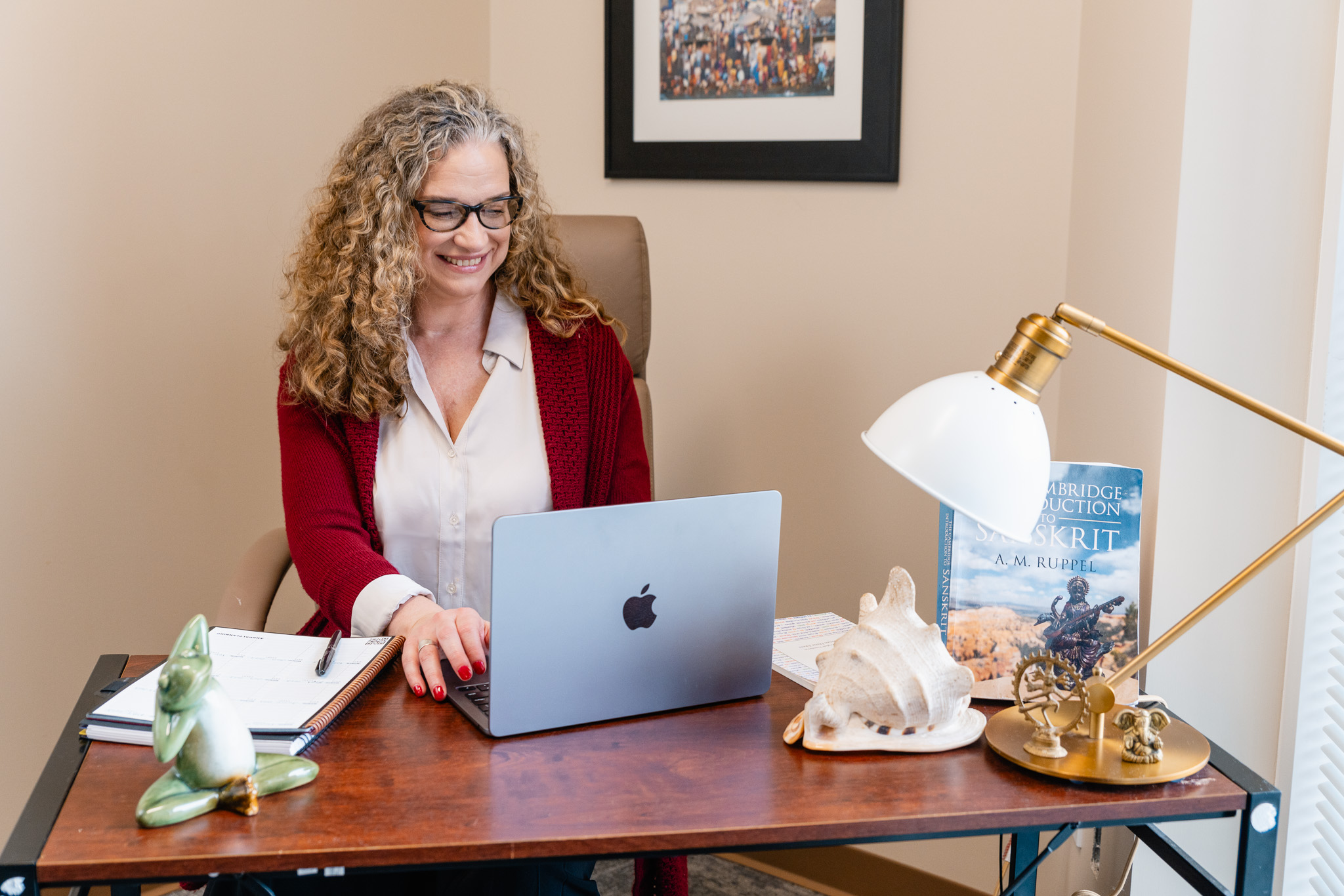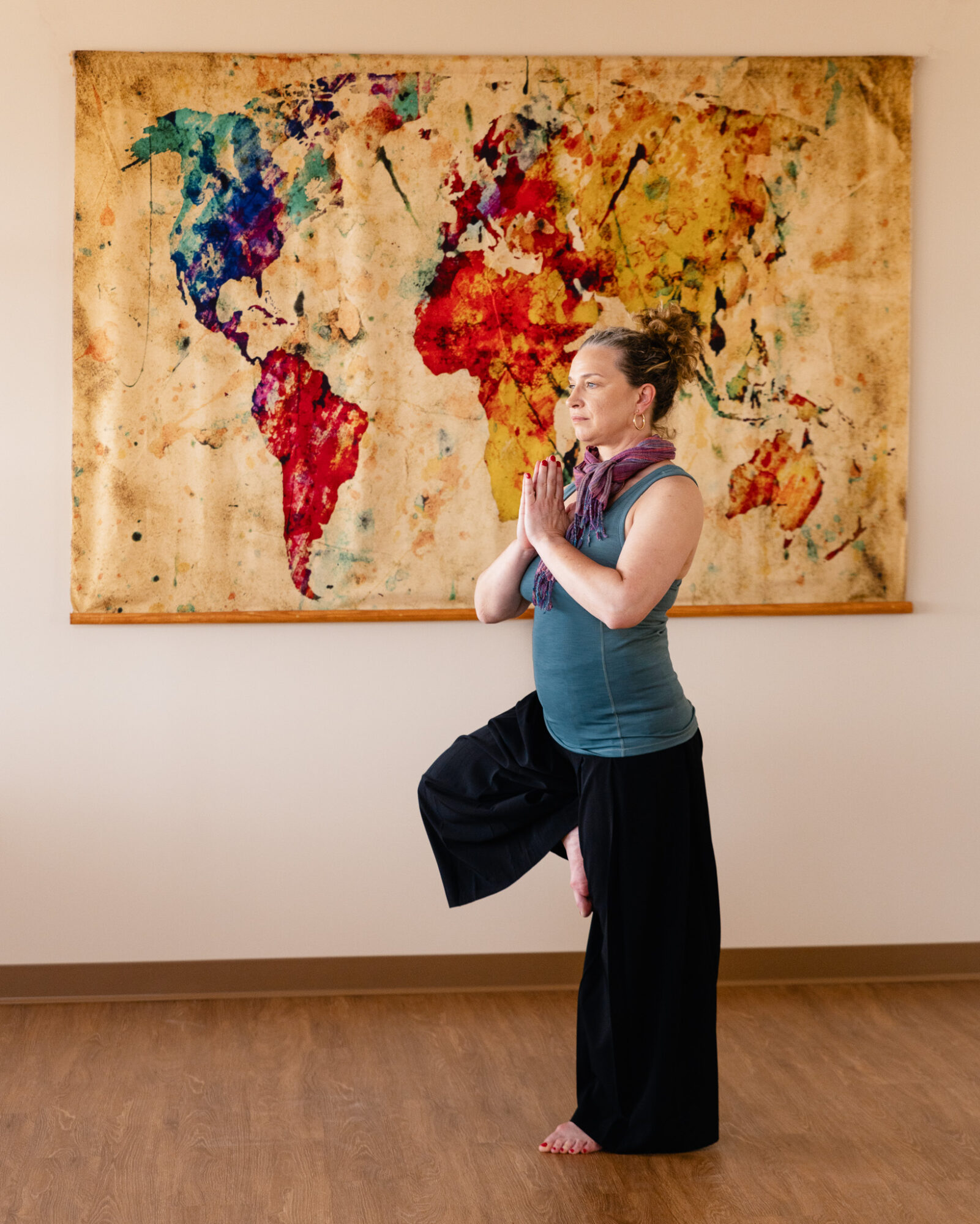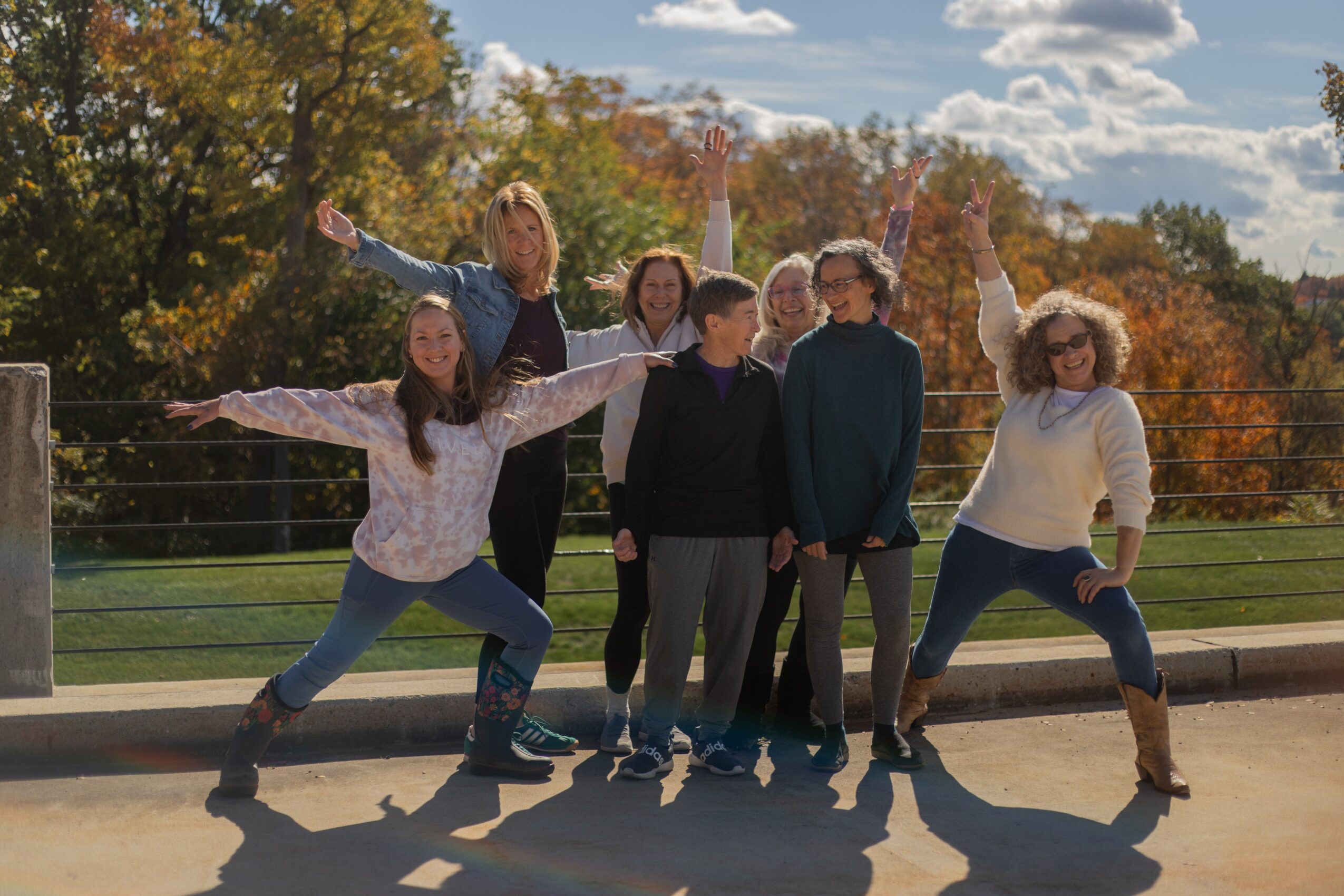



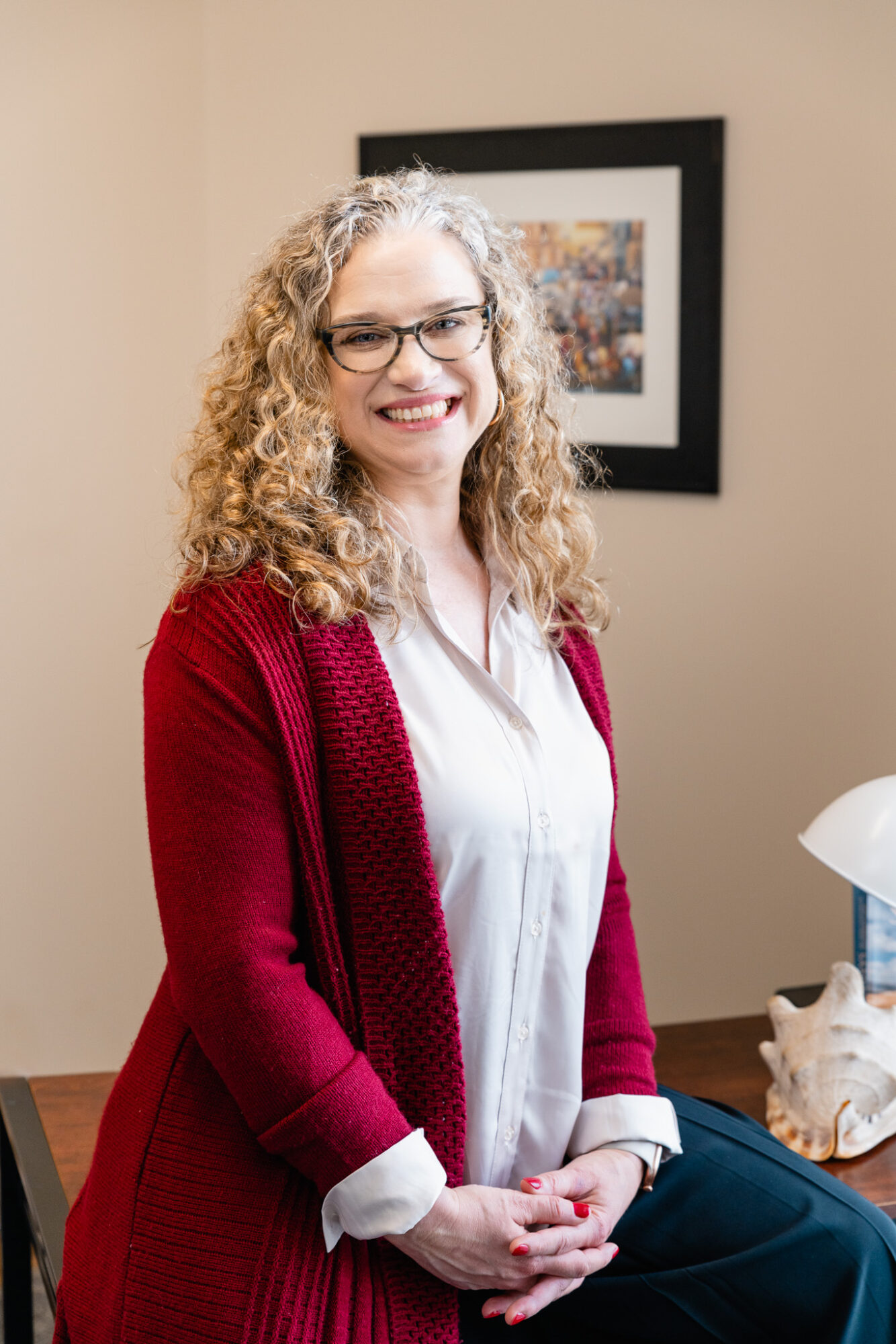
Today we’d like to introduce you to Tina Stroh.
Hi Tina, we’d love for you to start by introducing yourself.
My story with yoga began long before Just Plain Yoga. I first found the practice as a teenager in the 1980s, when yoga was still very far from the mainstream wellness industry it would eventually become.
What began as a personal interest grew into decades of study and exploration. I earned my degree in International Studies and Theatre, traveled extensively, and made three trips to India as well as traveling through Nepal. My first trip through northern India and Nepal was in 1998, and I returned to India in 2000 and 2001 while working on an independent film.
Those experiences were important because they allowed me to see yoga through a much broader cultural lens. My International Studies background encouraged me to look beyond the romanticized Western image of India and become curious about the culture, history and context from which these practices emerged.
At the same time, I was becoming deeply involved in the American yoga community. I trained extensively in several traditions and had opportunities to study with, host and get to know some of the influential teachers who helped shape modern yoga in the United States. I had a front-row seat as yoga went from something relatively uncommon to a booming industry.
It was fascinating, but it also made me question some things.
I wanted to preserve the depth, philosophy and transformative potential of yoga without requiring people to embrace the mysticism, cultural trappings or increasingly polished image that sometimes surrounded it. I wanted yoga to feel accessible to the person who might look at a yoga studio and think, “That’s not for someone like me.”
That was really the seed for Just Plain Yoga.
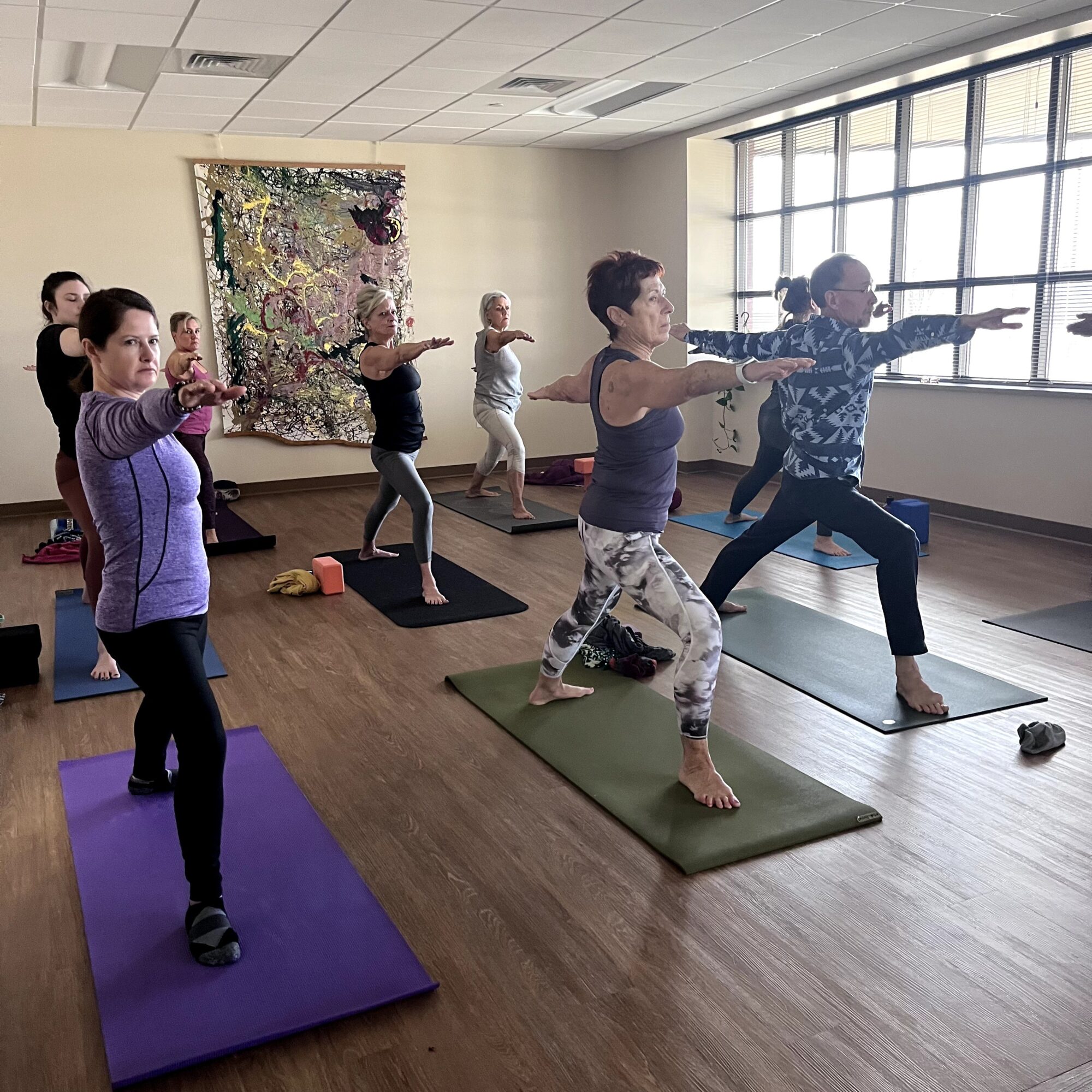
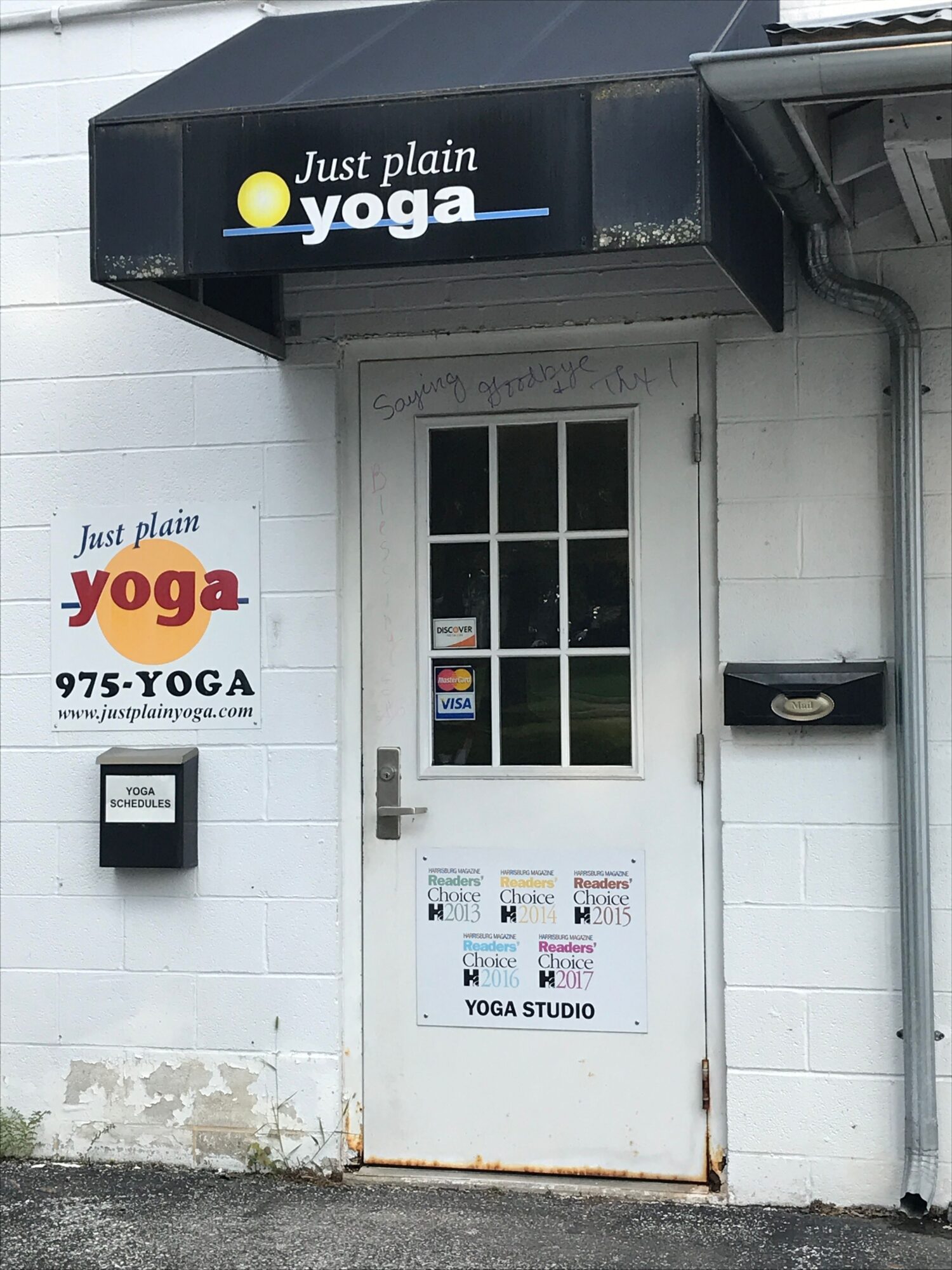
I opened the studio in 2003 with a very simple idea: yoga could be profound without being intimidating. You didn’t have to be flexible. You didn’t have to look a certain way. You didn’t need to know Sanskrit or subscribe to a particular belief system. You could just show up as yourself.
Twenty-three years later, that philosophy is still at the center of what we do.
The business itself has changed enormously. We’ve moved locations, weathered economic downturns, survived a pandemic, embraced livestreaming and on-demand classes, developed workplace wellness programs, trained yoga teachers, partnered with community organizations and continued adapting as both the yoga industry and the needs of our students have changed.
I’ve changed too. After more than four decades with this practice, I’m probably less interested in yoga as an identity than I’ve ever been and more interested in what it can actually do in people’s lives: helping us move, breathe, manage stress, age well, connect with one another and navigate being human.
Today, I see Just Plain Yoga as more than a physical studio. We’re continuing to develop teacher education, workplace wellness and community partnerships while finding new ways to share what we’ve learned beyond our four walls.
Running a small business for 23 years has taught me that longevity isn’t about doing the same thing forever. It’s about knowing what shouldn’t change while being willing to change almost everything else.
For Just Plain Yoga, the part that shouldn’t change has been there from the beginning: Come as you are. We’ll meet you there.
Alright, so let’s dig a little deeper into the story – has it been an easy path overall and if not, what were the challenges you’ve had to overcome?
Smooth would definitely not be the word I would use!
When you’ve owned a business for 23 years, the story of the business inevitably becomes intertwined with the story of your life. Just Plain Yoga has been there through some of the happiest chapters of mine and some of the hardest.
I’ve taught while pregnant, become a mother, gone through a divorce, navigated major personal and professional transitions, and continued running the studio while life was happening around me. There were times when showing up to teach meant setting aside whatever was happening personally and being present for the people who walked through the door that day.
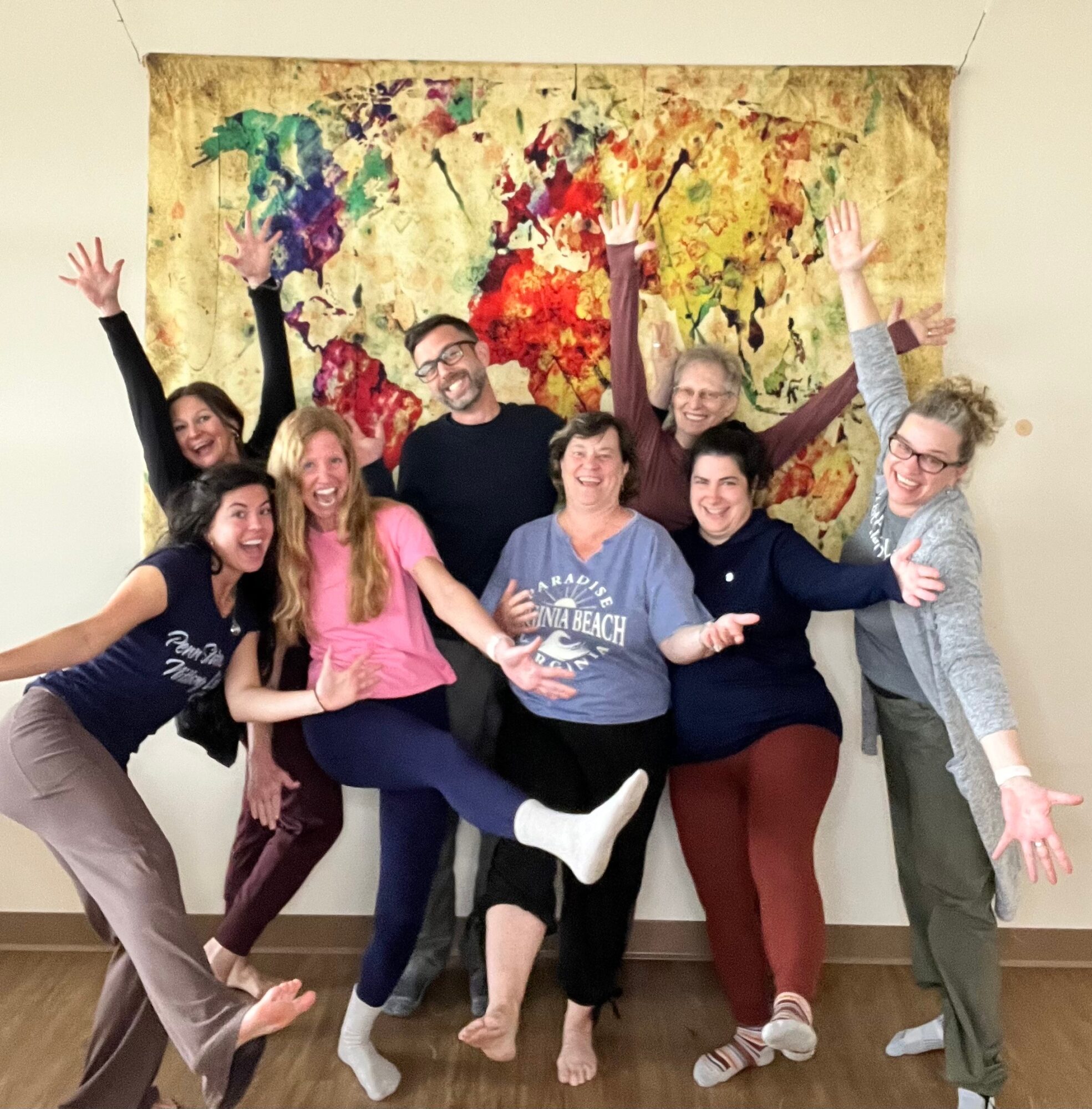
There have also been profound losses within our community. Over the years, students we knew and cared about have passed away, including some to suicide. We’ve lost teachers as well. When you build a community over decades, people aren’t simply names on a class roster. You know their stories. You watch their lives change, they watch yours change, and sometimes you grieve together. Those experiences have shaped my understanding of what a yoga studio can mean to people far beyond exercise.
People have also been one of the greatest joys and greatest challenges of owning the business. I’ve had extraordinary teachers and staff members who have helped shape Just Plain Yoga, some of whom have been part of our community for many years. I’ve also experienced broken trust, difficult interpersonal situations and times when people were going through significant struggles of their own that inevitably affected the workplace.
Those experiences taught me some of my hardest lessons as an owner. Compassion is important, but so are boundaries. Supporting someone doesn’t mean ignoring behavior that is unhealthy for the organization. I’ve had to learn that protecting the larger community sometimes requires making decisions that are personally very difficult.
There have been plenty of upheavals on the business side as well. At one point, decisions by our landlord meant we had to leave a space we had built our business around. Yet almost serendipitously, another space seemed to drop into my lap at exactly the right moment. What initially looked like a crisis became an unexpected opportunity, and ultimately the move was better for the business.
That has happened more than once in this journey. Something I would never have chosen has forced a change I probably wouldn’t have made on my own, only for me to discover later that it moved us forward.
We’ve weathered economic downturns, rising costs, changing consumer habits and enormous changes in the yoga industry. I’ve watched yoga go from something relatively uncommon to a huge commercial industry, followed by boutique fitness, apps, streaming platforms and an endless amount of free wellness content.
And then there was COVID.
For a business built around bringing people together in a room, the pandemic was an existential challenge. We pivoted quickly to virtual classes and eventually developed the hybrid model we still use today. What began as survival ultimately expanded how we were able to serve people.
Through all of this, I’ve had to learn that loving yoga and running a yoga business are two very different things. I’ve had to become a business owner, employer, marketer, problem solver and decision maker, often learning as I went. I’ve made good decisions and bad ones. I’ve learned that not every good idea is a good business idea, that trust needs to be accompanied by accountability, and that sometimes saying no is as important to the health of a business as saying yes.
Perhaps the biggest lesson has been accepting that resilience doesn’t mean things don’t knock you down. Sometimes they absolutely do. It means learning from what happened, getting clearer about what matters, and figuring out what you want to do differently the next time.
After 23 years, I’ve accumulated plenty of lessons I wish someone had shared with me when I started. I’ve learned that compassion needs boundaries, trust needs accountability, revenue matters as much as passion, and not every wonderful idea belongs in your business. I’ve learned to pay attention when something isn’t working, but also not to abandon something meaningful simply because it’s difficult.
I’ve also learned that there is no clean separation between the person and the business when you’re an entrepreneur. Life happens while you’re trying to keep the doors open.
That’s one reason I’m increasingly interested in mentoring other teachers, wellness professionals and small business owners. There is so much emphasis on how to start something and far less conversation about how to sustain it for five, ten or twenty years without losing yourself in the process.
I certainly don’t have all the answers. But after more than two decades of successes, mistakes, losses, pivots and unexpected opportunities, I have a much better understanding of which questions are worth asking.
We’re still here. We’re still evolving. And I think I’m reaching a point where part of that evolution is sharing what I’ve learned with the people coming behind me.
Alright, so let’s switch gears a bit and talk business. What should we know about your work?
My professional life has never followed a straight line, and I’ve worn a lot of hats along the way.
My degree is in International Studies and Theatre, and before Just Plain Yoga became the center of my professional life, I worked across television, theatre, education, film and community programming. I worked for WITF, our local PBS affiliate, in a variety of production roles, both behind the camera and on the production floor. I worked in theatre as an actor and instructor, taught theatre and improvisation to young people, and was involved in educational and community-based arts programming.
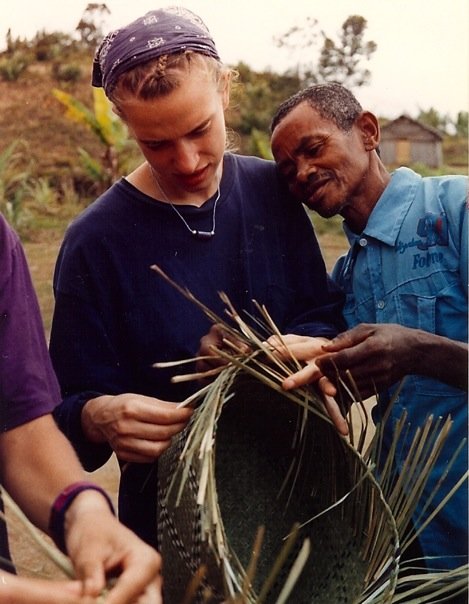
My International Studies background took me in another direction entirely. I traveled extensively and spent time in India and Nepal, including returning to India to work on an independent documentary film project. I also studied in Madagascar, where part of my work involved an independent field study of traditional healing practices.
On paper, those things can look completely unrelated.
Looking back, I don’t think they were.
Theatre taught me how to communicate, improvise, read a room and tell a story. Television and film taught me how many moving pieces have to come together behind the scenes to create something that looks effortless to the audience. International Studies and travel taught me to question my own assumptions and look at ideas within their cultural context. And yoga gave me a place where so many of those interests in people, culture, movement, philosophy and communication could come together.
Eventually, entrepreneurship required all of it.
I founded Just Plain Yoga in 2003, and for the past 23 years I’ve been its director, teacher, teacher trainer, marketer, program developer, problem solver and, depending on the day, whatever else needed to be done. Building an independent business is perhaps the ultimate exercise in wearing many hats.
Throughout that time, I’ve continued to think of teaching as a creative act. Knowing yoga is only part of being a good yoga teacher. You have to understand the people in front of you. You need to communicate clearly, adapt in real time and sometimes abandon what you planned because the room is telling you it needs something different.
That’s also what we emphasize in our teacher training. I’m less interested in producing teachers who can memorize a beautiful sequence than in developing teachers who can think, communicate, adapt and genuinely teach.
What I’m most proud of isn’t any single credential, role or accomplishment. It’s that I’ve managed to weave all of these seemingly unrelated experiences into a body of work that feels distinctly my own.
I’m also reaching an interesting point in my career. After more than four decades with yoga and 23 years running a business, I’m increasingly interested in writing, mentoring and helping other teachers, creatives, wellness professionals and entrepreneurs navigate something I’ve had to figure out largely by doing it: how do you take something you genuinely care about and build a sustainable professional life around it without losing yourself, or the thing you loved, in the process?
I certainly haven’t done everything perfectly. That’s probably part of what I have to offer.
I’ve succeeded, failed, reinvented, started over, changed my mind, learned to set better boundaries and accumulated a tremendous number of lessons along the way.
If there’s something that sets me apart, perhaps it’s that I don’t see creativity, wellness, education and business as separate careers. For me, they’ve all been part of the same one.
What sort of changes are you expecting over the next 5-10 years?
This is a fascinating question for me because I’ve already watched the yoga industry change almost beyond recognition during my career.
When I began practicing as a teenager in the 1980s, yoga was still relatively outside the mainstream. Then came the enormous yoga boom. Studios opened everywhere, teacher trainings proliferated, yoga became fashionable, and eventually it became part of the larger fitness and wellness industry.
Now I think we’re entering another significant period of change.
I don’t believe yoga is going anywhere, but I do think the traditional yoga studio model is going to have to evolve.
Consumers have more choices than ever. They can practice for free on YouTube, subscribe to an app, stream a class, go to a gym, join a boutique fitness concept, work with a personal trainer or create an entire wellness routine without ever entering a yoga studio. Trying to compete by simply offering more classes on a schedule isn’t enough anymore.
Ironically, though, the more digital our lives become, the more I think people are going to value genuine human connection.
That may become one of the greatest strengths of independent studios and wellness businesses. We can’t compete with technology on convenience or price, and I don’t think we should try. What we can provide is relationship, community, personalization and the feeling that someone actually knows who you are when you walk through the door.
At the same time, technology isn’t the enemy. We learned that very quickly during COVID. Livestreaming, on-demand content and other digital tools can make wellness dramatically more accessible. I think the future is less about choosing between in-person and virtual and more about understanding what each does well.
I also think we’re going to see yoga become less isolated as its own category and more integrated into a broader wellness conversation. People may not necessarily be looking for “yoga.” They’re looking for help with stress, mobility, strength, sleep, healthy aging, mental well-being and connection. Yoga can address many of those needs, but we have to become better at communicating that without expecting the consumer to already understand the language of yoga.
Workplace wellness is another area where I see significant opportunity. Employers are increasingly dealing with stress, sedentary work, employee well-being and the challenge of creating healthier workplace cultures. Yoga teachers and wellness professionals who understand how to translate what they do into practical programs for organizations will have opportunities far beyond the traditional studio.
I think teacher education will need to change as well. The industry produced an enormous number of yoga teachers during the boom years. Going forward, simply collecting a certification won’t be enough. Teachers will need stronger skills in communication, adaptation, professionalism and understanding the populations they serve. They may also need to think much more entrepreneurially about how they build sustainable careers.
And I think that last point applies to wellness professionals generally.
Passion is wonderful, but passion isn’t a business model.
One of the conversations I’d like to see our industry have more openly over the next decade is about sustainability, and I don’t only mean environmental sustainability. How do teachers make a living? How do independent studios remain financially viable? How do we compensate people fairly while keeping services accessible? How do business owners establish boundaries so they don’t burn themselves out trying to create wellness for everyone else?
After 23 years in business, those questions interest me much more than predicting which style of yoga will be popular next.
I suspect the wellness businesses that thrive over the next five to ten years won’t necessarily be the ones chasing every trend. They’ll be the ones that understand what technology can replace and, more importantly, what it can’t.
Technology can deliver a yoga class.
It can’t fully replace being known, belonging to a community, having a skilled teacher notice what you need, or walking into a room and realizing someone is genuinely glad you came.
I think the future of wellness will require both innovation and a return to some very human basics.
Pricing:
- New Student Intro Offer: Special introductory unlimited yoga offer available for new students. Visit our website for current pricing and details.
- 200-Hour Yoga Teacher Training: Multiple tuition options are available, including early enrollment and payment plans.
- Corporate & Workplace Wellness: Customized in-person and virtual wellness programs are available for businesses and organizations. Contact us to discuss options and current pricing.
- Professional Mentorship: Tina offers limited mentorship for yoga teachers, wellness professionals, creatives and small business owners seeking practical guidance on building and sustaining their work. Contact us to inquire.
Contact Info:
- Website: https://www.justplainyoga.com
- Instagram: @justplainyoga
- Facebook: @justplainyoga
- LinkedIn: https://www.linkedin.com/company/5962022/admin/dashboard/
- Twitter: @justplainyoga
- Other: https://www.linkedin.com/in/tina-m-stroh-36736541/