


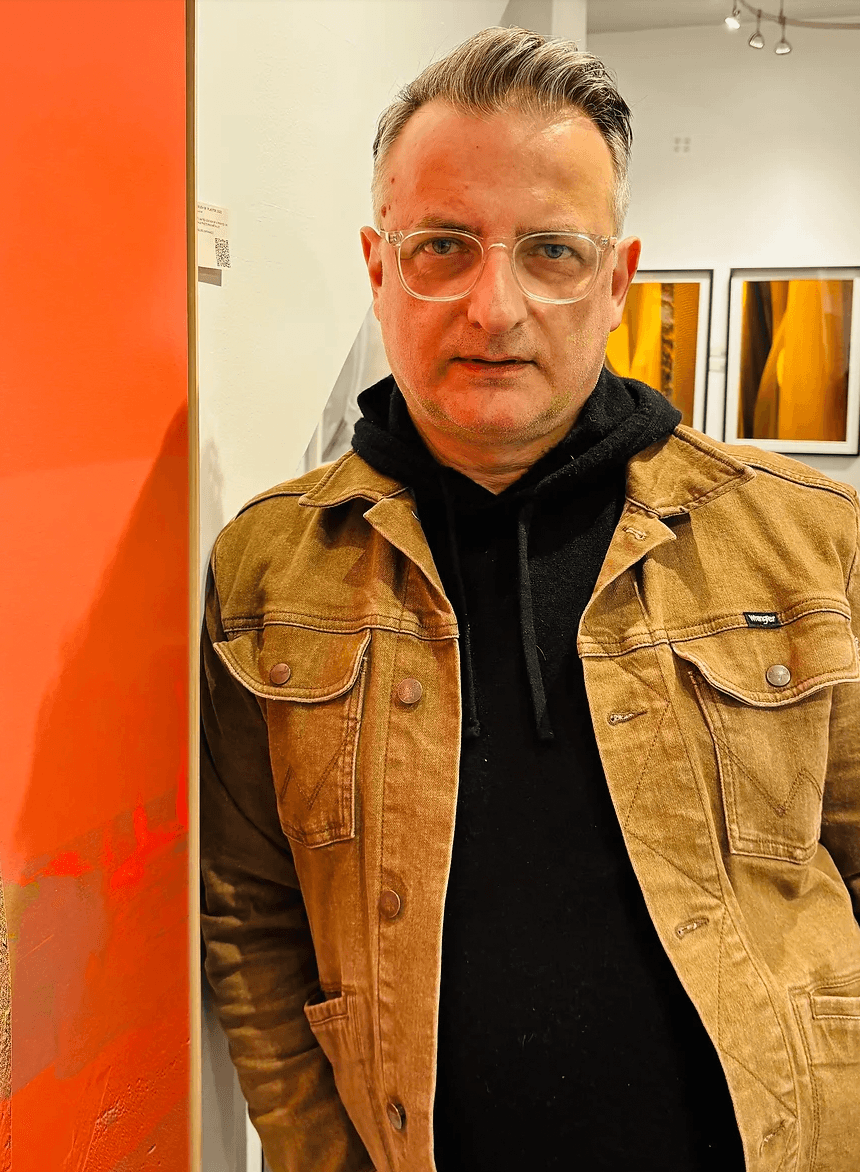
Today we’d like to introduce you to Michele.
Alright, so thank you so much for sharing your story and insight with our readers. To kick things off, can you tell us a bit about how you got started?
Tallmadge Avenue is a real street in Chatham, New Jersey. My wife grew up on it. That’s the whole beginning, not a concept, not a mood board, a street a kid walked home on.
The business started the way most of these start, which is to say by accident and then slightly out of hand. We were buying for our own house on the Philadelphia Main Line. Estate sales around the Brandywine Valley, the shows, Saturdays that began before light. We weren’t shopping for a look. We’d walk through a house where somebody had lived an entire life, and there would be a brass lamp, or a hunt-scene teapot, or a small painted box that clearly wasn’t meant for everyday things, and you could tell it had been kept on purpose for fifty years. That’s the part that got us. Not the object. The keeping.
Eventually we had more than one house could hold, so we started selling. And then the thing happened that actually made this a business rather than a hobby with a shipping problem.
Nobody was buying the object. A woman wrote to us about a set of glasses because her father drank out of the same ones. Someone bought a porcelain spaniel and told us, unprompted, about a dog that died in 1989. We had priced a lamp; they were buying an afternoon. Once you see that clearly, you can’t keep running the business the other way, as inventory, as square footage, as a feed of nice things on white backgrounds.
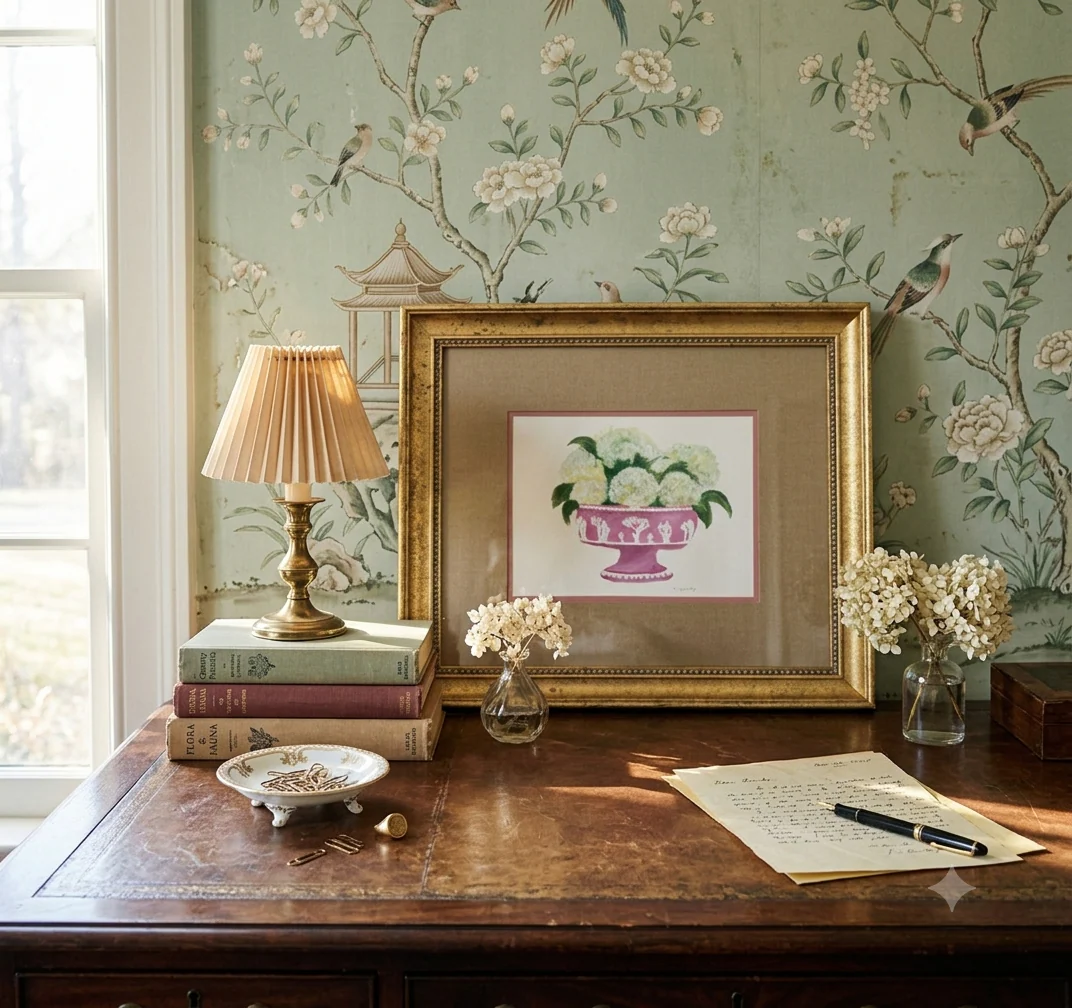
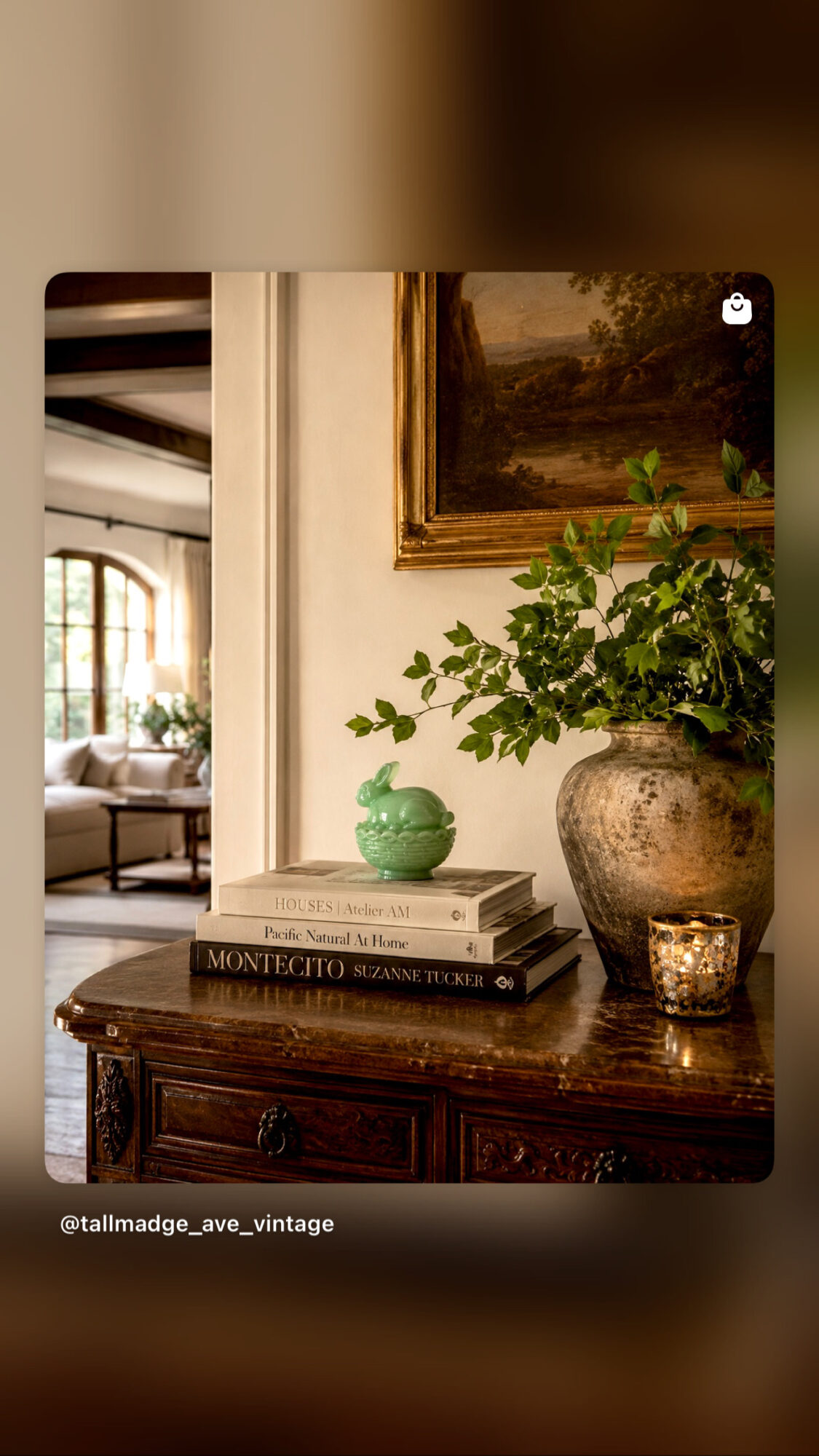
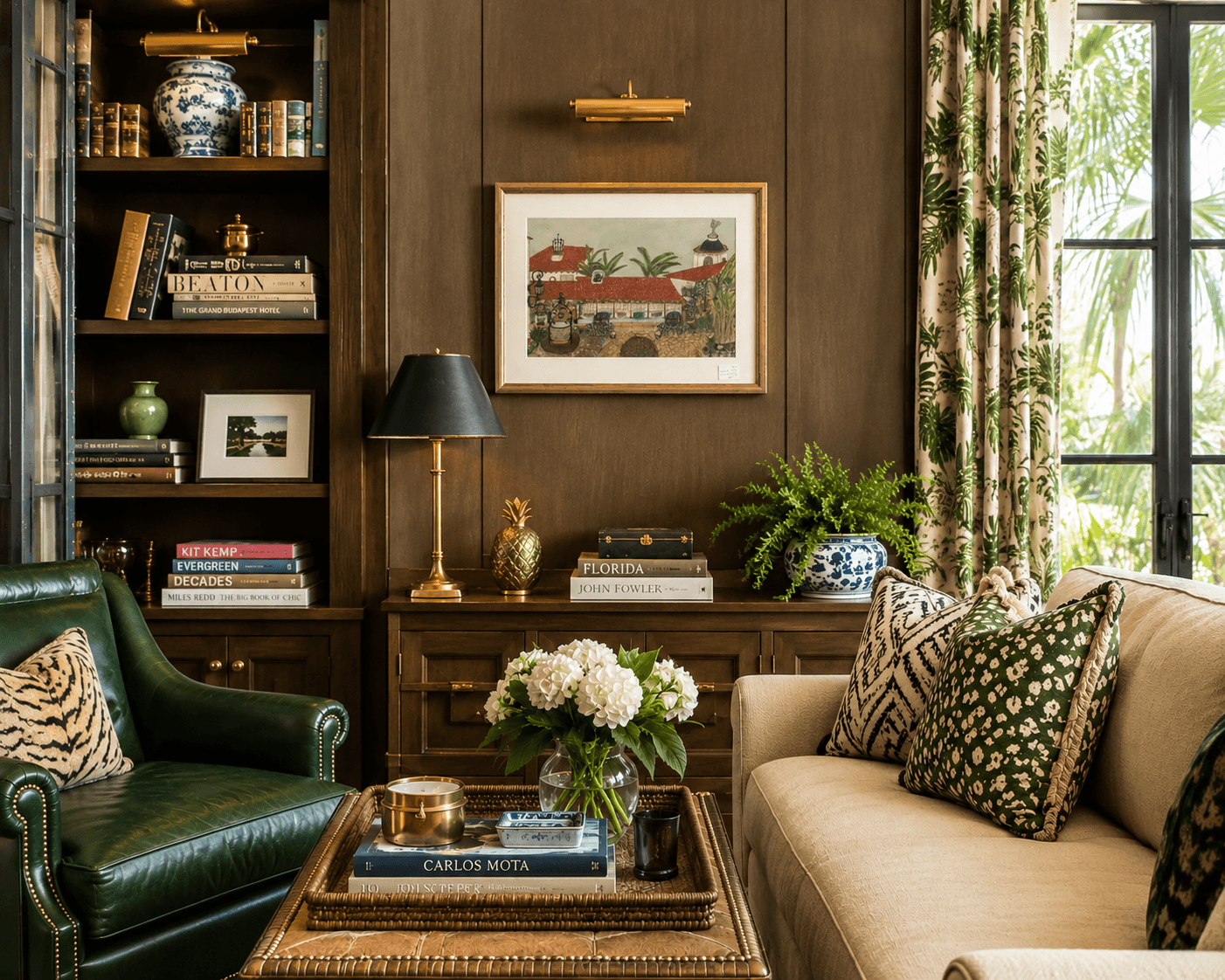
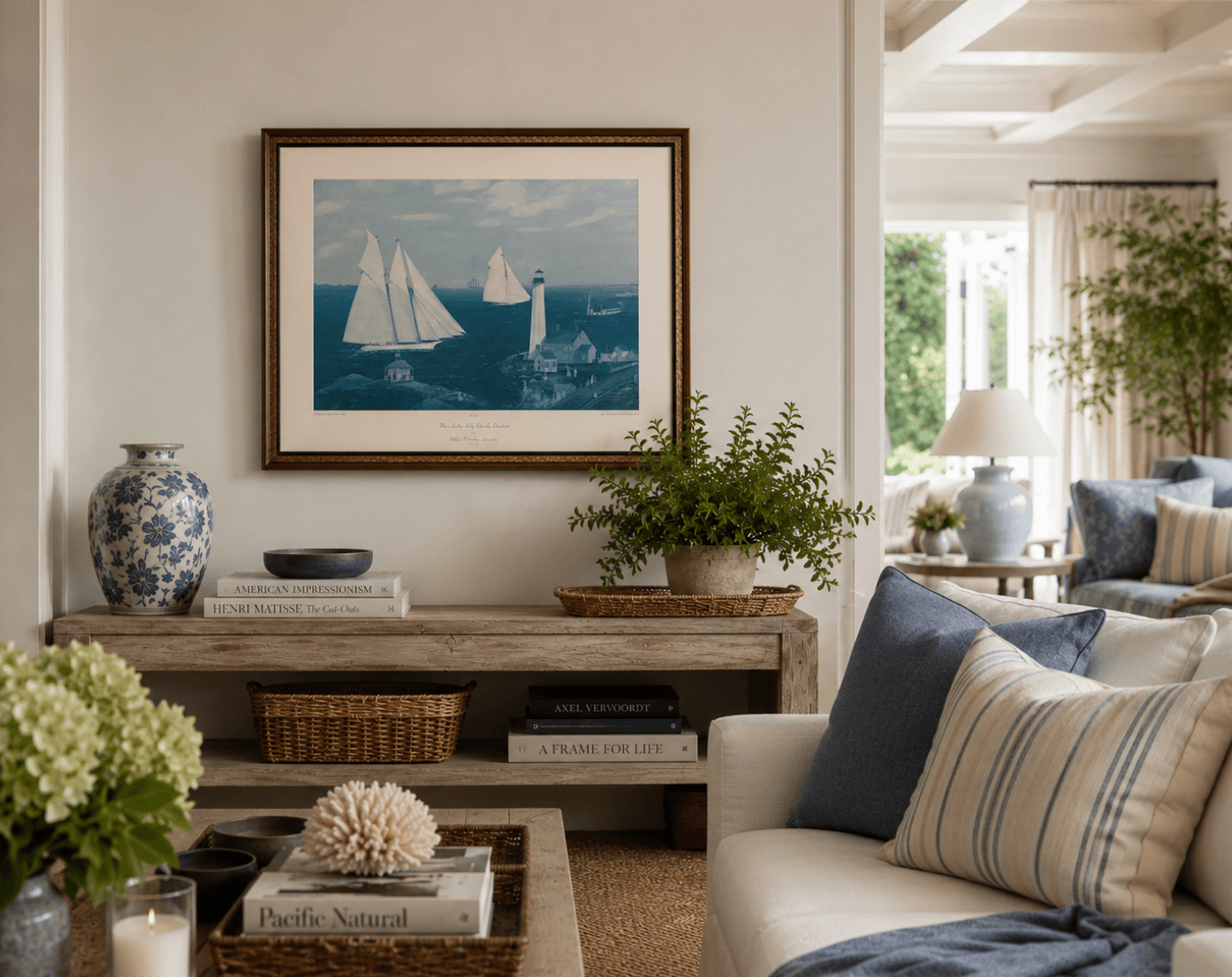
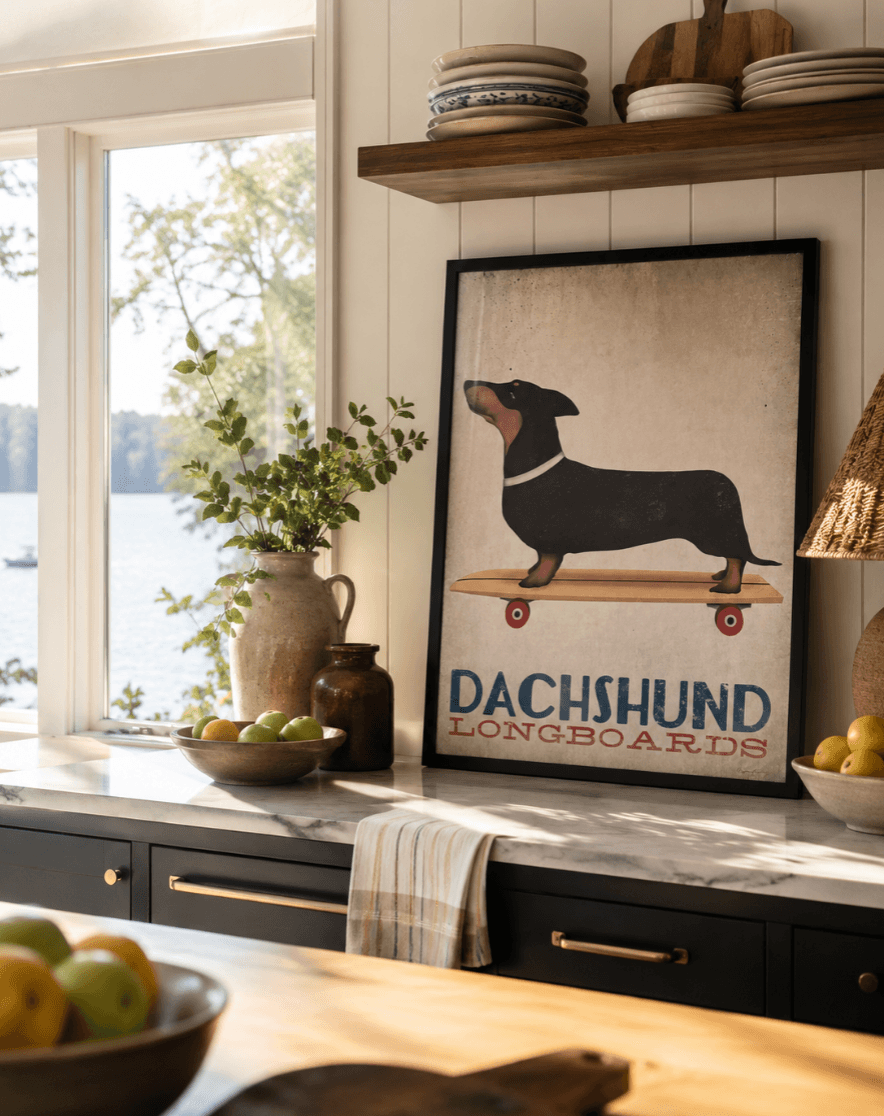
So it reorganized around that. We stopped describing objects and started writing what they might have been used for. A tea duo that could have poured a thousand Sunday cups, maybe by a window, maybe after a ride. We stopped shooting on white and photographed everything in our own rooms, in the house we actually live in, with the dogs in frame more often than is strictly professional. That turned out to matter more than we expected. The inventory is one of one, it comes and goes, but the house stays, and the house is what people come back for.
The through line, if there is one: a home shouldn’t feel purchased. It should feel assembled slowly. An object that has already survived eighty years carries something a new one can’t fake, proof that it was worth keeping. That history isn’t a flaw we disclose at the bottom of the listing. It’s the entire value. And we’ve always thought of the customer as a steward rather than a shopper. You’re not buying up. You’re taking something into your care that was cared for before you.
Today it’s an online shop, a journal we write, the shows, and the Circle, a small invitation-only group we host at the house, where the point is dinner and conversation rather than a transaction. We’re beginning to work with designers who want rooms that don’t look ordered. Some weeks it’s a real business and some weeks it’s two people in a van on Route 30 arguing about whether a chair fits, and we haven’t entirely resolved which one it’s supposed to be.
What hasn’t changed is the promise in the name. There is a real Tallmadge Avenue, and you can drive to it. The one we’re actually selling you can’t drive to. You assemble your way there, one object at a time, until a room finally feels like a place you’ve been homesick for without being able to name it.
I’m sure it wasn’t obstacle-free, but would you say the journey has been fairly smooth so far?
No, and the hard parts weren’t the ones we expected. We assumed the difficulty would be finding things. Finding things is the pleasure. Everything after that is the work.
The structural problem is that every object we sell is one of one. In an ordinary shop you learn what people want and order more of it. We can’t. When something works, when a piece sells in a day and three people write asking if we have another, the honest answer is no, and there will never be another. Every object is its own small launch: its own photographs, its own description, its own search for the one person it belongs to. Then it leaves and we start again from nothing. It took us longer than it should have to stop treating that as a problem to be solved and start building the business around it.
The second thing we learned slowly is that taste isn’t a business. We had rooms full of things we loved, photographed well, and people came and looked and left. You can do the beautiful part correctly and still make it quietly difficult for someone to buy, a popup asking for a phone number before they’ve seen a single object, a shipping cost that appears only at the very end, a homepage showing a mood instead of the things that are actually for sale. None of that is interesting to fix. Most of the last year has been uninteresting fixing, and it’s the part that moved the numbers.
Then there’s the physical reality, which nobody warns you about. Much of what we sell is old, heavy, and breakable. The shipping system was not designed with a hundred-year-old lamp in mind. We’ve become people who have opinions about foam.
The one that stung most was about writing, which is supposed to be the thing we’re good at. We were writing too hard. Every caption engineered to land, every sentence carrying weight, no line allowed to be ordinary. It reads as effort, and effort reads as manufactured, and manufactured is the exact opposite of what we’re selling. A home assembled slowly can’t be described by someone visibly working that hard. So now some of what we post is just typed. “Chelsea Flea first.” That’s a whole post. It was a real correction and it cost us some vanity to make it.
None of it is solved. We’re two people with a van and a house full of other people’s things, and some weeks the arithmetic is uncomfortable. But we know what we’re building now, which we didn’t at the start.
We’ve been impressed with Tallmadge Ave, but for folks who might not be as familiar, what can you share with them about what you do and what sets you apart from others?
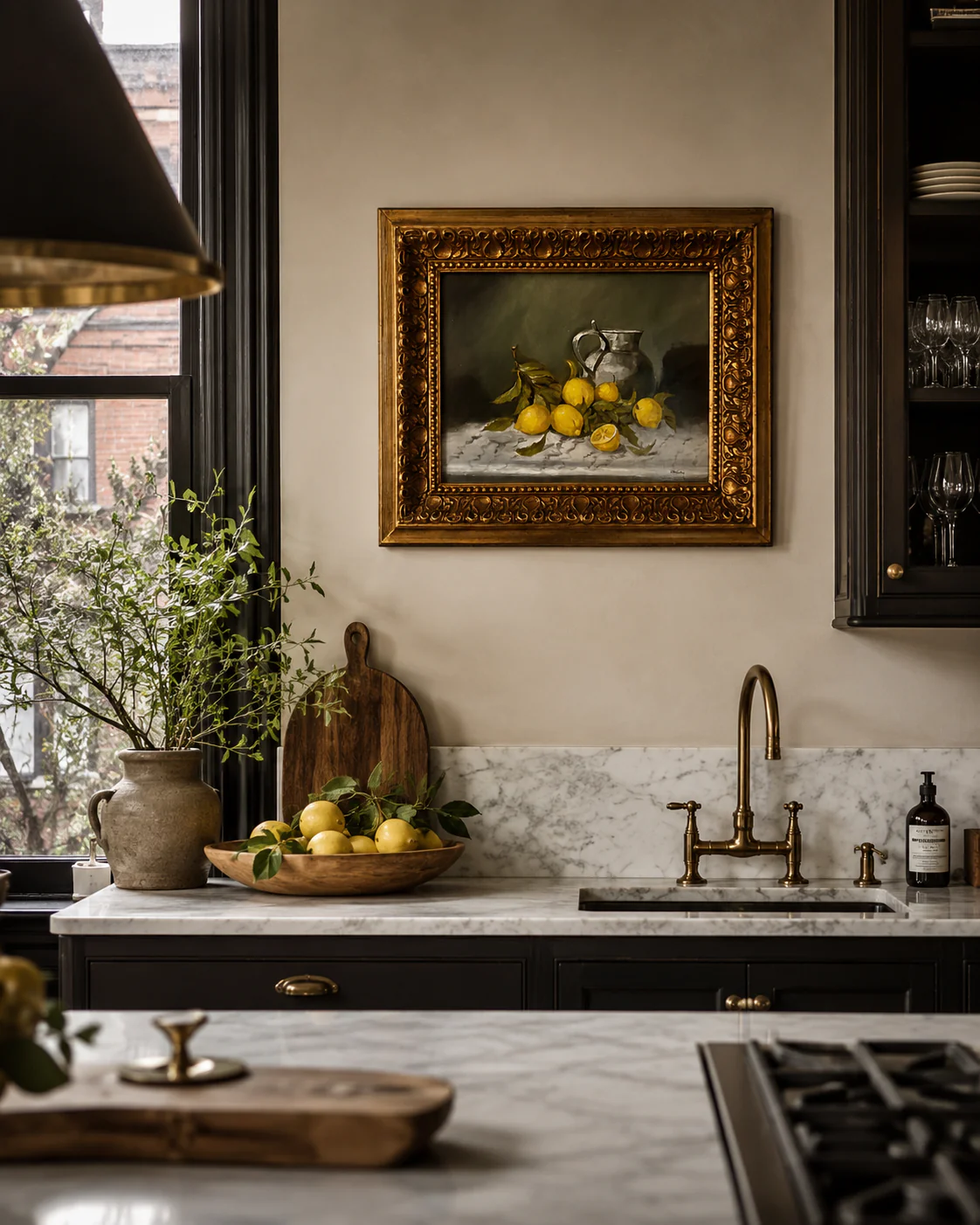
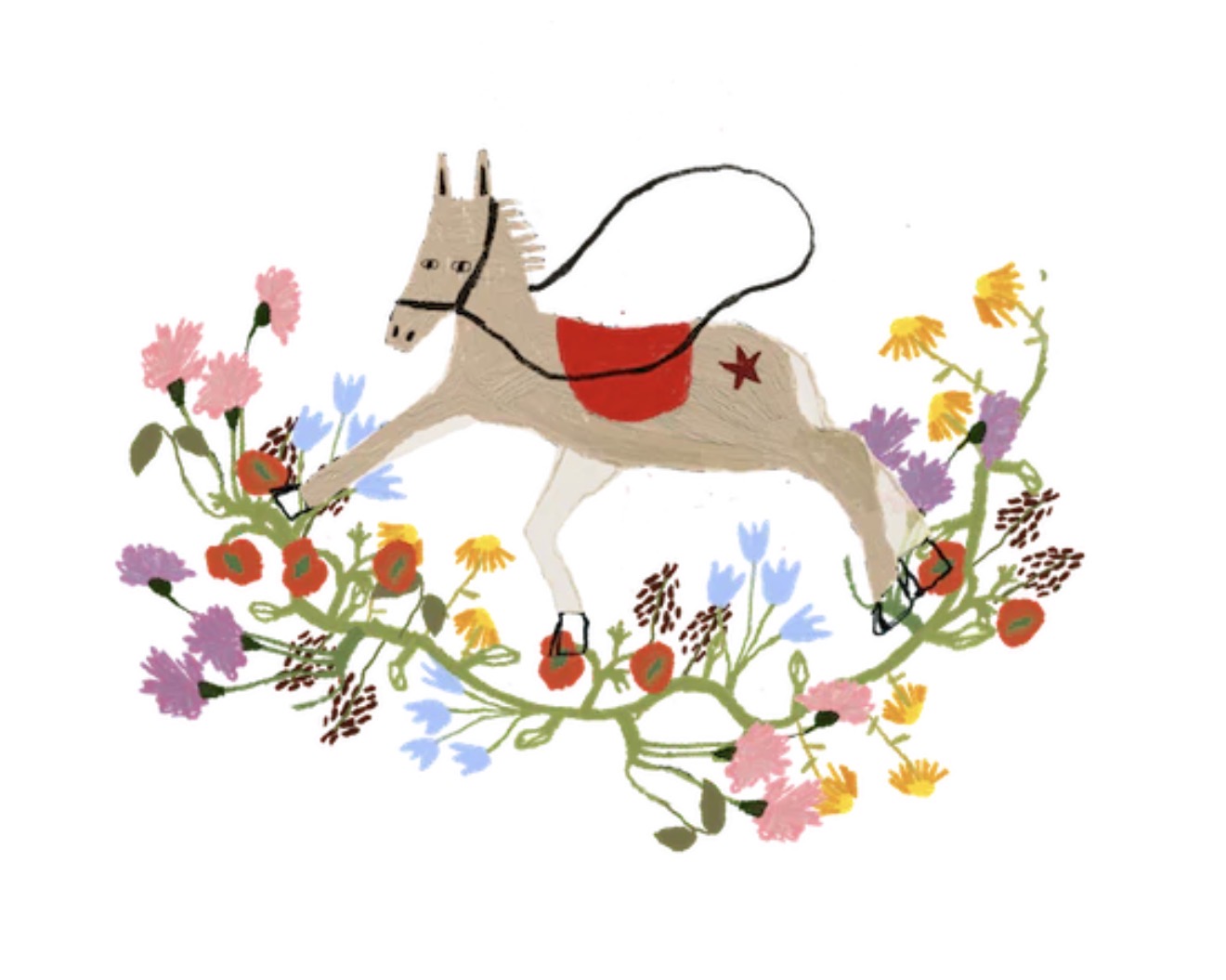
Tallmadge Ave is a vintage art and furnishings business. Paintings mostly, small oils and watercolors, animals and landscapes and the occasional dog portrait nobody remembers commissioning, along with lamps, brass, hunt-scene china, painted boxes, the things that fill in the corners of a room. We find them at estate sales and shows around the Brandywine Valley and up and down the Pike, and everything passes through our own house before it goes anywhere else.
If we’re known for anything, it’s the paintings and the dogs. The small animal watercolors move faster than anything else we carry, by a margin we’ve stopped trying to explain. Somebody sat down and painted a rabbit in a garden in 1974, reasonably well, and it hung in a house for fifty years, and now it’s the thing three people email us about in a morning. We’ve learned to trust that more than our own theories about what people want.
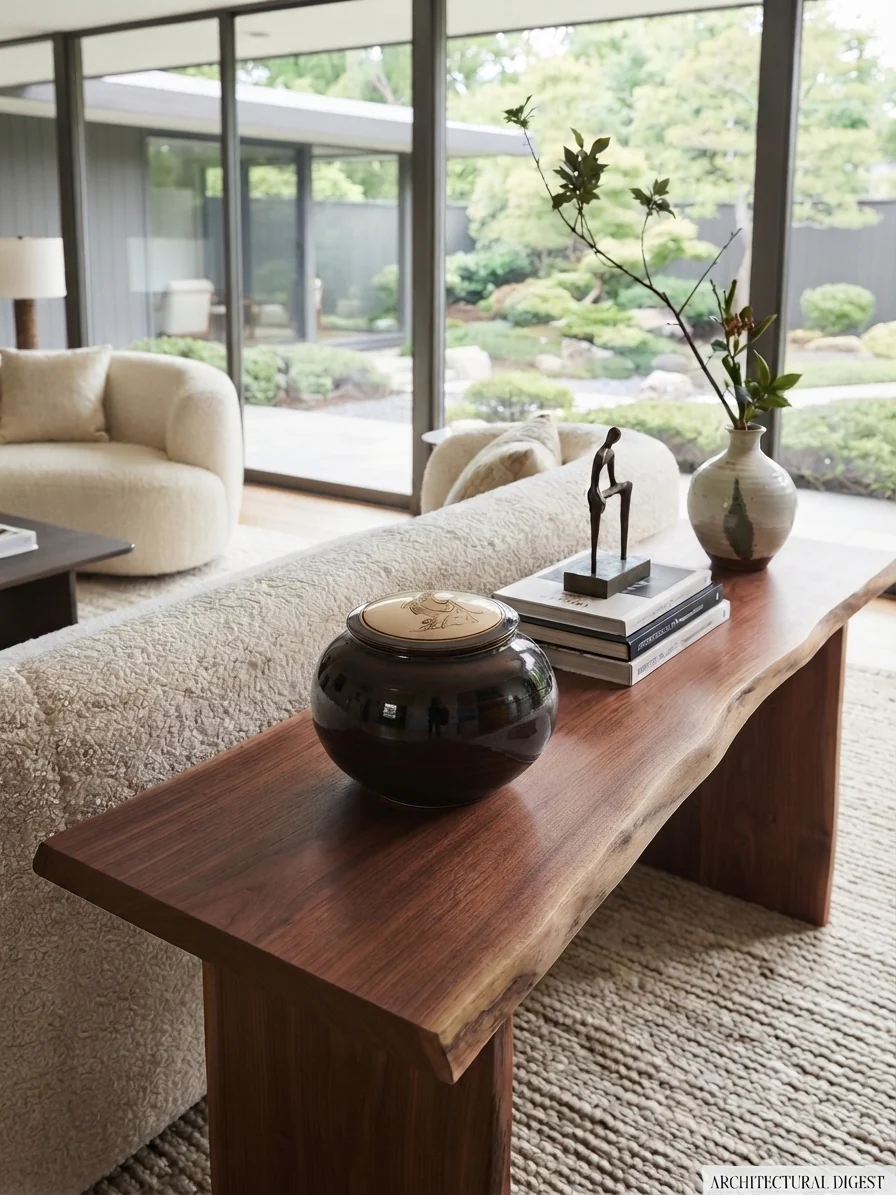
What sets us apart, if anything does, is that we don’t shoot on white. Every object is photographed in our rooms, the spot by the door, the den, the kitchen table, with the dogs in frame more often than is strictly professional. The inventory is one of one and turns over constantly. The house doesn’t. That turned out to be the real asset: people come back for the rooms and leave with an object.
We also don’t write specifications. A tea duo isn’t 4 inches, ceramic, excellent condition. It’s something that could have poured a thousand Sunday cups, maybe by a window, maybe after a ride. We’re not describing the thing. We’re describing what the thing unlocks, which is the part somebody is actually paying for.
The frame we hold to is inheritance rather than luxury. Nobody buying from us is buying up. They’re taking something into their care that was cared for before them, an object that already survived eighty years and carries proof it was worth keeping. That history isn’t a flaw we disclose at the bottom of the listing. It’s the entire value.
Brand-wise, the thing we’re proudest of is a negative. We have never run a countdown, never written “almost gone,” never manufactured a reason to hurry. You cannot tell someone a home should be assembled slowly and then start a clock. When a piece has been with us a while, it isn’t marked down, it’s still waiting for the person it belongs to. Holding that line has cost us sales we could have had, and it’s the single decision that keeps the whole thing coherent.
The other thing we’re proud of doesn’t show up in any metric. People write to us. About their fathers, about a set of glasses, about a dog that died in 1989. We didn’t build a business expecting correspondence.
Beyond the shop there’s the Circle, a small invitation-only group we gather at the house, where the point is dinner and conversation rather than a transaction. We work with designers who want rooms that don’t look ordered. And one line on the site does most of the filtering for us: if it reminds you of something you can’t quite name, it’s meant for you.
Do you have recommendations for books, apps, blogs, etc?
Not the ones you’d expect from someone running a shop. I don’t read business books, and I’ve never gotten anything usable out of a marketing podcast. What actually shaped how we work is a novelist and an industrialist, neither of whom sold anything resembling what we sell.
Naipaul is the one I go back to. Miguel Street, A Bend in the River. He’s the benchmark for compression, a whole life in a sentence, and then he stops. Everything I write for Tallmadge Ave gets edited toward him and falls short, but the falling short is useful. That discipline of asking whether a sentence has earned its place is most of what separates our copy from every other vintage shop’s copy, and it’s the first thing to go when I’m tired.
The other is Adriano Olivetti, which is a very Italian answer. He ran a typewriter company in the 1950s and believed a business owed something to the people inside it, and that this was not in conflict with making money, so he built libraries and housing and paid for them out of a company that competed successfully with IBM. In a much smaller way it’s the question we’re asking here: can something be run at human speed and still work? We don’t have a complete answer yet.
The closest thing we have to a case study is Ralph Lauren. Not the clothes. The fact that he began with no provenance at all and invented an entire world people wanted to live inside, then never once explained it. He showed a dog asleep on a worn sofa and let you do the rest. We have the opposite problem, nothing but provenance and no world, but watching how the world got built is instructive.
Practically, Pinterest has taught us more than any analytics dashboard. Not as a place to post. As a read on which rooms people actually want to live in, which is rarely the room they say they want.
And the real resource isn’t a resource. It’s other people’s houses. An estate sale is a life laid out on tables in the order someone happened to leave it, and if you go to enough of them you start to understand what people keep, and why, and what it costs them to let it go. No book taught me that.
Pricing:
- Most objects, brass, boxes, plates, candlesticks, the things that fill in the corners of a room, fall between $15 and $50.
- Original paintings and watercolors run from about $120 to $550, with most between $150 and $275.
- Framed prints, needlepoint, and small pictures, roughly $40 to $175.
- Gift cards from $10.
- We don’t run sales, discount codes, or countdowns. A piece that’s been with us a while isn’t marked down, it’s still waiting for the person it belongs to.
Contact Info:
- Website: https://tallmadgeave.com
- Instagram: http://instagram.com/tallmadge_ave_vintage
- Facebook: https://www.facebook.com/tallmadgeavevintage/