


Today we’d like to introduce you to Nicole Sincavage.
Hi Nicole, we’d love for you to start by introducing yourself.
I have always tried to see how one thing could fit in with another. How could this– benefit from that? Instead of following the ‘rules’ of society, I chose to live outside of my comfort zone, with a blend of my own interests involved. I was often told that I was “doing too much”. And I don’t know, maybe going to college for Chemistry, modeling, serving at night, selling marijuana on the side, and learning to have an avid social life, finally coming out of my shyness shell as a fresh 21-year-old, was too much for someone to take on all at once. I still believe that people that say you’re “doing too much” don’t see ambition the way you do. I saw the world as big, beautiful, and full of potential for myself to grasp in an avenue of different ways.
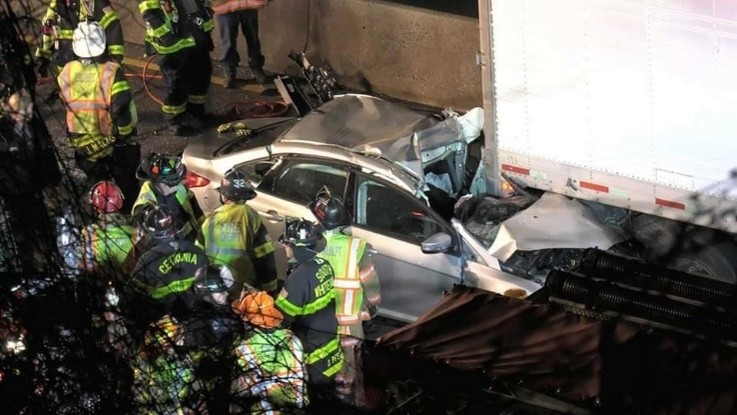
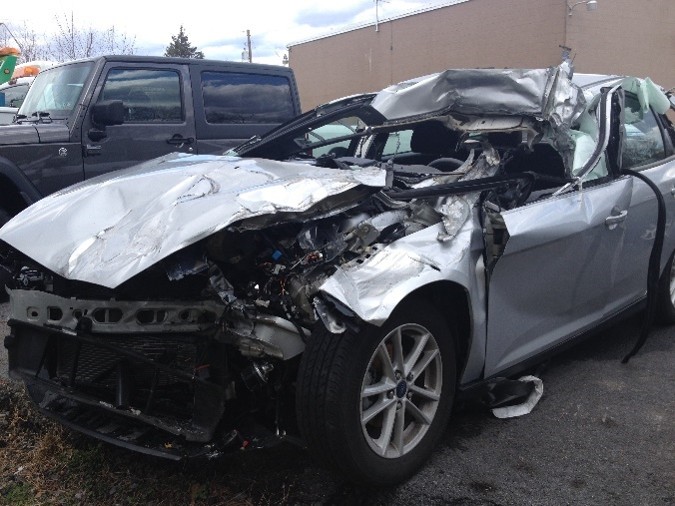
Until one day, the only thing I wanted to grasp was life itself. My intentional living faced the biggest challenge ever. On the evening of March 24th, 2016, my life took a turn for the worst. I landed underneath a tractor trailer on Route 22 in Allentown, PA. I can’t explain exactly what happened from memory, because there is no real memory of it. My brain successfully eliminated that event from ever coming up into my thought process. I’ve placed together a story based on the facts that I do know. I know it was a night like any other. I was working at Carrabba’s on Cedar Crest Boulevard, and I was scheduled to close that evening. I know that my coworker had gotten out earlier than I had and stopped at the liquor store for me as a favor because I wouldn’t have made it there on time. He got two bottles of my favorite wine as a new twenty-one year old, Apothic Red Blend. I had planned to have a few friends come over to my mom’s house that evening to hangout and drink. Those friends waited a long while, but I never showed. They texted and called, I never answered. I know that I had gotten into an argument with the coworker that did the wine bottle favor for me based on the messages in my phone around that time. My best guess was the accident was a result of distracted driving from this argument. A regretful estimate. A guess that I spent many years dwelling over. It’s embarrassing to admit that I could’ve prevented this. I could’ve not been texting and driving that night. I could’ve noticed the traffic building up because of construction. I could’ve prevented the damage caused to the tractor trailer, myself, and my vehicle. I didn’t. Although, I also didn’t cause harm to any other human being. Which I admit with full, heartfelt gratitude.
Every day after that dreadful night was a battle for my physical body to heal for the next three years. My cognitive side, on the other hand, is an ongoing healing journey.
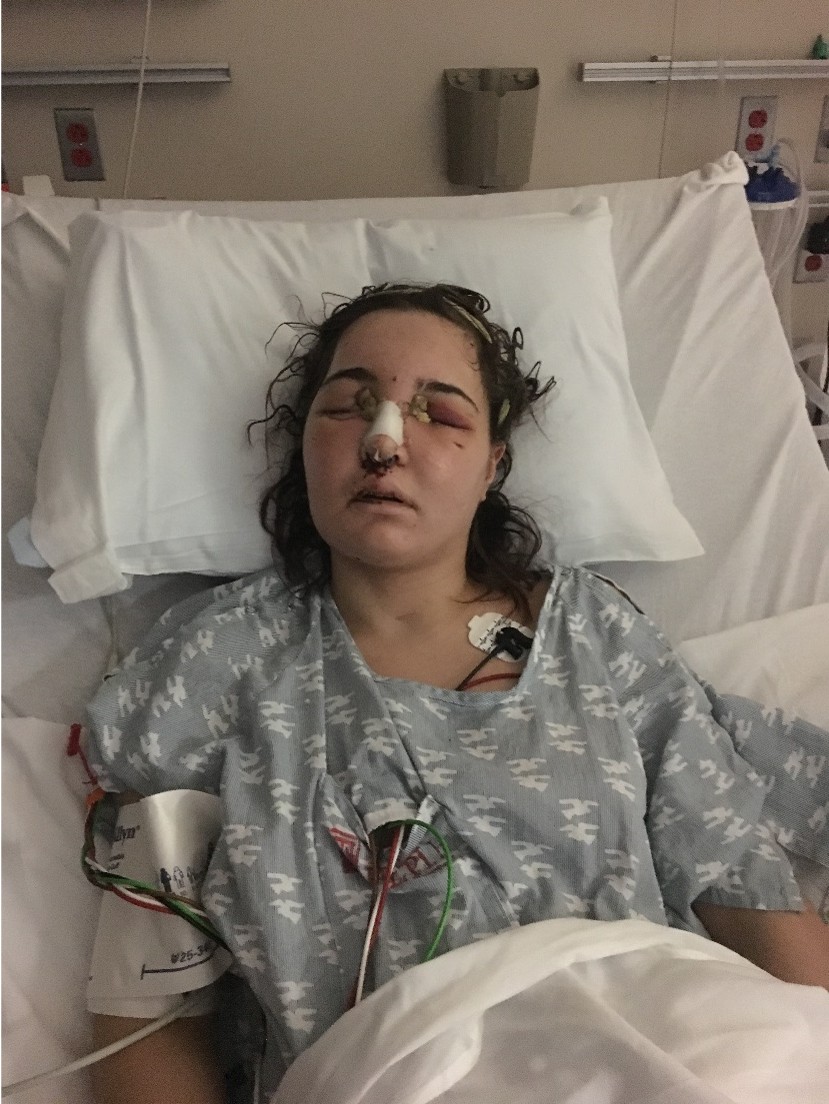
I broke every single bone in my face, had bleeding in my brain, broke my jaw, and shattered my elbow.
Yes, every bone in my face!
I still can’t fully believe those five words no matter how many times I say them out loud or write them down. It’s too surreal to hold place as a reality. The life I once knew as an ambitious, young, modeling chemist, was over. I now had to find myself again… whoever that even was.
I was put into what they call an induced coma following my injuries, which is a state of unconsciousness brought on by a controlled dose of an anesthetic drug. People often ask me what it was like to be in a coma, and I never know how to respond because it’s not like I have any recollection of the experience. They say they imagine it’s like you’re in a dream, or they ask if I “saw death”. To be honest, it’s just lost time. You wake up extremely confused and flustered, but I have no memory of that either. I know what my father explained about the experience of waking up to be.
Does anyone know of the famous Drew Barrymore and Adam Sandler 90s rom com ’50 First Dates’? The moments after being taken out of my coma were comparable to Lucy’s condition in the movie. As per my dad’s description, I would wake up in pure panic and adrenaline, ripping at the IV’s and monitors attached to me. My dad would calmly explain to me that I was in an accident, that I was severely injured and that I was going to be ok, and I would fall back into the sleepy wave of coma drugs coming out of my body. Then 15 minutes would pass, and the process would repeat until eventually the induced coma was essentially ‘removed’ from my system.
The first thing I do remember when coming out of the fog that lasted another week or so, was a card written by a former high school teacher and signed by all his students at the time. It was a simple get-well card, with a few well wishes from strangers, but, something about this card reached me in a profound way. It was the beginning of trying to understand the complexity of the tragedy.
It was beyond confusion. Anything other than the feeling of pain was too complex for my brain to handle. Feelings of comprehension were obsolete at this point. It was the first thing I had to emotionally process, and it was the most intricate part of this entire experience to have to do.
I recall looking around my hospital room at all the stuffed animals, cards, get well balloons, trying to comprehend how severe this whole thing was while at the same time trying to understand how to write, walk, and drink from a straw as my new normal of life. I never thought I would have to re-learn how to drink liquids. The first attempt at doing so again was in fact a complete anxiety-induced-fail ending in vomit everywhere. They take you down on your little hospital bed buggy to what seems like a waiting room from hell. What’s an hour feels like a day. I was so terrified I wasn’t going to be able to know how to do it again. Like, what if I just forgot forever how to drink? What if they had to put in a permanent stomach feeding tube? Is that even a thing?
My jaw was wired shut and I had been given meals through a tube in my stomach for the past four weeks. And at that moment, I had at least five doctors hovering over me telling me to take a sip from the apple juice, so things got a little anxiety provoking. I started questioning everything I knew, naturally. But that wasn’t much at the time due to brain injury induced fog. I got frustrated and overwhelmed with emotion then panicked to the point of puke.
After I returned home from the hospital, the only things on my schedule were: surgery, recovery and therapy in the foreseeable future. My mom became my personal at-home nurse, managing my medications, helping me do daily activities, and cleaning the trach that was still lodged in my throat to help me breathe. Very different than the modeling-chemist-photography life I had once lived. I never required breathing assistance while in front of a camera or behind it. Nor in the science lab.
During this time, I lost a lot of friends due to my own jealousy. I wanted to find normalcy again, and they were all living normal 21-year-old college lives. I became angry when they didn’t have time in their busy lives to visit me and I expected more from people I valued in my life as friends. My intention was never to use my anger against them, although I longed for the laughs I once shared with these people and tried to force their care out of them. But they were all out there immersed in building the lives they wanted for themselves, while I was occupied with hiding away at my house trying to rebuild my whole identity from scratch. I believe it was a mix of the jealousy and denial that led me to rush back into what I believed to be a normal life. But after having a severe traumatic brain injury, things aren’t going to be essentially ‘normal’.
It took me about nine years to realize that. I was so determined to have my life back that I decided to go back to school just nine short months after the accident. Jumping back, a few months prior to the accident, I was awarded a merit scholarship to Moravian University for science. I saw nothing stopping me from pursuing the degree when I was actively going through surgeries. Strong ambition with underlying denial created the push to attempt to do so. I decided to accept the scholarship and declare my major as neuroscience. My intention at that point was to find the slightest quality of life within the madness of surgeries and healing. I knew I wanted to help others, but I failed to acknowledge that I was screaming from the inside to help myself. I thought that after a major traumatic event, a blunt force trauma to the brain, I could just casually study and help be an advocate for these types of injuries. With the right dedication, motivation, and perseverance, I’m sure I could’ve.
But what I didn’t mention there was patience. You must have patience in the process of healing and acceptance of cognitive changes. I went to school with an eye patch covering my damaged eye, a bridge to my nose missing from my face, and a fresh new set of glistening braces that I’m sure every college kid was just so envious of. I had no idea of the complexity that happened in my brain and the symptoms I was actively experiencing because I had no perception of what my brain was with the lack of symptoms. I had no recollection.
Physically, it took about three years to fully recover from my injuries. Don’t get me wrong, the surgeries were no walk in the park. We (myself and sidekick nurse mom) traveled as far as we could financially to have the best surgeon and care. We followed Dr. Bradley all over the upper east coast. A reconstructive surgeon focused primarily on facial deformity. He really made the effort and took the time to help me get to a point of comfort within my appearance. Each surgery was precisely planned, with the details presented to me to ensure satisfaction before I went under the spell of anesthesia. It became routine for me. I got so used to the anxious jitters followed into surgery prep.
The most difficult part of the surgery process was the waiting in between surgeries for your bones to heal and the swelling to go down. They couldn’t go in again until a significant amount of time passed, and the patience I needed to find within me was nonexistent most times. At that time, I hadn’t found the correct dose of PTSD medication to aid in the anxiety of waiting. Days were agonizingly long. The second hardest part was the pain. Some days felt as if only a lethal amount of Oxycodone or Percocet could’ve assisted in the physical pain of 10 total major facial reconstruction procedures. My medications were regulated (thankfully) by my nurse mom. I spent some nights awake, staring at the ceiling, with tears impossible to be held back. Other nights were spent entirely numb to emotion, staring at the ceiling praying to be able to cry. There was hardly any in-between, and it was nearly unbearable. The intricacy of handling a brain injury, although is more of an ongoing jog… in a circle.
Trauma itself takes a physical and emotional toll on the person. It affects how you respond to things and how you analyze a situation. When the brain is injured from a traumatic experience, things become a bit more complex. Neurons fail to connect to other neurons within the brain creating a variety of issues ranging from emotional challenges to speech and motor problems, depending on which hemisphere(s) were affected. The right hemisphere of the brain is responsible for regulating memory, visual and spatial abilities, emotions, imagination, facial recognition, and musical ability. The left side controls logic and reasoning, number skills, analytical thought, language comprehension and speech, right side body movements, and sequential thinking. My brain was mostly damaged on the right side, with the biggest obstacles of symptoms being regulation of memory and controlling emotions.
(INFO FROM https://www.mayoclinic.org/diseases-conditions/traumatic-brain-injury/symptoms-causes/syc-20378557)
After the physical coping from surgeries, I didn’t feel necessarily satisfied. When I looked in the mirror, I didn’t see myself anymore. I didn’t see the features passed down from my mom and dad. I was a girl filled with metal screws holding her bones together and a bunch of unprocessed emotions just waiting to be triggered.
The emotional challenges were the most difficult to manage. What PTSD felt like to me was a mix of anxiety, anxiety, anxiety, depression, anxiety, and… anxiety. I tried a variety of different prescribed mental health medication cocktails, and then I was introduced to one medication that magically took away all my anxiety like a flick of a switch. Xanax. Nothing else mattered for the next year and a half besides this drug. So much so that when I ran out of my prescription, I would get it from people off the streets. I wanted to numb the pain. I had no intentional living or pursuit of happiness left within me at this point. There was nothing else to life besides getting rid of the anxiety and turning into a zombie in the process.
One day I realized how much of myself was lost. So much was lost before I even fully got to find myself again. I made the decision to advocate for myself and expressed to my doctor that I was addicted after a full sweaty, painful withdraw from the drug that could’ve been the end for me, yet again.
The first step in healing was to realize that I had something to heal. With no recall of my past brain function, there was no reference to what changed within my daily life. I did what I thought I was supposed to do; I followed doctor’s instructions. At the time, the only thing I knew about symptoms of a brain injury was what my doctors told me. I know my memory isn’t the best, but I know one thing for sure. I had one single neurologist appointment, and not a single cognitive therapy session following my hospital stay. Their main concern was about the injuries they could see with their eyes. They put little effort into healing my cognitive injuries even though they were classified as severe. According to the Brain Injury Association of America, https://biausa.org/brain-injury/about-brain-injury/diagnosis/injury-severity, a severe brain injury includes unconsciousness exceeding 24 hours (coma), no sleep/wake cycle during loss of consciousness, and signs of injury appear in neuroimaging tests. I check all three boxes. I’ve learned over the years that sometimes doctors don’t have your best interest in mind. In fact, sometimes it feels like malpractice is in their best interest.
Sometimes you get a stage IV bedsore while in the ICU because the staff failed to turn you enough. Sometimes you get suicidal and get prescribed Xanax to send you into a deeper hole of agony. And sometimes you don’t receive cognitive therapy sessions that would’ve saved you years of disarray, and maybe even saved you from addiction. Not saying this to say all doctors and nurses are awful. I had plenty of amazing healthcare staff that went out of their way to put my comfort and care first. There was Corinne, the nurse that bought me a smoothie when I could finally drink again and brought me movies to watch to get through the nights alone in my hospital bed. But there was also *nurse whose name shall not be named* who attempted to place an IV into my arm fifteen times unsuccessfully even though by attempt ten I was screaming and begging for someone else to try. Not all humans are going to share your values and mindset of proper care, and mistreatment is not uncommon. The main lesson I learned from this was that advocating for yourself is extremely important. Taking the steps to do the necessary research for yourself is essential for your own care. When you’re in an induced coma, it’s a bit difficult to do, well… at that state it’s impossible to do anything, for yourself. Which brings me to that infamous word again, patience. With almost ten years to date, I can now finally say that I am beginning to fully take the steps to recover.
Can you talk to us a bit about the challenges and lessons you’ve learned along the way. Looking back would you say it’s been easy or smooth in retrospect?
The realization of cognitive impairment can be an extremely frustrating and overall emotional process. For the longest time, my brain could not comprehend what my intention in life was. I became lost in a rollercoaster of wanting to do better for myself and wanting to numb the anxiety. Confusion in certain forms of perception was evident, but not to me. Planning for my future seemed pointless with a lack of identity. So, I lived in the moment, for every moment.
It’s not until I became completely honest with myself in the realization that I was having challenges, that I could do something to fix the problem. I accepted my disability when I started to take the time to research ways I can live with it. Finding intention is the key to do things with a purpose for your own well-being. This mindset developed slowly over these years. It’s something that we all grow up thriving for, until all hope has disappeared. Hope has its way of finding a way back home, though.
I started to go to therapy again, I began to make appointments to care for the symptoms I started to discover as impairments. I began to feel the need to help others going through similar situations and advocate for the rights of patients with traumatic brain injuries who aren’t given suitable resources or care. I do this by putting myself and my personal story out on social media, free for questions and feedback. I provide information on the resources I’ve found in hoping in reaches those who would need it. I shouldn’t have to discover nine and a half years after my brain injury that there’s a government program that aids in cognitive therapy for people with moderate to severe brain injuries within my state. That is the reality of it though. There are resources for people out there. All we can do is inform people of the information that we weren’t informed. I can only wish I had more guidance from medical professionals, not dwell on it. I’m hoping for a better future in more neuro-psychological research and practicing physicians within the field.
Until then, focusing on living with intention will create opportunity for success. It begins with defining your core values and purpose to be able to set goals that will align with them. Then, consciously practicing daily actions with connection to these priorities. This is possible by minimizing distractions, practicing mindfulness, organization, creating routines, building strong relationships, seeking support within others that coincide with your morals, and daily reflection to ensure everything you’re doing aligns with what you want to be doing.
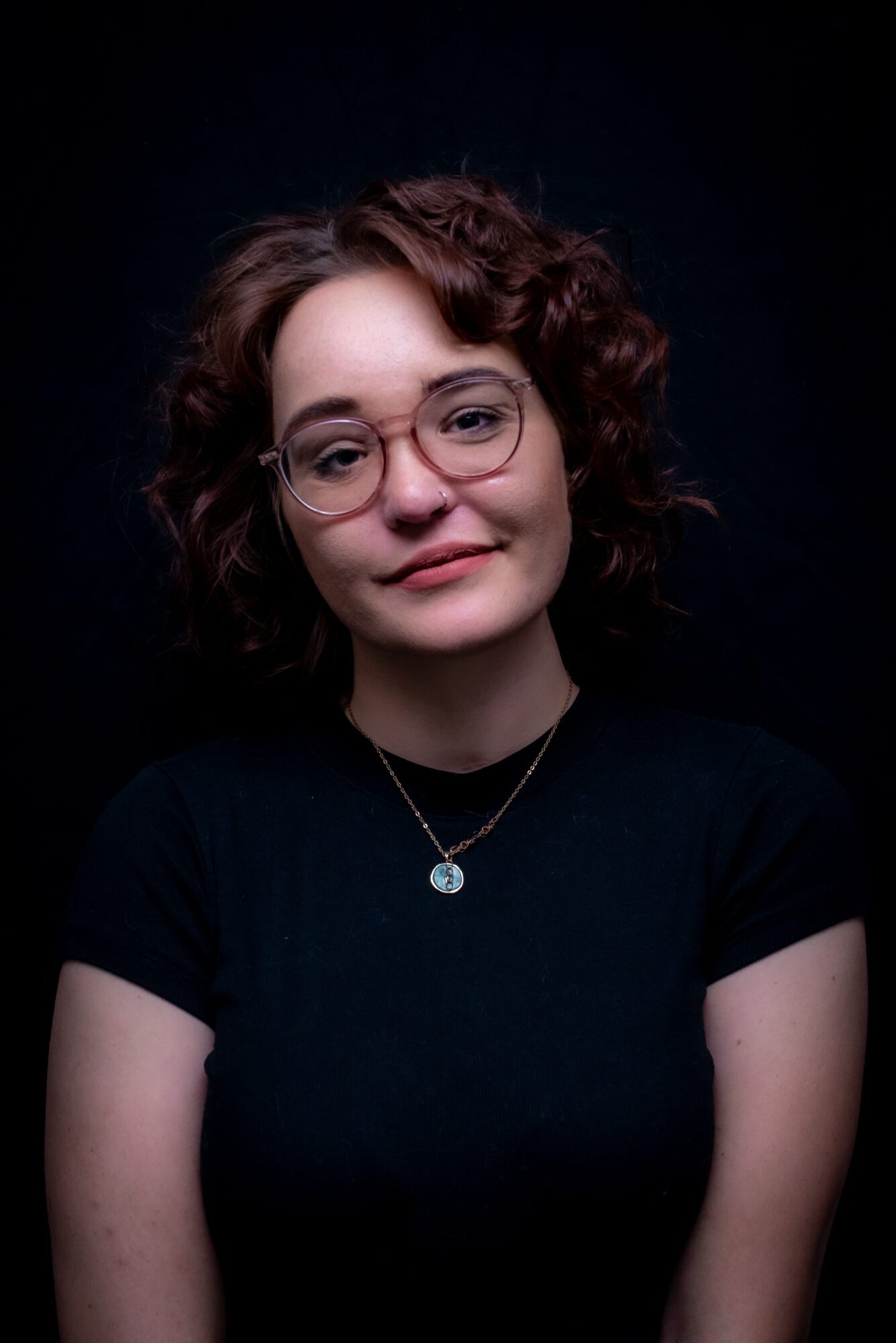
For me, I will be focusing on my passion for photography; I will create with the purpose to make people feel emotion with each photograph. I will continue to wake up and immediately make the efforts to live life to the fullest every day. Exercising my brain, and my body with a regulated routine. Finding ways to cope with the cognitive struggles rather than hiding from them. Not forgetting to take the time to appreciate the colors of the sky, and the depth of nature in the process. Looking in the mirror now, and I can see myself, maybe with some different physical features, but I see a Nikki who has reinvented her identity from within. Healing is an ongoing process, but there are now small pockets of light in places that were once very dark. I’m walking towards the light now, but in a different way this time
Appreciate you sharing that. What else should we know about what you do?
I am a creative and candid event photographer. I always found everything about a photograph to be so pure because it can create so much beyond just a photo. Whether it be a family memory, or the artistic view of the skyline. The feelings, creative storylines, and memories a photograph can bring are something I could find myself immersed in. From a young age, I saw it as an intriguing game of shadows and color, creating depth. Learning a perception of life caught by the manipulation of light was so complex, like science to me.
What do you like and dislike about the city?
I admire the Lehigh Valley but I didn’t always feel that way. I used to want to get away to explore what is out there beyond the Valley, because there is so much more to see and I would resent not being able to do so more as I was growing into an adult. Now that I am an adult, I have really learned to appreciate the mini-city-like aura it provides and it’s a beautiful place to settle in. That being said, I would still love to travel more. Because there is just so much beauty to see around the world in this lifetime of ours.
Pricing:
- $250 mini portrait session (30 min, 10 guarenteed photos)
- $350 hour long portrait session (20 guarenteed photos)
- $550 2-hour long portrait session (40 guarenteed photos)
- $600 for 2 hours of event photography minimum and $250 for each hour added after
Contact Info:
- Website: https://nikkisinkphotography.com
- Instagram: nikkisinkphotography