


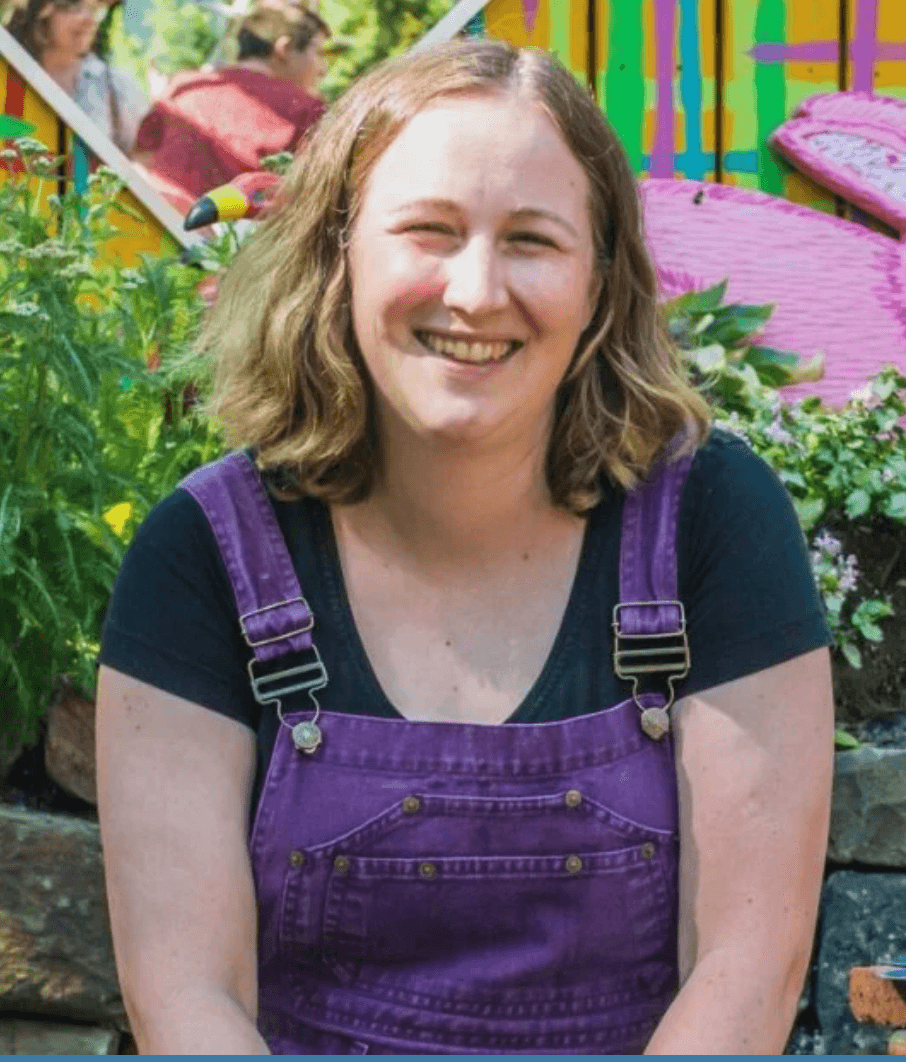
Today we’d like to introduce you to Aprilynn “April” Artz.
Hi Aprilynn “April”, so excited to have you on the platform. So before we get into questions about your work-life, maybe you can bring our readers up to speed on your story and how you got to where you are today?
If you are a person who likes context and/or history and/or just likes information, then this section of our website is for you.
I never intended to start a private practice (hopefully you don’t stop reading here). In fact, I never intended to be a therapist at all (again, hear me out-keep reading).
I went to undergrad at Pitt for creative nonfiction writing. I chose this major because English was a class I excelled in all throughout school (math and science were not my strongest subjects). I intended to be a writer and I wanted to do this because I wanted to connect with people. I read books like “The Color Purple,” and authors like Annie Dillard, and Anne Lamott, and Elizabeth Gilbert, and I would feel so moved by what they wrote that I wanted to do that too.
Pittsburgh in the late 1990s-early 2000s was not exactly the hub of the writing world and so after graduation I did have some paid writing gigs (remember The City Paper?) I soon found myself looking for a steady job.
I ended up running a summer camp at a day care and through that work I ended up learning about TSS (Therapeutic Staff Support). I saw people supporting kids one on one at camp and I thought “I would like to do that.”
I was lucky. Very lucky. Because at that time you could work as a TSS as long as you had an undergraduate degree and experience working with children. I was even luckier because I got hired at Pressley Ridge and Rebecca Klaw was the Director at that time. And Rebecca was not a die hard ABA-er. She was eclectic.
At Pressley Ridge I learned from some of the best people. I learned how to run therapy (“social skills”) groups with kids and make them fun. I worked directly with Dan and Lisa (who had been trained prior to me coming onboard) and I watched and learned and grew. We rode scooters with kids, we took them to the grocery store, we had a ball pit, we had an art room! It was therapy, but it was real life. And, that made a ton of sense!
I worked at Pressley Ridge’s summer day camp and Melissa “Missy” Kuban Ramirez taught me how to take kids out into the community regardless of their level of need. We went everywhere-to the public pool-to Kennywood-Horse Back riding…..and it didn’t matter if someone was non-speaking or not yet able to use the toilet independently…..off we went! Giving credit where credit is due, Melissa “Missy” learned how to run a camp from Stacy Porter Smith (who now works at The Children’s Institute). Missy is the School Psychologist at Pine Richland School District.
After working at Pressley Ridge for over 10 years, I decided I needed to go back to school because I knew it wasn’t feasible to be a TSS for life. But Pressley Ridge informed everything that the practice does today because it was there I learned how to help people in real life and in real time and that doing so is TREMENDOUSLY valuable.
I chose Chatham for my Master’s program with a very clear goal of continuing to support autistic folks.
During my Master’s program I interned at The Watson Institute and learned how they ran their “social skills” groups, and supported kids at summer camp, etc. It provided a different perspective.
After graduating from Chatham I stayed at Pressley Ridge and moved up into the role of a BSC (Behavior Specialist Consultant). I probably would have stayed there for many years, but they closed our department and so I found an opportunity at WPIC’s Merck Clinic (now called CADD).
At Merck I was finally in the role of a “real” therapist-if a real therapist sits in an office and has clients come to them. I worked under Dr. Ben Handen and alongside Cathryn Lehman (who is now Dr. Lehman) and a team of really great psychiatrists and nurses and psychologists.
But, that Pressley Ridge bug had really bit me hard and I found it difficult to sit in one space all day. I wanted that real time engagement and I missed that in the moment problem solving. So when I learned that JFCS was going to collaborate with Dr. Bob Field to bring Quest camp to Pittsburgh, I was intrigued. It took three different people to mention it to me before I decided it might be worth the risk to leave my full-time salaried job for an opportunity that was unknown and mostly involved working in the summer.
I spent 10 summers running Quest camp and it is still the highlight of my career. It was a sandbox so to speak (computing term) and I loved being able to create something out of nothing. We went from 15 kids in year one, to 30 kids in year two, to 50 in years three through ten. Every summer was intensely stressful, rewarding and fun.
I was encouraged to start Connection Counseling & Consultation (even before it had a name) by a fellow therapist. She had moved to Pittsburgh from New York and she kept telling me “You should have your own practice. You have a specialty.” Never once had I thought about this. Not when I went back to school. Not while I was in school. Not after I was in school. I just wanted to keep helping autistic people to find their place in the world. And thus far, I had found many wonderful places that allowed me to do just that.
I started going and looking at office spaces. Just for fun. Nothing serious. And eventually, found one in Forest Hills that was very affordable and had two offices, a waiting room, and a bathroom. My husband and I had been gifted $5,000 from my Aunt who had passed away and the rent for 1 year equaled exactly that amount. My husband said “What’s the worst that can happen? We use up the money from Aunt June, but at least we tried.”
We started our business in 2016 while I continued to run Quest camp in Pittsburgh, and my husband continued to work at a non-profit that supported youth in the Foster Care/Adoption system. We both just had a small handful of clients.
Ten years later (which doesn’t feel like ten years) in 2026 we now have a full blown therapy and consultation business that offers outpatient therapy, social/support groups (Dungeons & Dragons, Art, Board Games, an Adult Group), community inclusion coaching, and consultation to local organizations and schools.
To use a D & D term, it’s all been “homebrewed.” As we’ve grown my thought has always been “What do folks need?” and then I try to create it. As a result, I often spend extra time explaining the practice, our methodology, and what exactly we offer to college/university supervisors of Master’s level counseling students who are used to therapists conducting therapy in an office. That’s the standard model. But, it doesn’t work for everyone. That’s part of why therapy can have a bad rap sometimes. Because maybe it’s too rigid. Too “old school.” Takes itself too seriously.
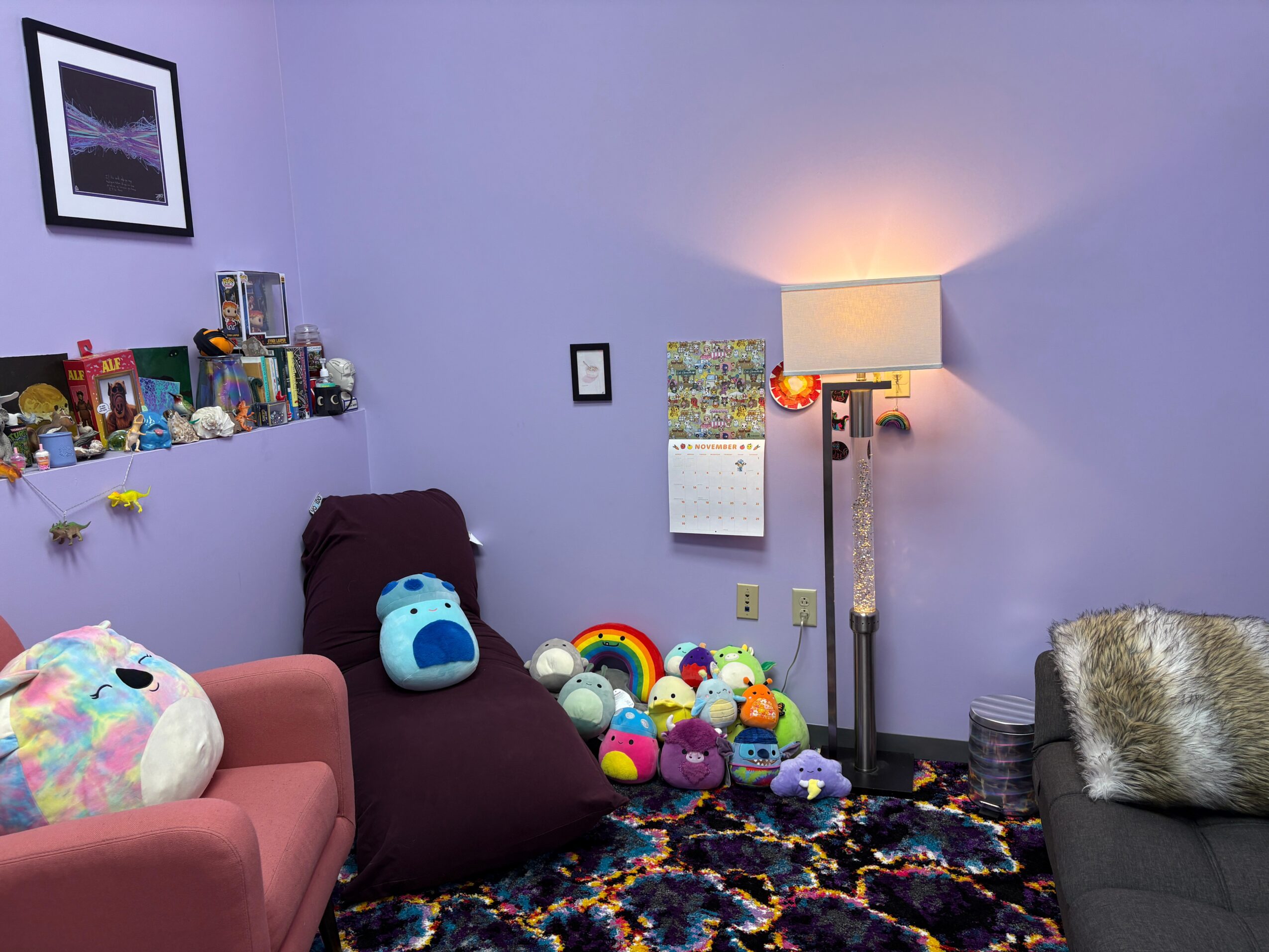
Let’s treat people like people. Let’s meet them where they’re at. Let’s be real humans having real human interaction! I’m waiting for the day when this seems less radical. I’m waiting for the day when accessibility for disabled/neurodivergent folks is just part of our society (not something special or unique or a heart warming news story). Let’s include everyone! I really think it’s possible. I don’t want to think outside of the box. I want to remove the box.
Can you talk to us a bit about the challenges and lessons you’ve learned along the way. Looking back would you say it’s been easy or smooth in retrospect?
The biggest struggles are people being downright confused by our model. Because it has been created to meet the needs of the people we serve vs just replicating what already exists, people who expect more of the same are often confused.
We’ve had some University supervisors of Master’s counseling students struggle to understand supports like coaching and body doubling. They’ll say it’s not “therapy.” However, it’s what many of our folks need and what helps them.
We’ve had places where we’ve provided consultation struggle with the idea that inclusion involves the system changing to meet the needs of everyone vs doing something where kids with “needs” are simply provided a one on one.
Alright, so let’s switch gears a bit and talk business. What should we know?
Our practice is tailored to meet the population we serve.
This means we are always getting creative. We’re always trying out new ideas.
We are the only therapy practice who also offers coaching (real time support to people in real life).
I am most proud of the feedback we receive from the people we help. I recently received an email from someone we support and they said “I also have been wanting to send you a longer and more articulate message telling you how grateful I am for the practice and how important what you do is. I don’t have the capacity for forming the thoughts and writing for this to be what I want, but here’s something. The resources/support/care you provide for autistic individuals of all ages is SOOO vital. Reading the social story {about the move to the new office} was awesome. The spaces and environments you create for ND kids (and adults) to connect, learn, grow, etc is making such a difference in (my, and) their lives.”
Do you have recommendations for books, apps, blogs, etc?
I can provide this later. I want to get input from the folks who work at the practice
Contact Info: