


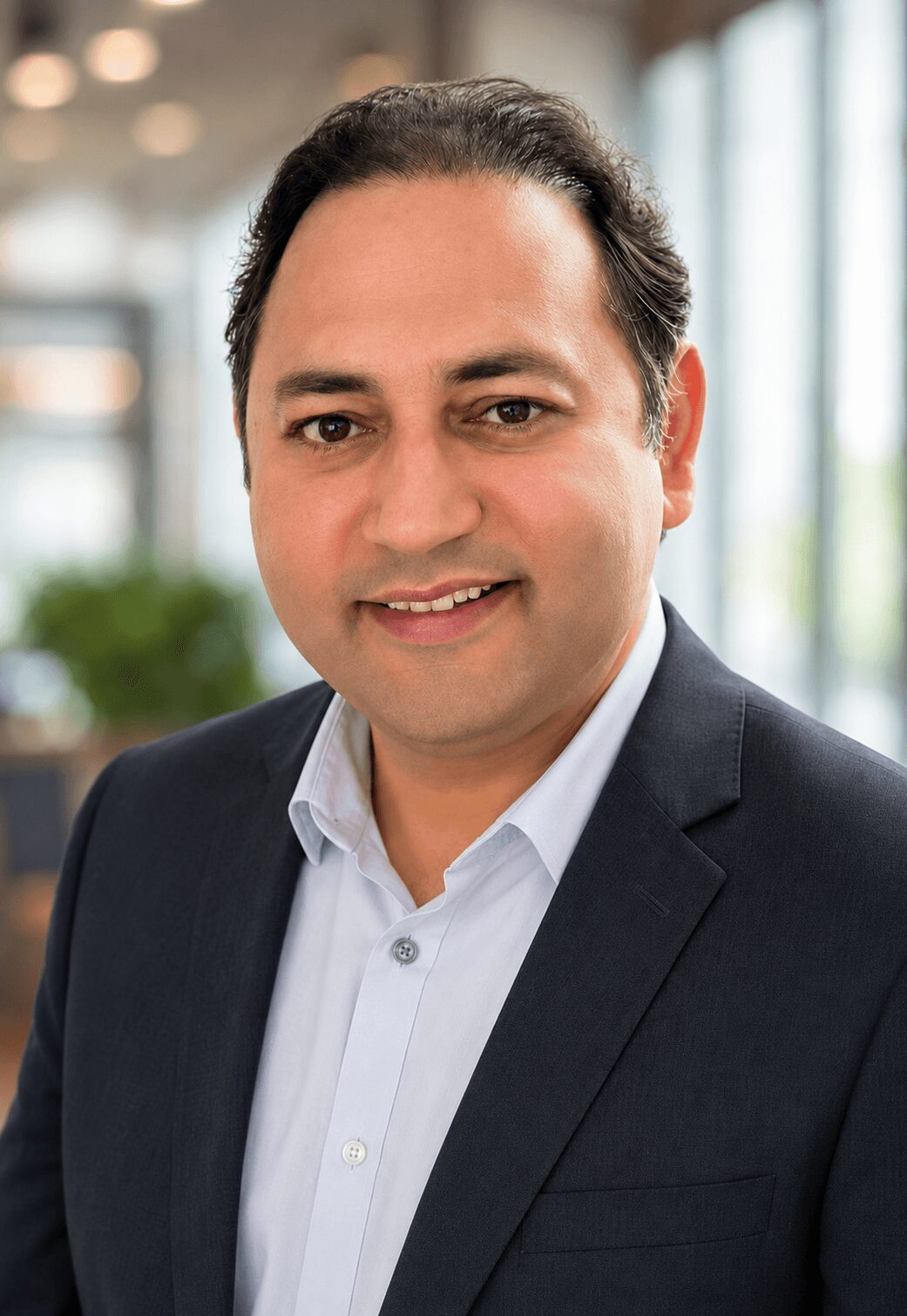
Today we’d like to introduce you to Nitin.
Hi Nitin, so excited to have you on the platform. So before we get into questions about your work-life, maybe you can bring our readers up to speed on your story and how you got to where you are today?
From Pennsylvania Beginnings to a National Life Sciences Mission
My story began long before I ever became a founder, CEO, investor, board member, or pilot. It began with responsibility.
I lost my father when I was 15. At that age, most kids are thinking about school, friends, sports, and what comes next. I was thinking about survival, family, and how to build a future when the safety net had disappeared. That experience shaped me more than any business book ever could. It taught me that life does not always wait until you are ready. Sometimes you have to become ready because people are counting on you.
Pennsylvania became the place where that next chapter unfolded.
I came to Drexel University to study Electrical and Computer Engineering, but my college experience did not look like the traditional version. While I was carrying a full engineering course load, I was also working full time. I worked with Cisco and Verizon while I was still at Drexel, learning enterprise technology in the real world during the day and finishing an engineering degree at the same time. I pushed hard enough to graduate a quarter early.
Looking back, I do not think I fully appreciated how difficult that season was while I was living through it. At the time, it was just what needed to be done. I had bills to pay, goals to chase, and no room to complain. But that period gave me something that has stayed with me my entire career: the ability to operate under pressure, learn quickly, and keep moving even when the path is not clean or easy.
My first real entrepreneurial leap also happened here in Pennsylvania. I co-founded Ompay, a smart-card parking technology company in Philadelphia. It was an ambitious idea at a time when mobile payments and digital parking systems were not nearly as common as they are today. We were trying to solve a real urban problem with technology before the market fully understood where things were headed.
That experience taught me the difference between having a good idea and building a real business. It taught me how hard it is to sell something new, how important timing is, and how much grit entrepreneurship requires. It also gave me my first taste of building something from scratch in the city that had become my professional home.
By 29, I was honored to be recognized as one of Philadelphia Business Journal’s 40 Under 40. At the time, it felt like a milestone. But in hindsight, it was less of a destination and more of a signal that I was on the right path. I still had much more to learn.
My career eventually led me deeper into enterprise systems, consulting, and NetSuite. I worked at RSM, where I was one of the early members of the Northeast NetSuite practice. I saw firsthand how the right systems could help companies scale, create accountability, and make better decisions. I also saw the opposite: companies with great products and smart people struggling because their back-office systems, finance processes, compliance controls, and operational workflows could not keep up with their growth.
That insight became the foundation for Archer Insights.
I founded Archer Insights in 2017 in Pennsylvania with a simple belief: companies deserve implementation partners who understand not just software, but the business outcomes behind the software. In the early days, Archer took on complex NetSuite implementations and turnaround projects. We helped companies that were growing fast, struggling with broken processes, or trying to create order from chaos.
Over time, our focus became sharper. We decided to specialize in life sciences — biotech, biopharma, medtech, pharma services, CDMOs, and other FDA-regulated companies. That decision changed everything.
Life sciences companies are different. They are often racing against time, funding milestones, clinical trials, regulatory requirements, audits, commercialization deadlines, and investor expectations. Their science may be world-class, but science alone does not get a therapy or device to patients. Companies also need the right operating foundation: finance systems, procurement controls, vendor onboarding, quality documentation, audit readiness, inventory controls, approval workflows, Sunshine Act reporting, 3PL integrations, and scalable processes that can support growth.
That became Archer’s lane — and our purpose.
At Archer Insights, our purpose is to help bring life-saving drugs and devices to market faster and more cost-effectively by giving life sciences companies the systems, processes, controls, and operational foundation they need to scale. We are not discovering the molecule, designing the device, or running the clinical trial. But we are helping build the business infrastructure that allows those innovations to move from science to patients with less friction, less waste, and more confidence.
Today, Archer Insights is a national organization with international experience, serving life sciences companies across the country and supporting organizations with global operations. We implement NetSuite, build proprietary life sciences SuiteApps, support managed services, and help companies move from early stage to commercialization and beyond. Our work has included complex multi-subsidiary, multi-country, and compliance-driven environments where companies need systems that can scale beyond one market.
We have supported companies through major growth moments, including IPO readiness and acquisitions by large pharmaceutical companies.
Some of the most meaningful examples are companies like Apogee, Neogene, Sierra Oncology, and Landos. These are organizations that advanced important science and ultimately became part of larger pharmaceutical companies with the reach to bring innovation to more patients. Archer’s role was not in the lab. Our role was the operating layer behind the scenes: ERP, finance processes, procurement, compliance documentation, audit readiness, approvals, and the scalable systems that allow companies to grow with confidence.
That work is deeply personal to me.
After years in business, I went back to school at Cornell University and completed a dual degree: an Executive MBA in Healthcare Leadership from Cornell’s SC Johnson College of Business and a Master of Science in Medicine from Weill Cornell. School of Medicine. I did that because I wanted to better understand the healthcare and life sciences ecosystem from both the business and medical sides. For me, Archer is not just a consulting company. It is a way to help innovators bring life-changing drugs and devices to patients faster, more efficiently, and with a stronger foundation for long-term impact.
The company has grown far beyond Pennsylvania, but Pennsylvania is still a central part of the story. This is where I studied, worked, started, failed, learned, rebuilt, and grew. It is where I learned that entrepreneurship is not glamorous most days. It is persistence. It is payroll. It is client trust. It is late nights. It is figuring things out when there is no perfect answer.
Pennsylvania gave me the early foundation: Drexel, Philadelphia, my first startup, my first recognition, and eventually the place where Archer Insights was born. From here, we built a company that now serves life sciences organizations nationally and brings experience from international operating environments as well.
When I think about how I got here, I do not see a straight line. I see a series of hard turns that somehow made sense later. Losing my father taught me resilience. Working full time while completing engineering school taught me discipline. Building my first company taught me humility. Consulting taught me pattern recognition. Life sciences gave the work a mission. Archer became the vehicle to bring it all together.
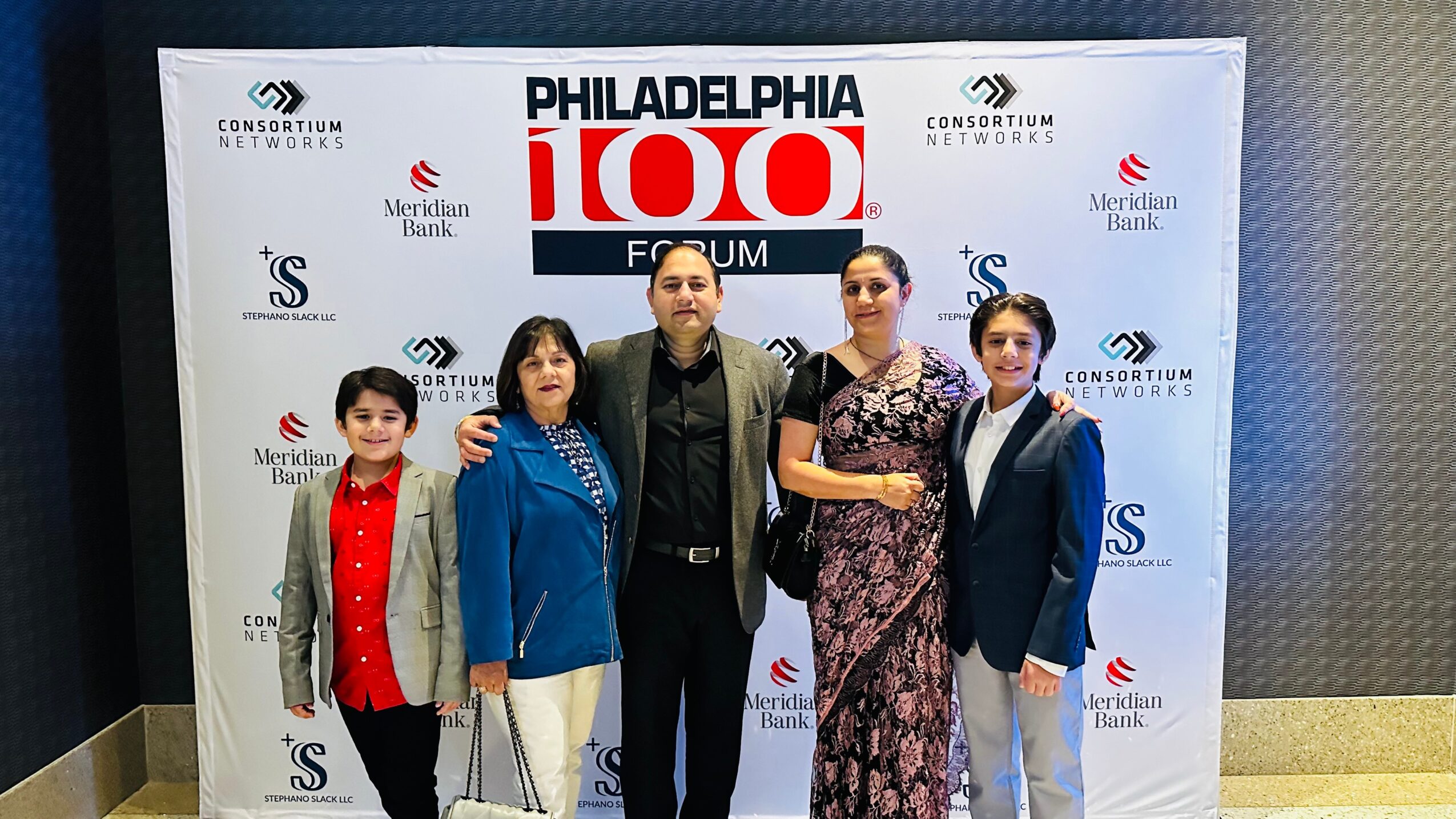
I am proud of the recognition Archer has received, including repeated Philadelphia100 honors, Hall of Fame recognition, Inc. 5000 recognition, and NetSuite life sciences awards. But the part that matters most is the impact. When a client scales successfully, goes public, gets acquired, commercializes a product, expands globally, or becomes more prepared to serve patients, we know we played a small but important role in that journey.
My story is a Pennsylvania story, but it is also an immigrant-style entrepreneurial story in spirit: start with what you have, work harder than feels reasonable, build credibility one step at a time, and never forget why the work matters.
I did not start with a grand plan to build a national life sciences consulting and software company with international experience. I started by trying to create stability after loss. Then I tried to create opportunity. Then I tried to create something bigger than myself.
That is still the mission today: helping life sciences innovators bring life-saving drugs and devices to market faster, more cost-effectively, and with the operational strength to reach the patients who need them.
Would you say it’s been a smooth road, and if not what are some of the biggest challenges you’ve faced along the way?
It has definitely not been a smooth road.
I lost my father when I was 15, so struggle entered my life early. That experience forced me to grow up quickly and take responsibility at an age when most people are still figuring out who they are. It also gave me a mindset that has stayed with me: no one is coming to save you, so you have to keep moving.
College was another difficult chapter. I had a scholarship at Drexel, but it did not cover everything, so working was not optional. While studying Electrical and Computer Engineering full time, I was also working full time with Cisco and Verizon. I graduated a quarter early, but it came with a lot of sacrifice.
I did not have the typical college experience. I did not take weekends off. I did not allow myself to get distracted by dating, drinking, or partying. Until I got married, I was extremely disciplined about where my time and energy went. That may sound intense, but at that stage in my life, I felt I had no other choice. I was trying to build a future while carrying responsibilities that were bigger than my age.
Entrepreneurship brought its own challenges. My first company, Ompay, was ahead of its time in many ways. We were trying to bring smart-card technology to parking in Philadelphia before digital payments became common. That taught me that having a good idea is not enough. Timing, capital, market education, sales execution, and persistence all matter. It was a humbling experience.
Building Archer Insights has also had plenty of difficult seasons. In the early days, we had to earn trust one client at a time. We were not a large national firm with unlimited resources. We had to prove that a specialized, Pennsylvania-born company could deliver complex enterprise systems work for serious life sciences organizations.
There were the normal founder struggles: payroll pressure, hiring mistakes, client escalations, cash flow, growth decisions, and the constant tension between working in the business and building the business. There were moments where we had to reinvent parts of the company, sharpen our focus, and make hard decisions about where we would and would not compete.
One of the biggest turning points was deciding to focus deeply on life sciences. It was the right decision, but it was not the easy decision. Specialization means saying no to other opportunities. It means going deeper, building industry-specific knowledge, investing in proprietary solutions, and holding yourself to a higher standard because the clients you serve operate in regulated, high-stakes environments.
We have also had to scale while maintaining quality. That is one of the hardest parts of any services business. Growth is exciting, but if you grow without discipline, quality suffers. In life sciences, that is not acceptable. Our clients depend on us for systems, processes, controls, audit readiness, and commercialization infrastructure. We cannot treat that casually.
So no, it has not been smooth. But I also do not think smooth roads build strong companies. Every struggle taught me something: resilience, discipline, humility, focus, and the importance of purpose. Archer exists today because we kept learning, kept adapting, and kept coming back to the same mission — helping life sciences innovators bring life-saving drugs and devices to market faster and more cost-effectively.
Thanks – so what else should our readers know about Archer Insights?
Archer Insights is a Pennsylvania-founded life sciences consulting and software company with national reach and international experience. We specialize in helping biotech, biopharma, medtech, CDMO, CRO, and other FDA-regulated companies build the operational foundation they need to scale, commercialize, and bring life-saving drugs and devices to market faster and more cost-effectively.
At the core, we help life sciences companies implement and optimize NetSuite. But what makes Archer different is that we are not a generic ERP consulting firm. We focus deeply on life sciences, which means we understand the real operational challenges these companies face as they move from research and development to clinical trials, commercialization, IPO readiness, audits, and global growth.
Our clients are often dealing with complex requirements: SOX controls, GxP documentation, FDA-regulated workflows, vendor onboarding, procurement controls, approval workflows, Sunshine Act reporting, 3PL integrations, CMO/CDMO supply chain operations, inventory controls, and audit-ready finance processes. Archer helps bring all of that together in one scalable operating system.
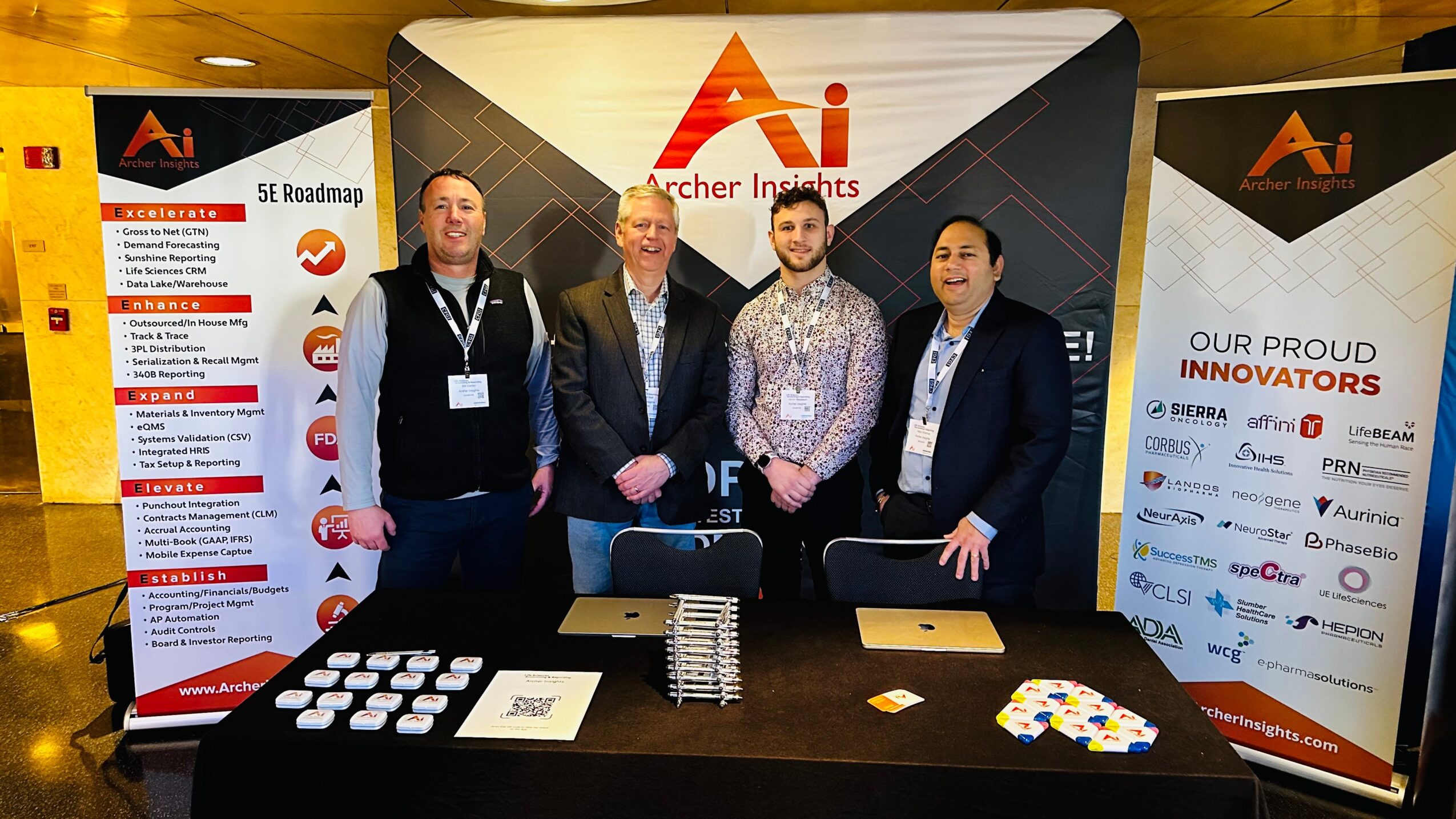
We are also known for building proprietary life sciences solutions inside NetSuite. These include tools for Sunshine Act reporting, contract lifecycle management, vendor onboarding, approval workflows, AP automation, supplier punchouts, 3PL integrations, mobile expense reporting, and supply chain processes for companies working with contract manufacturers and distributors. Our goal is to reduce disconnected systems and give growing companies a cleaner, more compliant, and more scalable way to operate.
What sets us apart is our combination of industry specialization, implementation experience, software products, and post-go-live support. Many firms can implement software. Fewer understand the life sciences journey from early stage to commercialization. Fewer still have built repeatable products and processes specifically for that journey.
We are proud that Archer has supported companies through major milestones, including IPO readiness, commercialization, audit preparation, and acquisitions by large pharmaceutical companies. Companies we have supported have gone on to become part of organizations such as AbbVie, AstraZeneca, and GSK. While we are not the scientists discovering the drugs or designing the devices, we help build the business infrastructure that allows those innovations to reach patients with less friction and more confidence.
Brand-wise, I am most proud that Archer has become known for being focused, practical, and deeply committed to life sciences. We are not trying to be everything to everyone. We know who we serve, we know the problems we solve, and we take pride in doing that work well.
I want readers to know that Archer Insights was built in Pennsylvania, but our mission extends far beyond one region. We serve life sciences innovators across the country and support companies with international operations. Our purpose is simple: help the people building life-saving drugs and devices get to market faster, more cost-effectively, and with the operational strength to scale.
Can you tell us more about what you were like growing up?
Growing up, I was a very curious child. I always wanted to understand how things worked, and from an early age, I wanted to be an engineer. My mother encouraged that ambition, which made a big difference. She allowed me to explore, experiment, and believe that building things was possible.
If there was an electronic item in the house, I wanted to take it apart, fix it, or improve it. Radios, appliances, washing machines — anything I could get my hands on became a project. Sometimes I was repairing things, and sometimes I was probably creating new problems, but I was always learning.
I was also creative. I enjoyed performing at school events and even did stand-up comedy. So there were two sides to me: the technical kid who wanted to solve problems, and the performer who liked being on stage and making people laugh.
My parents were strict, so my brother and I grew up as obedient and respectful kids. But even within that structure, my mind was always running. I would often look at everyday problems and think, “Could this be turned into an opportunity?”
One of my earliest entrepreneurial experiments happened in fifth grade. That was the year we were introduced to writing with ink pens. I quickly realized that once you wrote something in ink, you could not erase it. That was a problem for me, and I assumed it had to be a problem for many other kids too.
We had bleach at home, and as part of my usual experimentation with anything I could find, I discovered that bleach could erase ink. The only problem was that it also burned the paper. So I kept experimenting with the concentration until I found a version that could remove the ink without damaging the page.
Once I got it to work, I bottled the solution into tiny bottles with droppers and recruited my younger brother to go sell them. That was probably my first entrepreneurial venture: an ink eraser business started by a fifth grader who saw a problem, experimented with a solution, packaged it, and found a sales channel through his little brother.
Looking back, that story says a lot about who I was growing up. I was curious, technical, creative, a little mischievous, and always interested in solving problems in a practical way. I did not have the language for entrepreneurship back then, but the instinct was already there.
Contact Info:
- Website: https://www.archerinsights.com
- LinkedIn: https://www.linkedin.com/company/archer-insights/