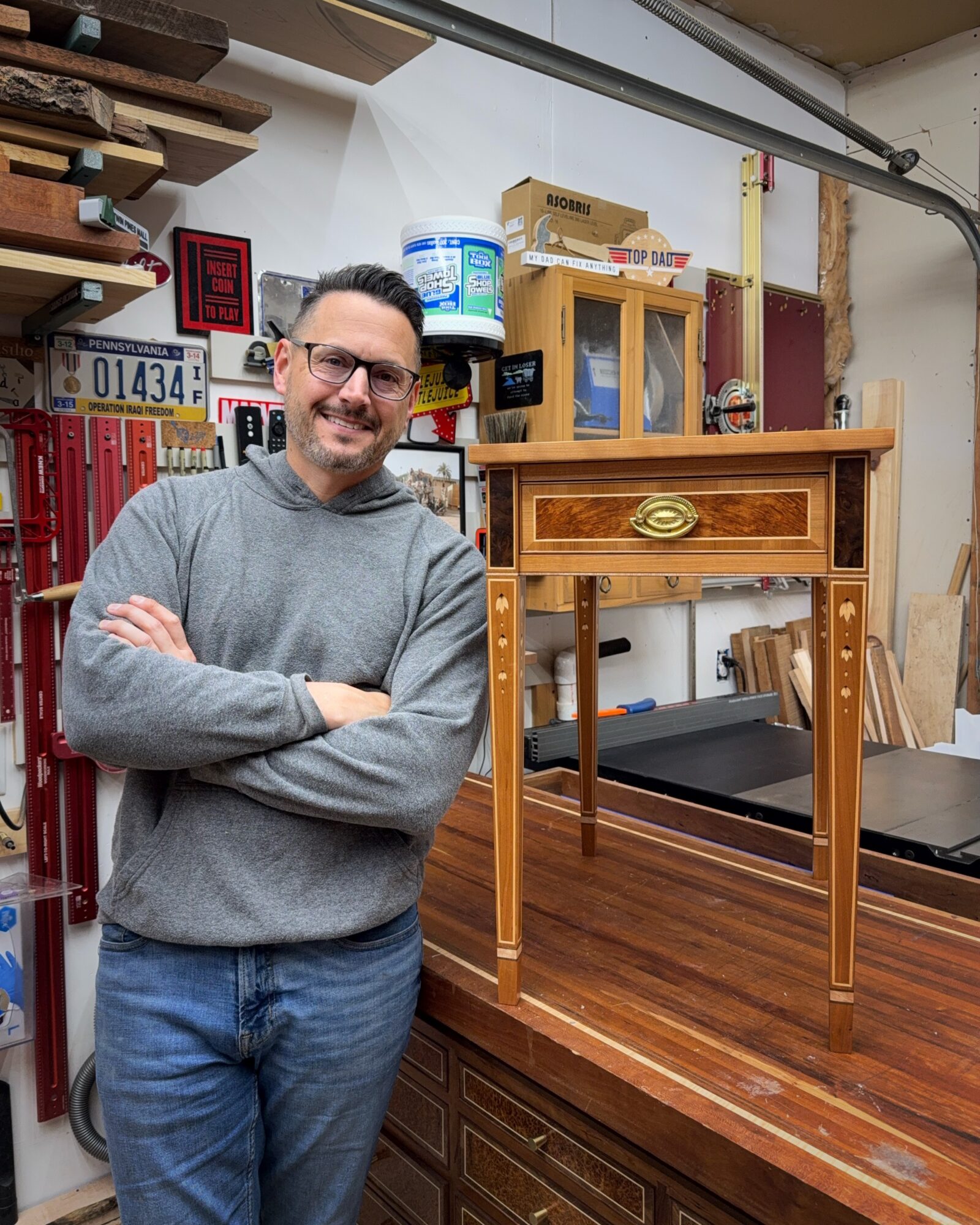



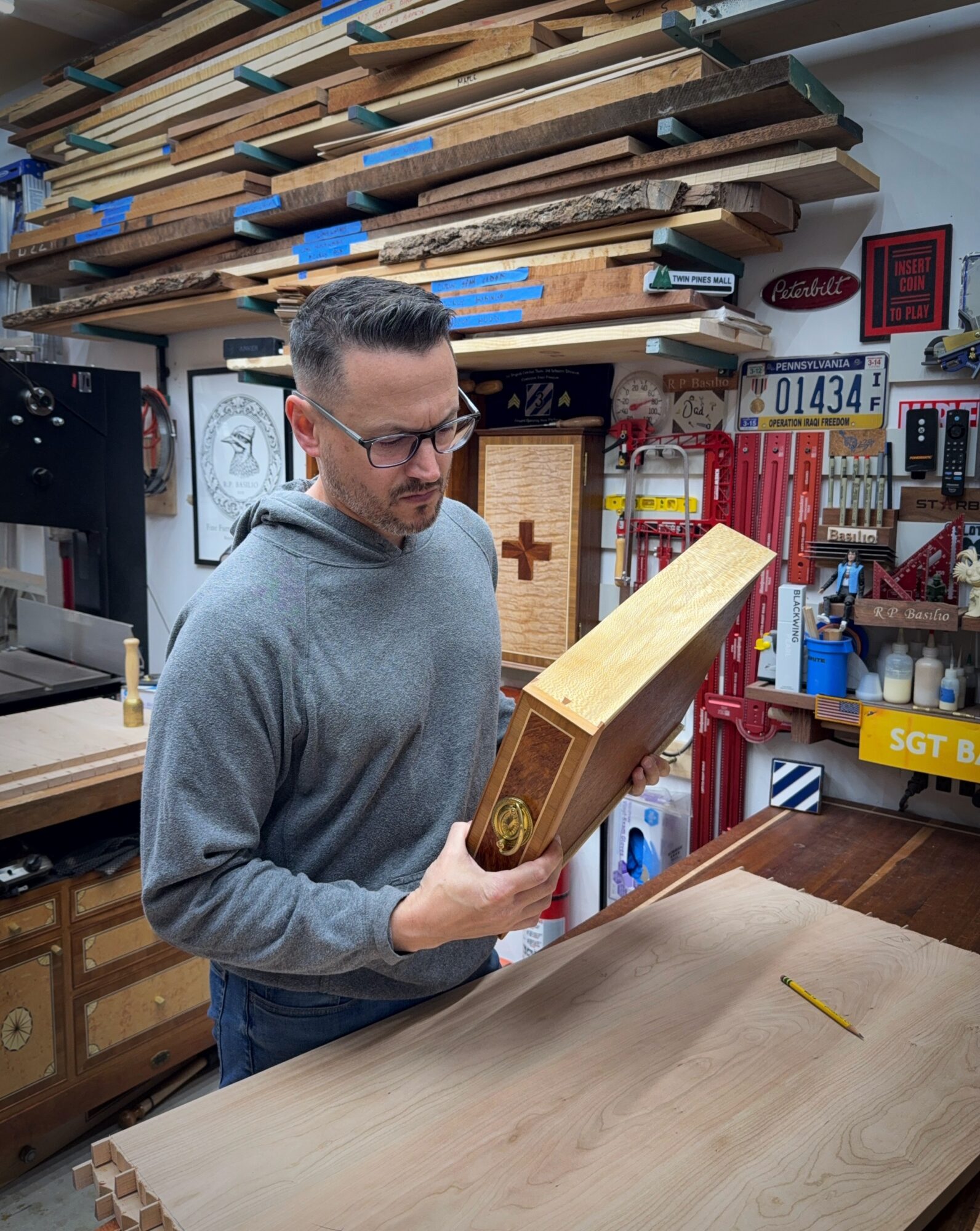
Today we’d like to introduce you to Rick Basilio.
Hi Rick, thanks for sharing your story with us. To start, maybe you can tell our readers some of your backstory.
I grew up around this craft. My father was a master carpenter, so some of my earliest memories are of him building. Ironically, I had zero interest in woodworking for most of my life. It wasn’t until my 30s that he showed me how to make a simple cutting board—and that was the hook.
On the surface, a cutting board is about as basic as it gets. But if you pay attention, it quietly teaches you a lot—wood movement, glue-ups, milling, and accuracy. It’s one of those projects that looks simple… until you realize it isn’t. From there, I spent a few years building straightforward furniture and cabinetry, just putting in the reps.
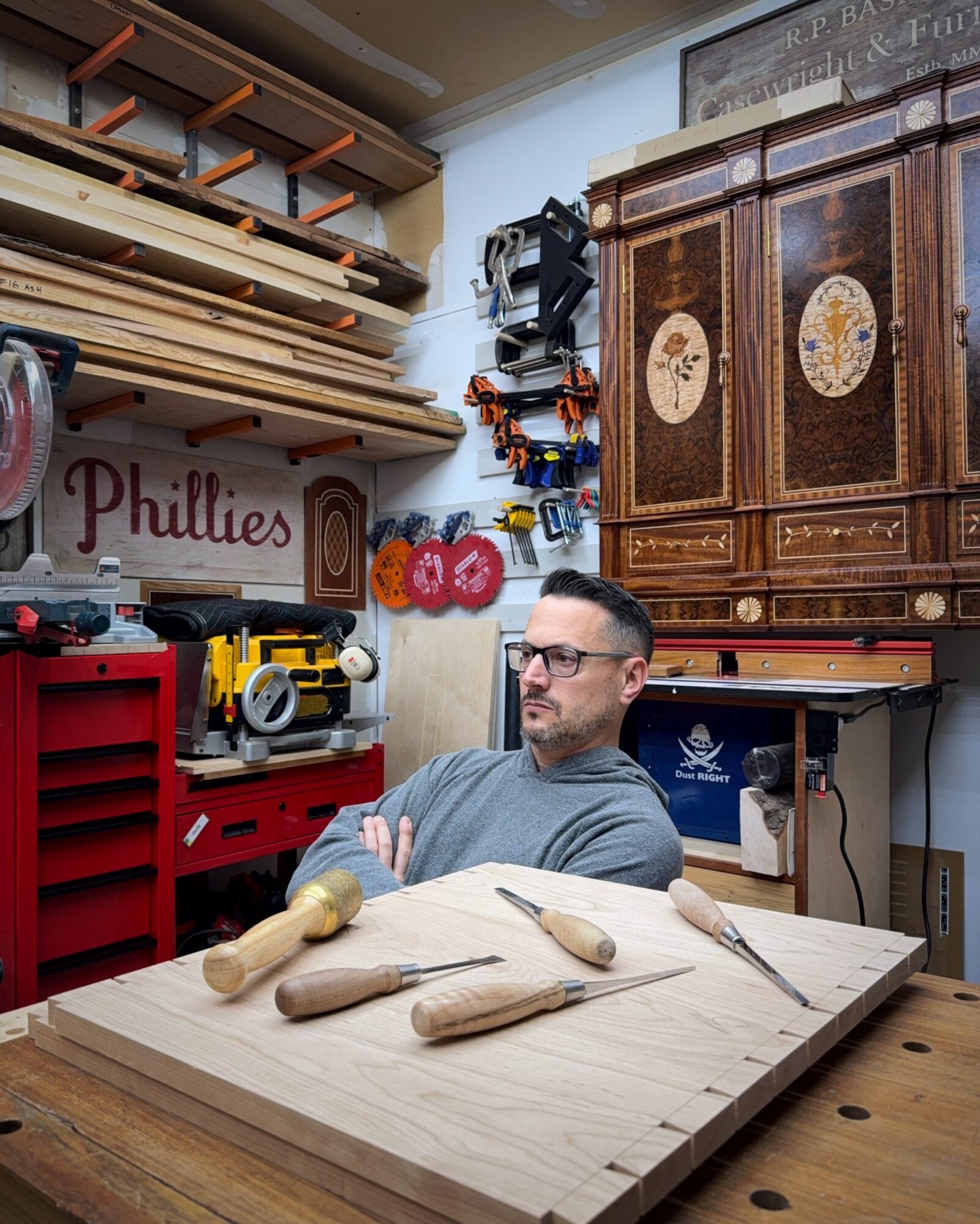
Then COVID hit. Like everyone else, I was stuck at home and going a little stir-crazy. I came across a video on fine woodworking and hand-cut dovetails—something I had avoided for years. There’s a certain intimidation factor there. It’s a very honest joint… it shows everything.
So I went out to the shop and gave it a shot. “Hacked out” is probably the most accurate description. It was rough, a little embarrassing—but it worked. And more importantly, it broke the mental barrier I had built up around it.
That moment flipped a switch. I went from casually interested to completely obsessed. I started studying the craft more seriously and eventually took classes in veneering and marquetry with Dave Heller down in Charlottesville. That’s really where things deepened for me.
Those skills pulled me into the world of period furniture—Federal, neoclassical—and the level of detail and precision that comes with it. That’s what I’m chasing now. Not just building furniture, but building it in a way that respects the traditions behind it.
These days, you’ll find me in my shop in Royersford, Pennsylvania, applying traditional joinery and marquetry to everything I make. Still learning, still refining… just with slightly fewer “hacked out” dovetails than when I started.
I’m sure it wasn’t obstacle-free, but would you say the journey has been fairly smooth so far?
Most of my journey has been relatively smooth, and I think a big part of that is because I haven’t had to rely on this craft to make a living. For me, it’s an outlet—not a hobby, but not a full-time job either. That separation lets me stay focused on the work itself, rather than rushing decisions or compromising just to meet a deadline… or convincing myself something “adds character” when it really doesn’t.
However, fine furniture comes with a very high standard of craftsmanship, and there’s really no way around it—you’re either meeting that standard or you’re not. It forces you into a constant cycle of learning, studying, and refining your approach, and that process takes years. There aren’t many shortcuts in this world—at least none that don’t come back to haunt you halfway through a glue-up.
But honestly, that’s exactly what keeps me in it. Each piece is an opportunity to build cleaner, more precise, and more intentional than the last. There’s a real pull toward learning from the masters—both through direct experience and historical texts—and toward carrying those traditions forward in a way that still feels relevant and, most importantly, original. And if I’m doing it right, I’m just uncomfortable enough during the process to know I’m not taking the easy way out.
Thanks – so what else should our readers know about your work and what you’re currently focused on?
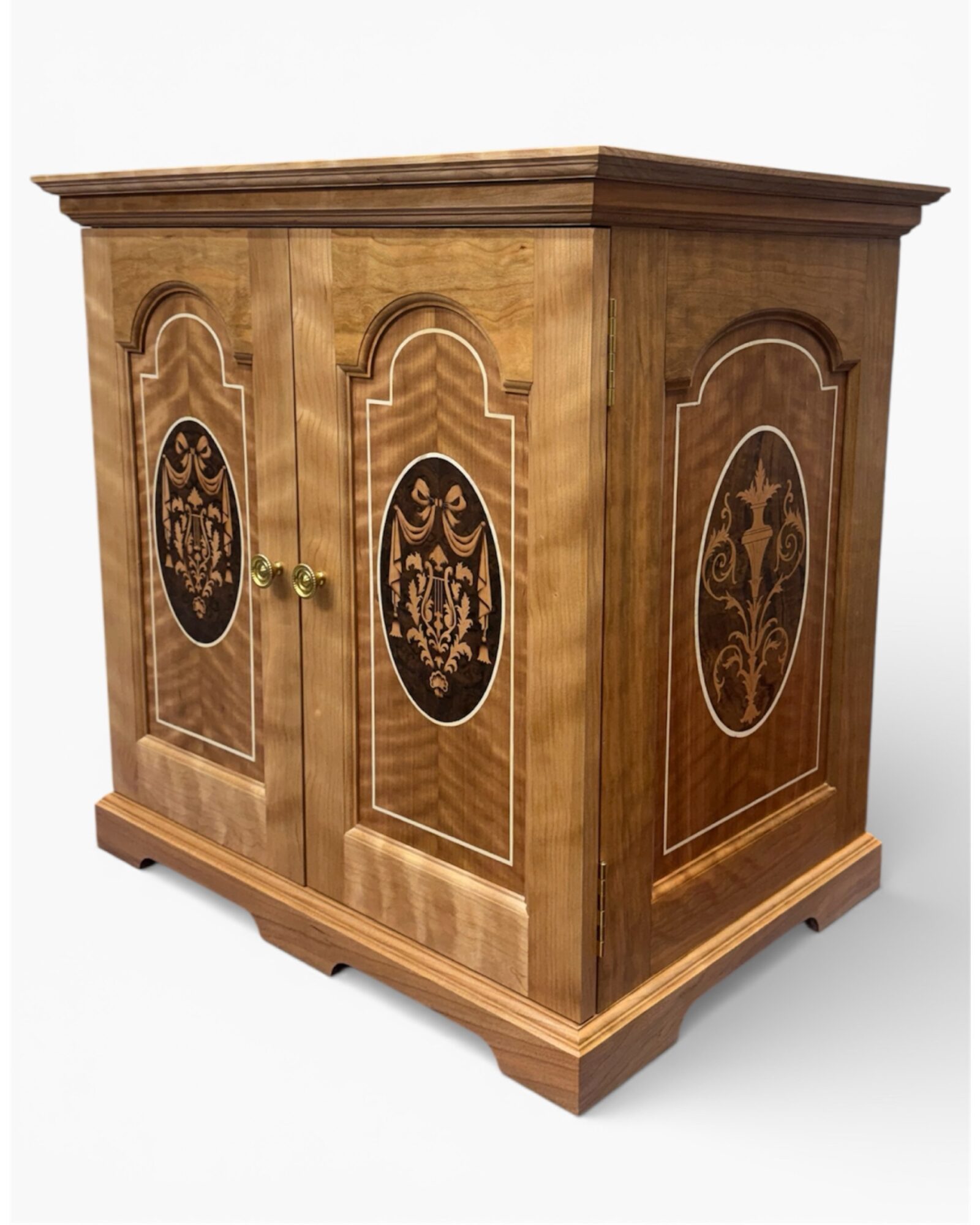
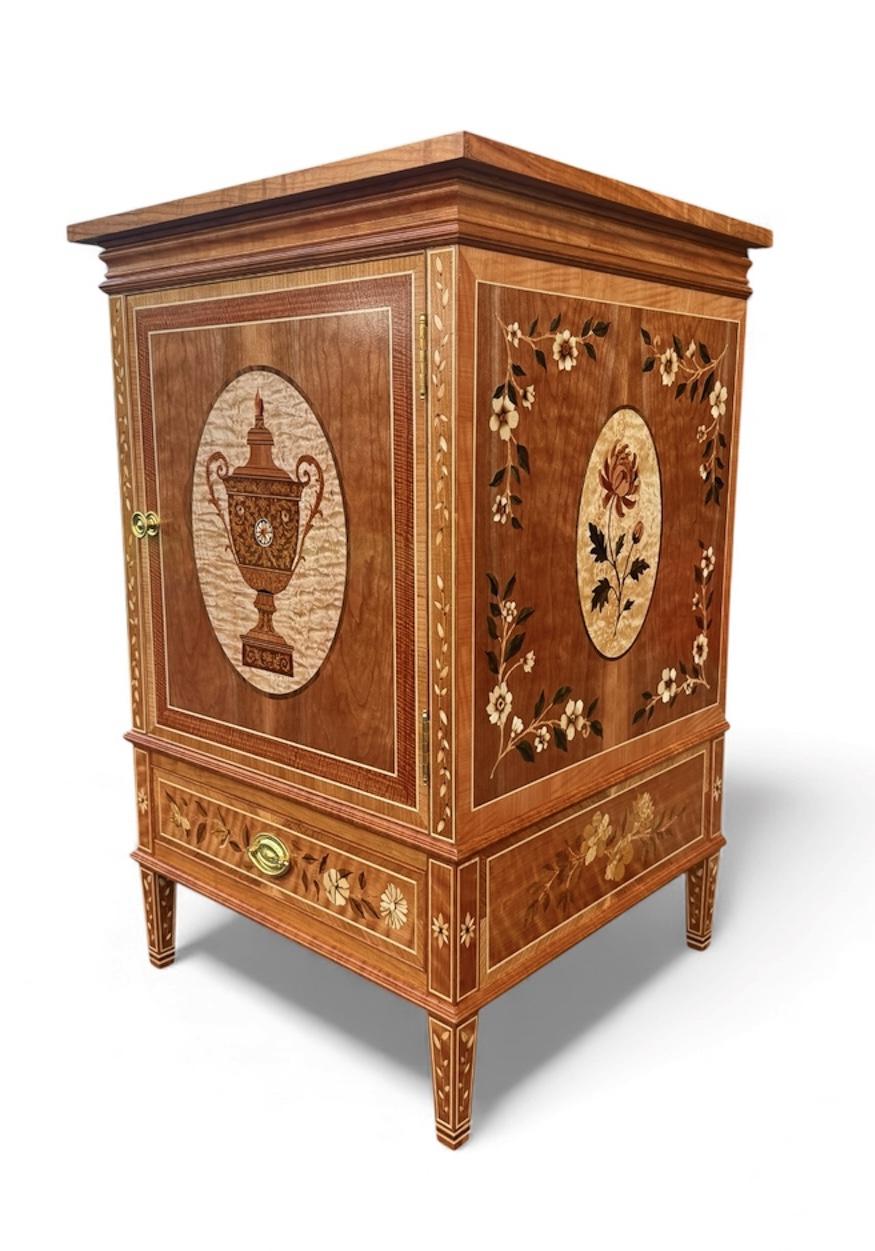
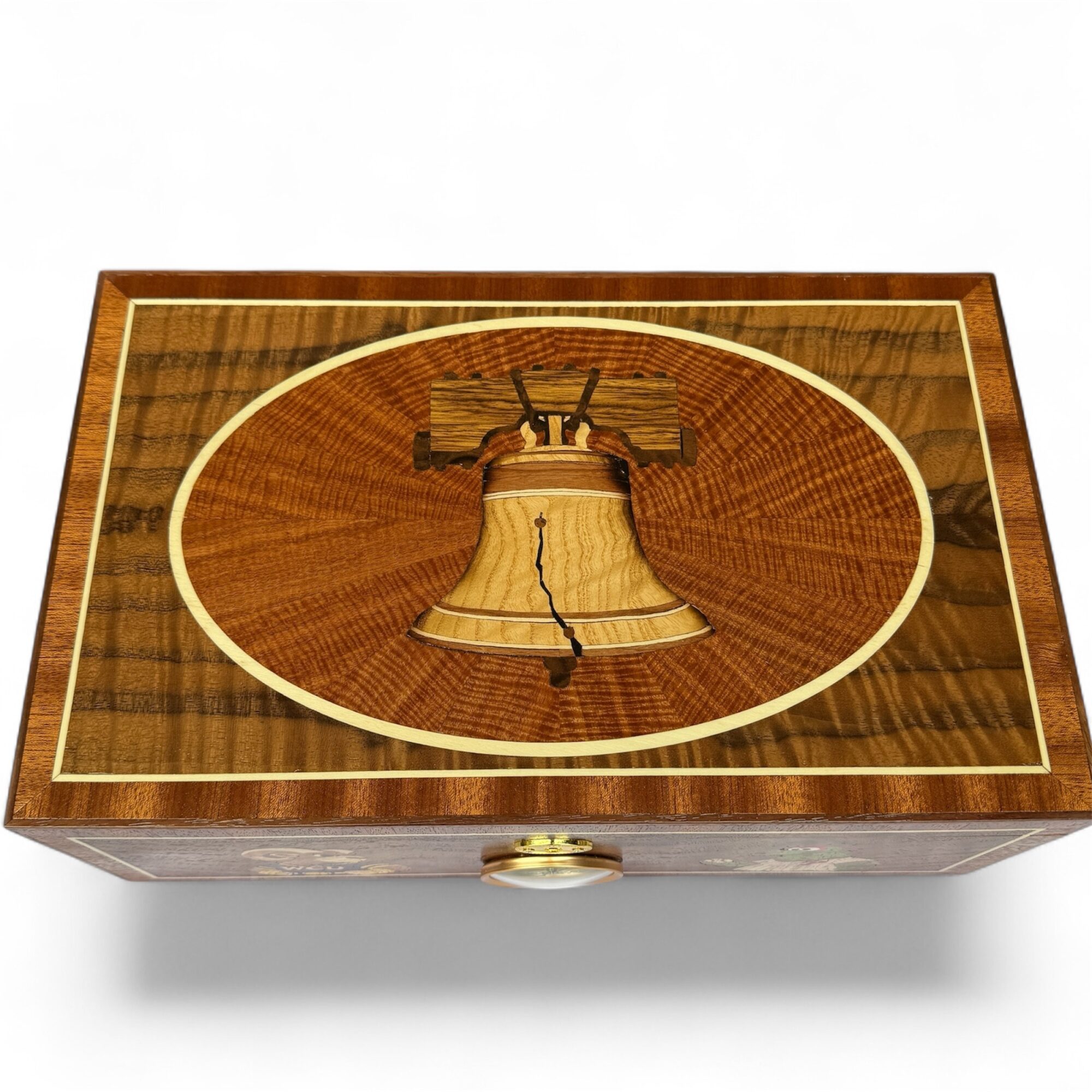
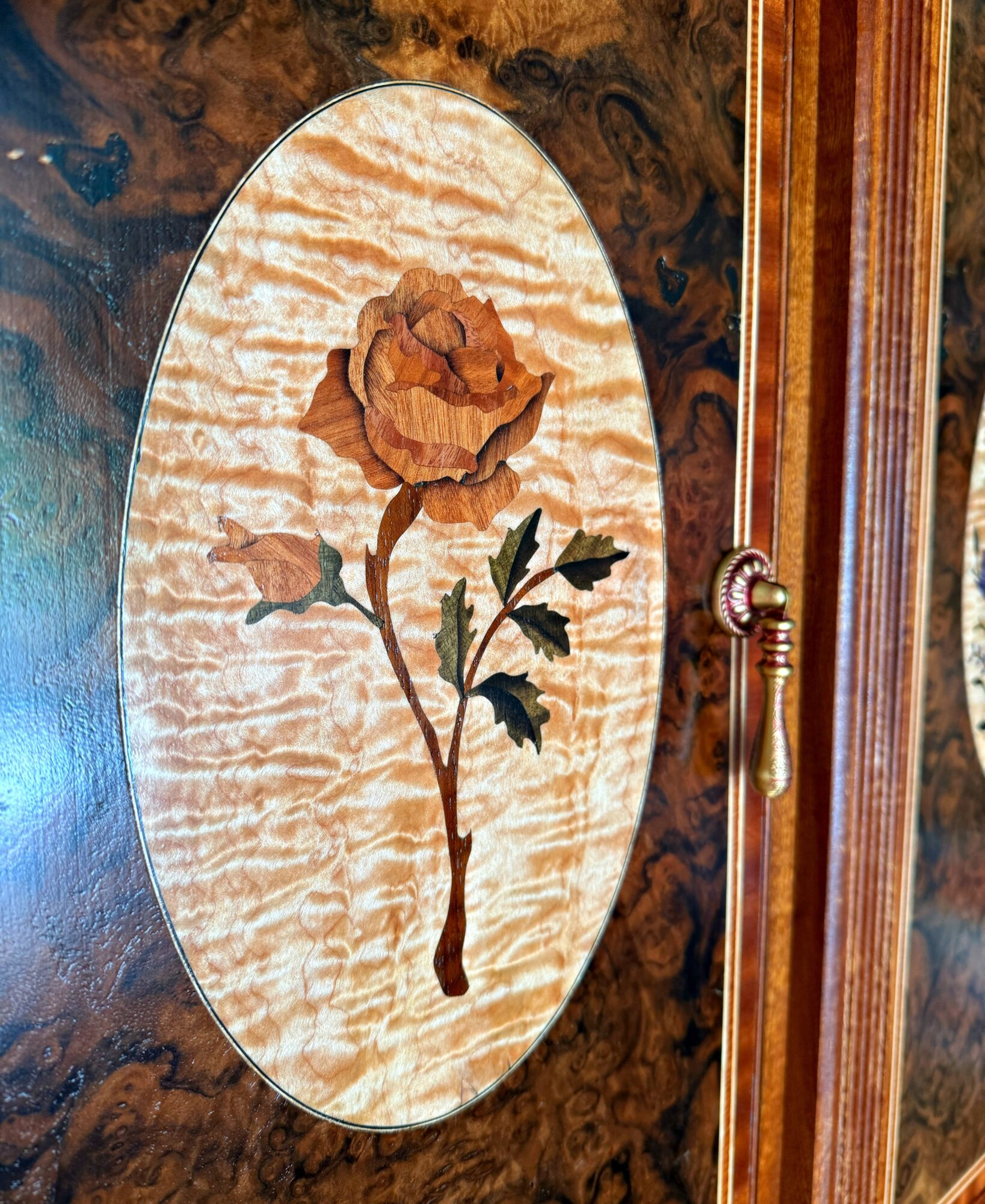
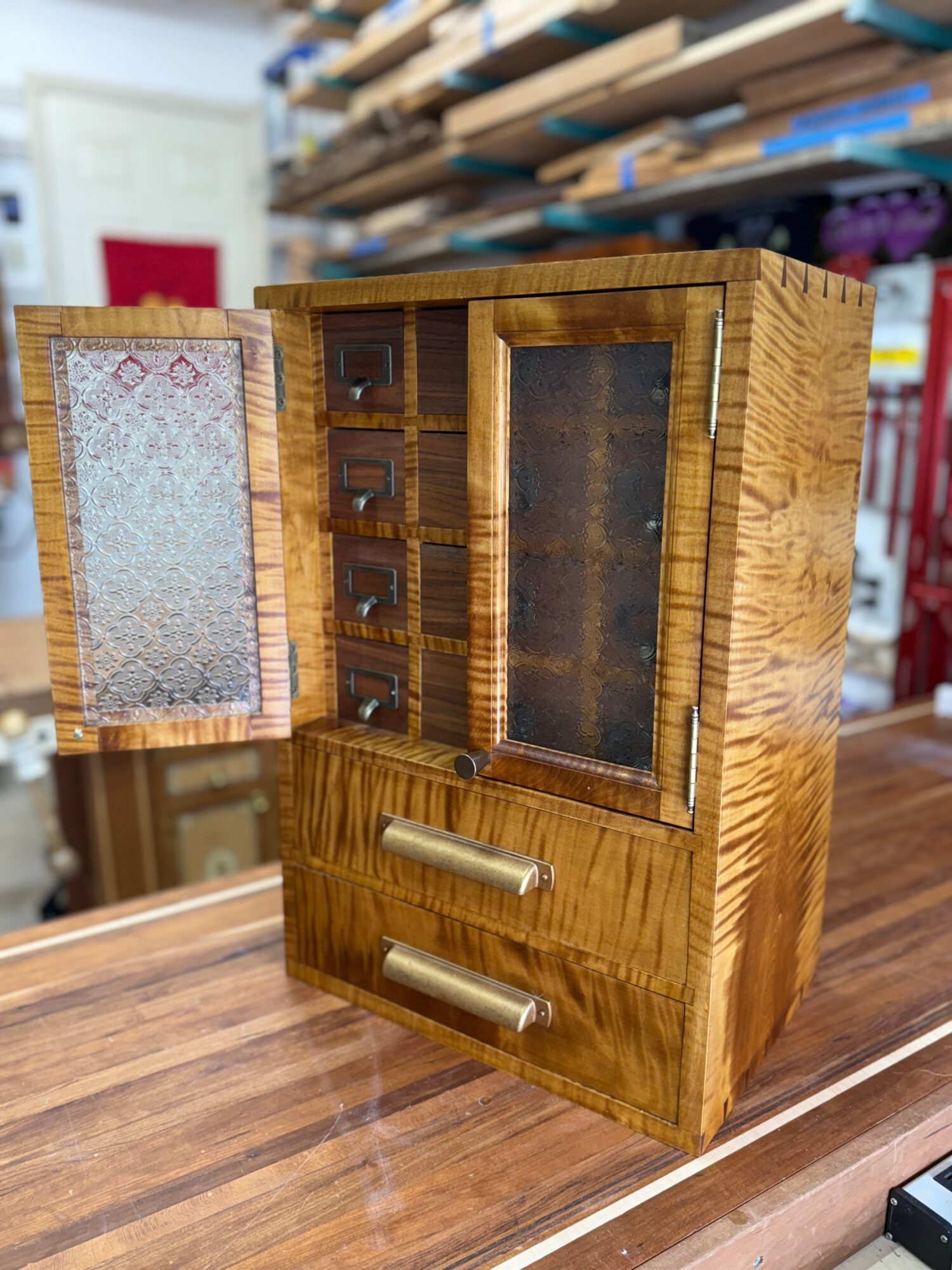
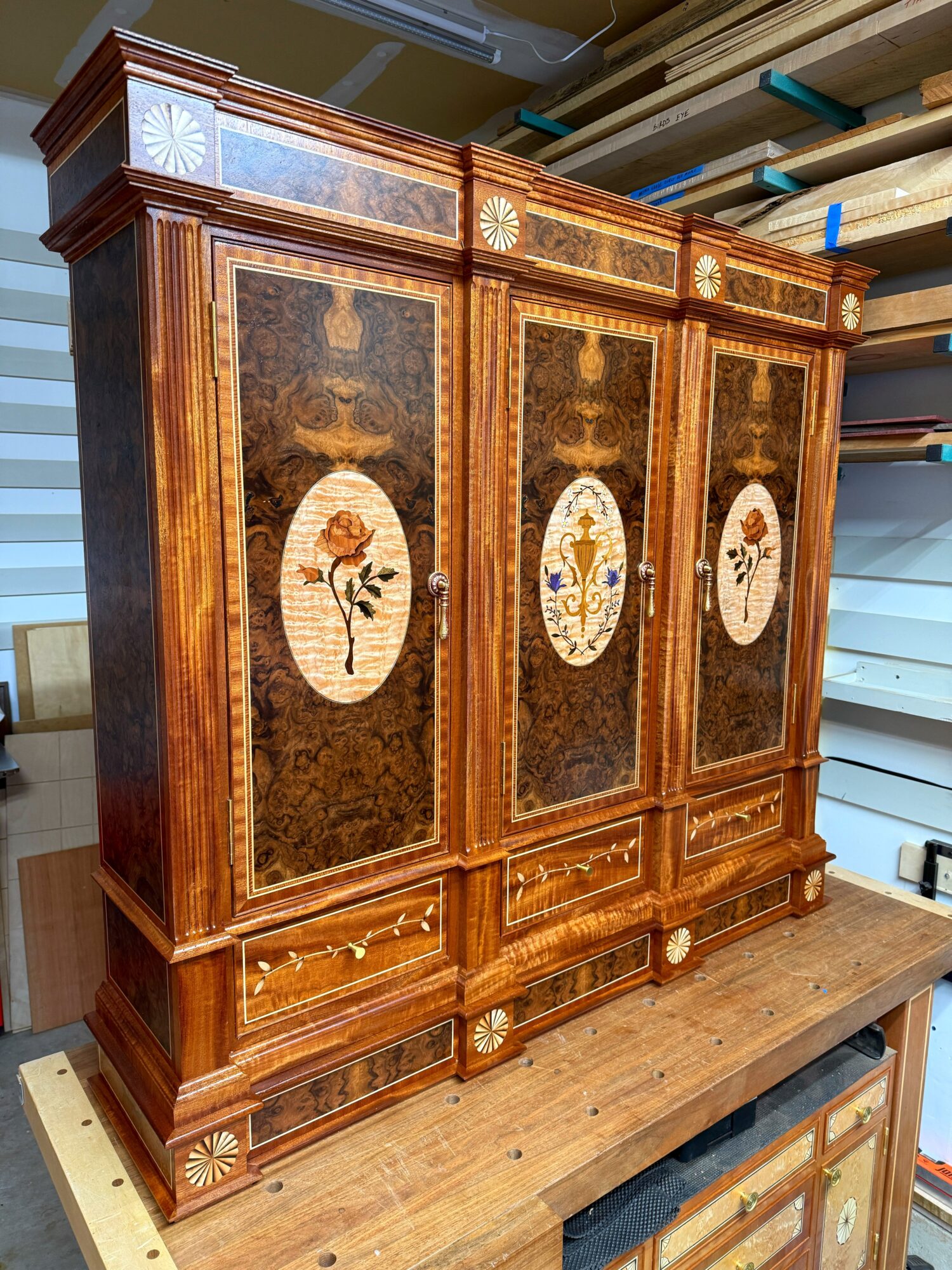
I design and build bespoke furniture, with a big focus on marquetry—hand-cut veneer work rooted in American Federal and neo-classical design. Most of what I make are one-off pieces for clients who care about craftsmanship and detail, and who want something that isn’t coming out of a catalog packaged with 5 pounds of screws.
Over time, I’ve tried to focus on precision and being intentional with the work. Marquetry especially doesn’t leave much room to hide—every line you see is an individual piece of wood that has to be cut and fit correctly. There’s no filler or shortcuts to lean on.
That process naturally demands a certain level of discipline, and I think that shows up in the finished piece.
I draw a lot of inspiration from historical styles, but the goal isn’t to recreate the past—it’s to build something that feels grounded in that tradition while still being original.
One thing I’ve come to value over time is consistency—not just a single standout piece, but work that holds up across the board, both in design and execution. Especially up close, where the details really get tested.
And then it comes down to discipline—sticking with the harder path when it would be easier to simplify or cut a corner. More often than not, those decisions are what give the piece its character in the end.
We’d love to hear about any fond memories you have from when you were growing up?
I remember helping my father build a mantel years ago. While he was holding it in place, he asked me to drive a nail. First swing—I missed the nail completely and drove the head of a roofing hammer straight into his thumb. I laughed so hard I couldn’t keep going… while he was stuck there in absolute agony, still holding this massive mantel in position.
As ridiculous as that moment was, it also stuck with me for a different reason. I still remember the quality of that mantel and the care he put into building it. That combination—effort, precision, and pride in the work—left a mark on me in a way I didn’t fully appreciate at the time.
Contact Info:
- Instagram: @rp_basilio
- Youtube: @RPBasilio