


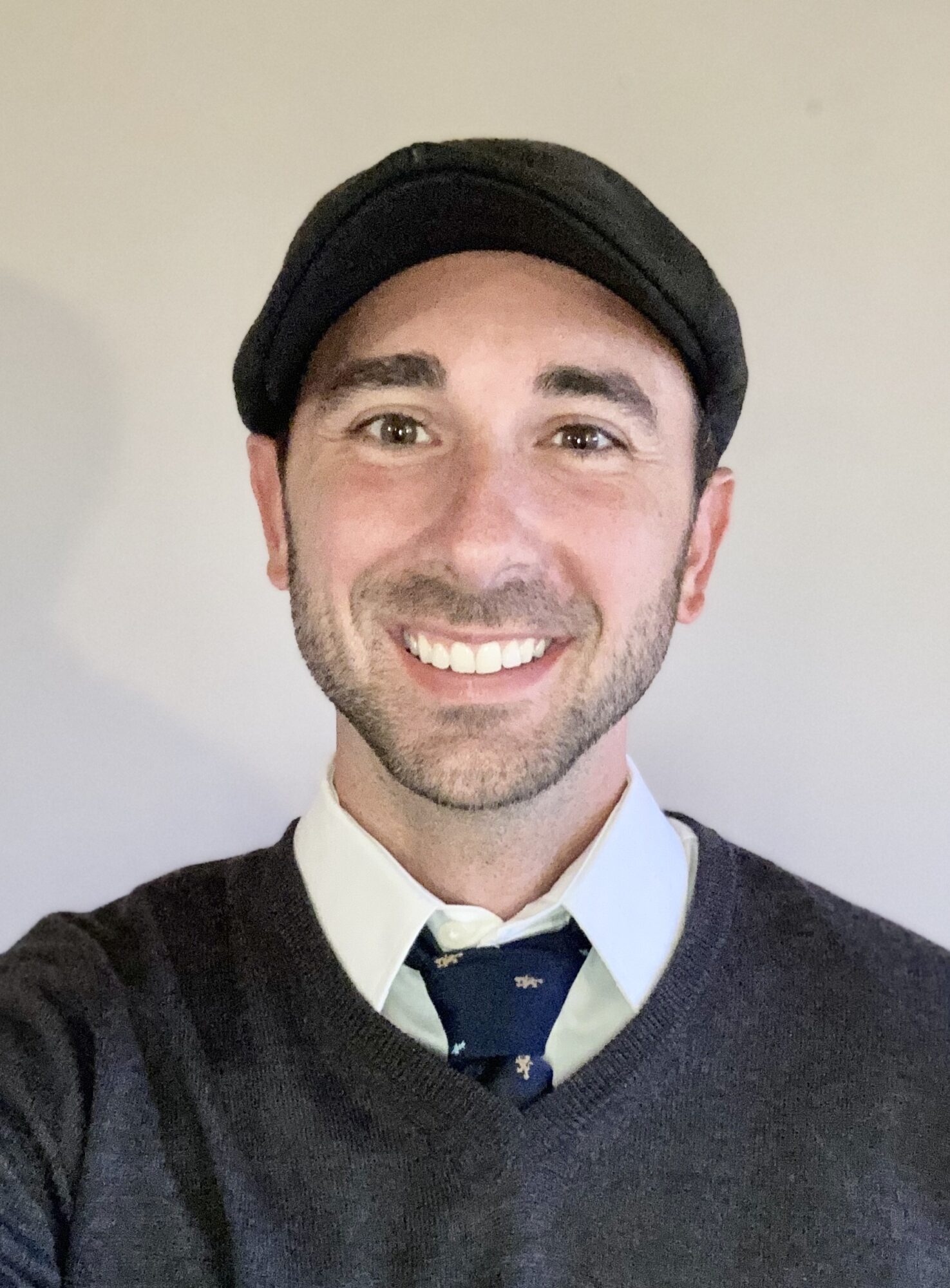
Today we’d like to introduce you to Evan Griffin.
Hi Evan, we’re thrilled to have a chance to learn your story today. So, before we get into specifics, maybe you can briefly walk us through how you got to where you are today?
The truth is, I didn’t know what I wanted to “do when I grew up” until I was 25 years old. Classic story – I started out as a lost, directionless, and generally confused recent college grad working as a bartender to make ends meet while trying to “figure out what to do with my life.” I had spent many years previously working in the hospitality industry throughout high school and as I put myself through college, and felt relatively polished in terms of my people skills and networking ability.
My undergraduate studies were largely useless in terms of pragmatic application, as I spent my formative years studying religion and philosophy to indulge my transcendental curiosities. When left to face the grueling reality of actually “living,” (instead of just thinking about living), I felt deeply frustrated and underprepared. I spent many years trying to figure out how to align my personal interests, convictions, and training into an applicable and sustainable career.
Behind the bar, I often found myself lending a listening ear to all sorts of different types – whether I wanted to or not frankly. “In vino veritas” (in wine, truth) as they say, and so the loosening of tongues was plentiful. I offered philosophical and theological platitudes on the daily as I served up Manhattans and Margaritas at various watering holes throughout the Lehigh valley. I eventually grew weary of the late night, low pay, party-hardy lifestyle of the hospitality industry, and found myself wanting more. Plus, I was not very good at having a boss.
Between my natural interests in the meaning of existence, my background in the study of philosophy and theology, and my experience listening to drunk people spill their deepest darkest secrets, I made the only logical and natural decision – to pursue a graduate degree in something I had never studied previously in my life (tongue in cheek). I figured shrinking down philosophy into practical application meant I could choose from either sociology, anthropology, or psychology, and so I owe a great gratitude to the many drunk guys and gals out there that inspired my journey.
I was obviously quite nervous about taking on significant debt, returning to higher education after years away, and even gaining acceptance in a field of study with which I had no prior experience, but hey – “what’s life without whimsy?” I think this is where I first actualized the most important part of becoming successful in where I am now – I simply decided to try. Despite my fear, uncertainty, and trepidation, I took a chance on myself. What I’ve come to learn now is that most people freeze at that point – they take the road most traveled – they cut themselves off from their own potential. So I tried… and I fell in love.
I was fortunately and graciously accepted into graduate school at Drexel University into their relatively prestigious Marriage and Family Therapy program – having to pay full price out of pocket of course – and for the next two intensive years committed everything to the process of becoming a therapist.
After graduating, there is a 2.5 year minimum waiting period before it is possible to become licensed, during which time I needed to accrue 3000 hours of client-facing experiencing under the tutelage of a supervisor to qualify to sit for my own independent license to practice. I grinded those hours of experience out as fast as possible in community mental health, and launched from my entry level associate therapist position into a supervisory role once acquiring my license. I gained some experience as a supervisor while maintaining a smaller caseload for some time before transitioning from community mental health into private sector outpatient work. I spent a year and a half working in an outpatient therapy practice, learning how the system worked and continuing to develop my skills and expertise until I was able to shake off some of the “imposter syndrome” that is natural to any advancing professional. At this point, facing down 6 figures of debt from Drexel and with only a $60k salary to work with (yes, quite abysmal despite a graduate degree and the subsequent grueling licensure process), I found myself facing a new existential quandary – how the hell do I make this sustainable?
So, back to taking chances on myself – I decided to take a shot and enter into private practice on my own. I had very little idea how to do this, but determined it was the only way I could build the lifestyle I wanted to have and potentiate the financial security I needed to do so. Having spent some time in outpatient practice, I began to study and research and ASK LOTS OF QUESTIONS, which ultimately led to enough understanding and blind confidence to shoot my shot. I quit the outpatient practice in 2020 and never looked back.
Many people advise against going into private practice because it can be very difficult and stressful to manage. You have to inhabit the role of a business person while maintaining the kind, empathetic, curious, and gentle candor of a therapist, and often these two things are considered antithetical. Then again, people say most things are difficult until they’ve done them enough times – then they just become things (neither difficult nor easy). It is from that mindset and initiative that my practice was built, which now includes having purchased a building and expanded to employ new practitioners and supervisees.
Alright, so let’s dig a little deeper into the story – has it been an easy path overall and if not, what were the challenges you’ve had to overcome?
Certainly not a smooth road, but a worthwhile one. Fear, uncertainty, financial stressors, discouragement from people in the field, red-tape, COVID, family, friends, marriage, children – but all a delight in their own way when observed through the right lens.
Great, so let’s talk business. Can you tell our readers more about what you do and what you think sets you apart from others?
Context Counseling is an outpatient therapy clinic based in the Bethlehem area offering highly specialized intervention for children, adolescents, couples, families, and adults/individuals. We pride ourselves on our areas of expertise, and ensure that our interventions are based firmly in neuroscience, evidence-based practice, and modern psychodynamic therapy techniques,
We offer diverse expert interventions in the treatment of PTSD/CPTSD, anxiety, depression, mood disorders, oppositional defiance, ADHD, parenting issues, relationship issues, sex and intimacy issues, anger management, communication difficulties, ASD (including ASD evaluations) and problems related to shame. Our providers cover a variety of specialized treatment modalities such as EMDR, IFS, Somatic Experiencing, EFT, CBT, TF-CBT, DBT, ARC, ACT, and IPNB.
I am most proud of the unified approach of the practice, which marries a synthesis of complex hyperspecialized intervention and neuroscience with very authentic and casual human interaction. Every practitioner is as honest and human as they are specialized, which makes for a very comfortable and effective therapeutic environment.
I’d hope for the readers to know that they can receive high quality and effective therapeutic intervention that doesn’t feel sterile, overmedicalized, or manualized. We are collaborative in nature, and treat every situation with respect, care, and attendance to individual needs.
Additionally, it is important to us to be able to offer high quality therapeutic intervention to all races, genders, classes, sexual orientations, religious affiliations, ages, etc…, so we accept most major insurances and operate on a sliding scale for out of pocket payments to allow for populations with limited financial resources to access expert care.
Sadly, the world of mental health services is plagued with systemic issues. It’s sort of ass-backwards in that the populations with the highest level of need tend only to have access to the least seasoned and least supported therapists – often fresh graduates working towards licensure in the realm of community mental health. This is highly problematic in our view, as we believe that all people are entitled to the highest level of care available, especially those with more severe biopsychosocial challenges. We stand to challenge this systemic issue by offering seasoned and tenured expert therapist care to the populations that otherwise are financially selected out.
Are there any apps, books, podcasts, blogs or other resources you think our readers should check out?
There are a great many books that I feel have been very helpful to me in life, including but not limited to: “Necessary Losses” by Judith Viorst, “The Body Keeps the Score” by Bessel Van Der Kolk, “Mindsight” by Daniel Siegel, “Daring Greatly” by Brene Brown, “The Book of Delights” by Ross Gay, and then basically anything by F. Scott Fitzgerald, Albert Camus, Aldous Huxley, Ernest Hemingway, J.D. Salinger, Herman Hesse, Jack Kerouac, Kurt Vonnegut, Special shout out to the children’s book “Still Water and Koo Save the World” by Jon J Muth
Pricing:
- We accept most major insurances who set their own rates
- Out of pocket cost operates on a sliding scale and runs from $100-200/session (with some exceptions to accommodate financially strained populations)
Contact Info:
- Website: https://www.contextcounseling.com