


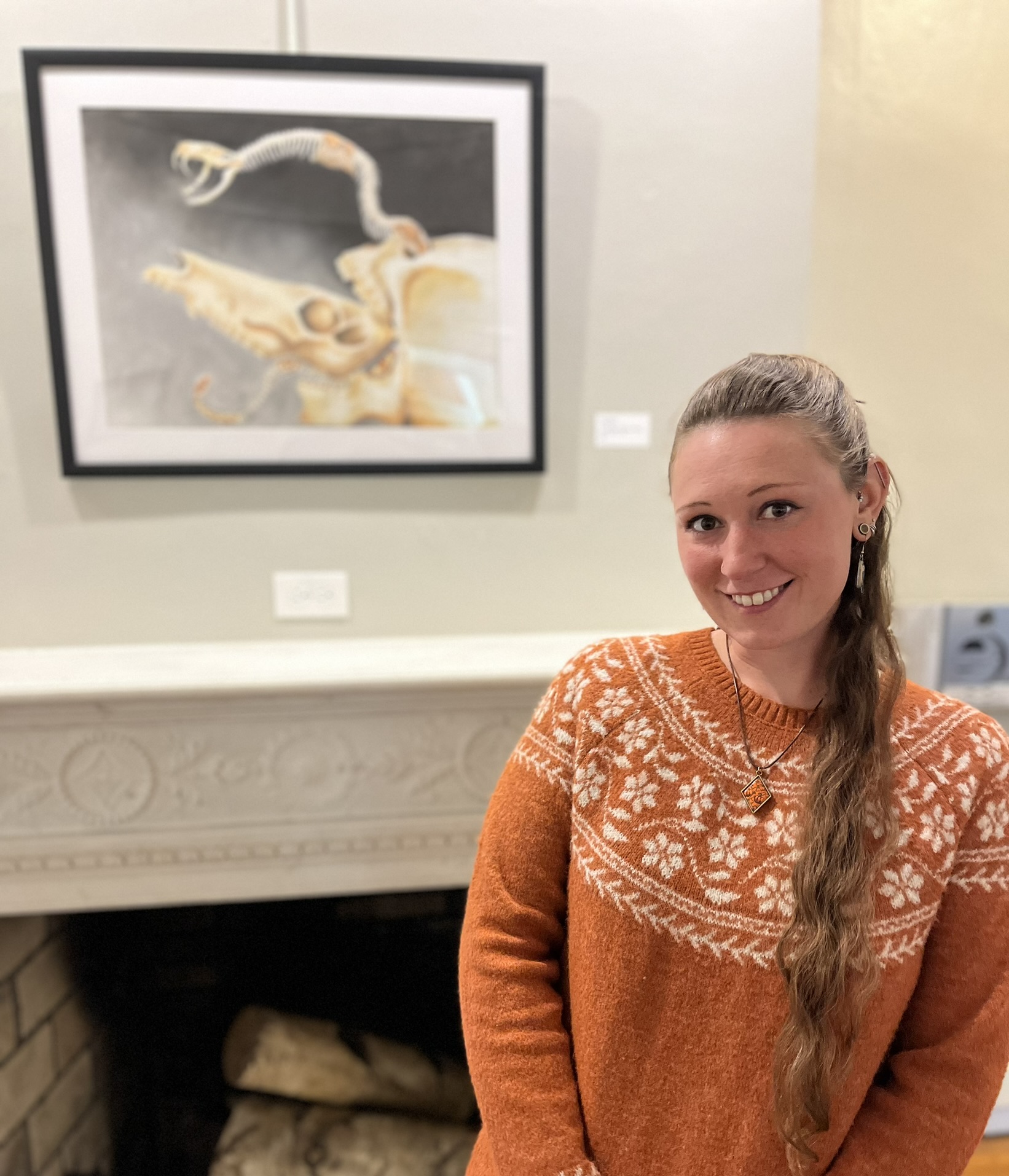
Today we’d like to introduce you to Casey Beal.
Hi Casey, so excited to have you on the platform. So before we get into questions about your work-life, maybe you can bring our readers up to speed on your story and how you got to where you are today?
I began life in a frenzied pursuit of knowledge about the world around me. As a child growing up in the suburbs of Florida, I spent countless hours wandering neighborhoods and parks in search of insects and lizards. I loved to watch them and to catch them to study them up close.
My wandering transformed into investigation as I aged, I wanted to understand more about life, nature, and animals in particular. Thus, I embarked on the adventure of academia, where I toiled until I earned a Masters of Science in Biology. I primarily studied marine and coastal life, and I especially loved the long hot days of summertime field work collecting samples and spending time in the estuaries of North Florida. During that period of my life, I thought I would move on to become a field biologist or maybe split my time between teaching college Biology courses and conducting research, as my mentor did. However, as I neared the end of graduate school, I developed a debilitating autoimmune condition. My illness caused muscle atrophy, leaving me temporarily disabled, and forced me to reconsider my future goals.
Embracing change as I began learning to manage this new lifelong illness, I made the decision to bid farewell to the scientific world and instead start a new chapter as an artist. I left a life by the sea to live amongst the ancient and beautiful Appalachian mountains, where I now find solace and purpose on my small homestead.
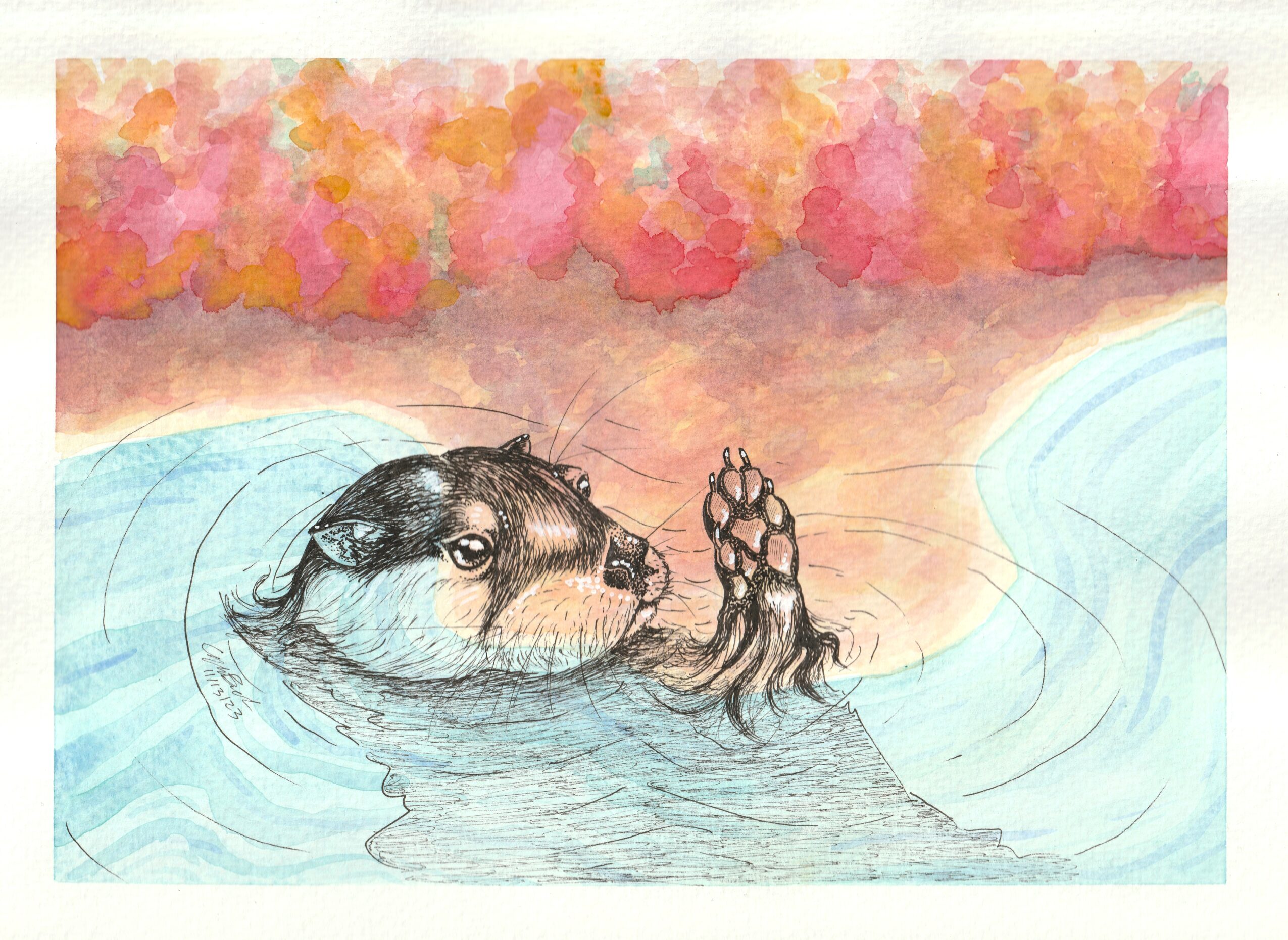
Drawing from my background in Biology, I use my art to tell stories about the flora and fauna I love, to celebrate the natural world, and to bring awareness to the smallest beings that are often overlooked. Each piece is a reflection of my connection to the intricate dance of life, an homage to the wonders that surround us.
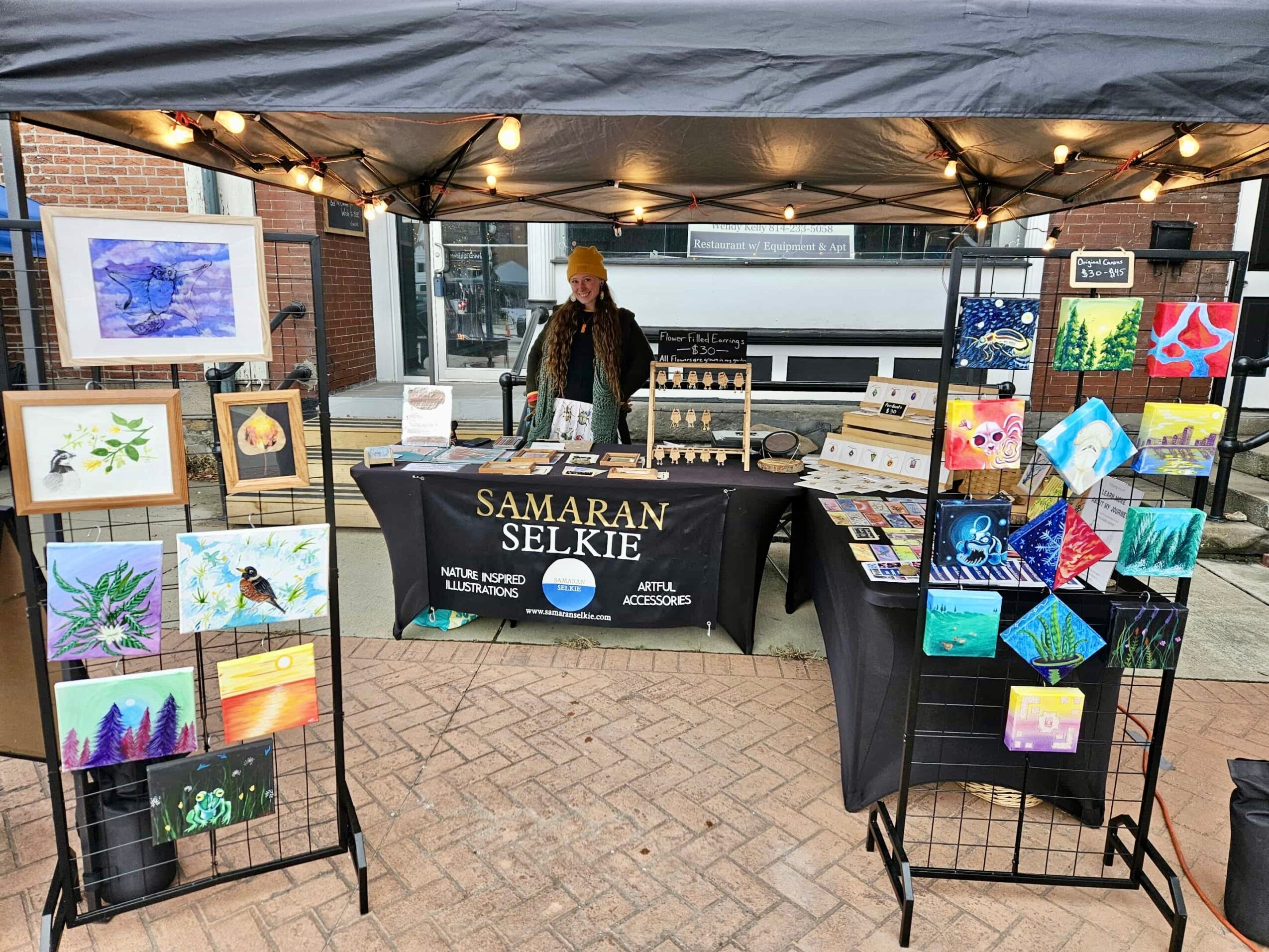
In 2024, I started my business, Samaran Selkie, through which I share my artwork, hand crafted and painted jewelry, and my writing. The name Samaran Selkie has significant meaning tied to my own personal journey, “Samara” refers to the seeds of the abundant maple trees of my new home, and “Selkie” comes from a Scottish myth of a creature that resembles a seal in the water but assumes a human form on land – as a nod to my upbringing by the ocean.
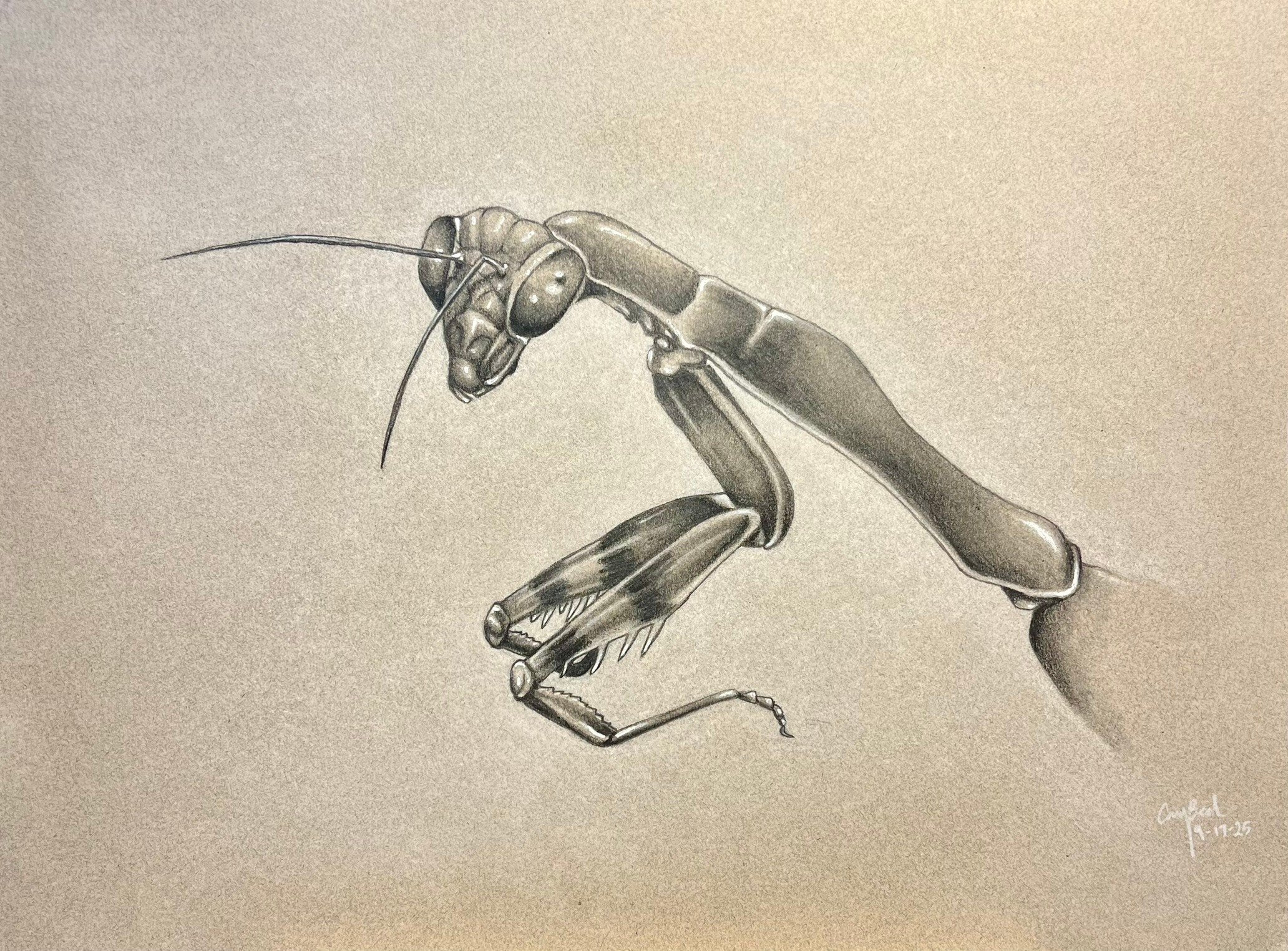
My mission in creating Samaran Selkie was to inspire others to connect more with the miniature wilderness lurking in their own backyards, and to tell the dramatic, beautiful, and sometimes fantastical stories of that tiny world. It is easier to care for creatures that you understand, and so if I can make a mantis or a spider feel less frightening and more familiar through my work, I consider that a huge win! In addition, I feel that art is incredibly important and healing for the human soul, so I spend a good deal of my time creating workshops and classes to teach others how to express themselves through a multitude of media. I am always supportive of folks who are just beginning to create art or budding new artists in our local art community, and I try to use my foothold in the creative world to help raise up as many artists as I can. I have begun assisting in creating and planning events like the Western Maryland Artist Studio Tour and the brand-new Cumberland Living Arts Festival, to create spaces to spotlight other artists and their work, but also to connect people who may not yet be artists with skills and confidence to begin their own artistic practices.
I am incredibly grateful for the opportunities I have had since becoming an artist and starting my business. I started with little more than a dream and a passion for drawing animals, and in just two short years I have been blessed to have my work displayed in many local cafes, restaurants, and galleries such as the Bottle Works Ethnic Arts Center in Johnstown and Laurel Arts in Somerset. Last year, I had my very own solo art exhibition titled “Small Bodies, Vast Worlds” at the Composition Art and Wine Bar in Bedford, showcasing the hidden lives of insects. Currently, I’m painting away in preparation for a joint exhibition at the Gilchrist Gallery and Museum to bring an eccentric exhibition to Cumberland, MD. The talented sculptor, James Barefoot, and I will be showcasing our unique take on the diversity and forms of insects. Both James and I employ our backgrounds in Biology to make artwork that blends science and artistic expression. Please consider joining us for the opening reception on May 16th, from 5-8pm, where James and I will be talking about our processes and the stories behind our work!
Alright, so let’s dig a little deeper into the story – has it been an easy path overall and if not, what were the challenges you’ve had to overcome?
My journey has definitely been a bumpy one.
My dream since I can remember was to work with animals. I studied hard, took accelerated classes, and volunteered throughout high school to earn enough scholarships to put myself through college. I spent eight years in undergraduate and graduate programs, each year inching ever closer to becoming a biologist. As fate would have it, in the final years of my masters program, I developed a debilitating illness that made my dreams virtually unattainable. I studied sharks through my graduate studies and had always intended to continue working in the field, spending my life learning about and bringing awareness to the animals I loved. The sort of work I was doing and planned to continue to do involved many long days at sea working under the harsh sun, and required strength to haul in anchors and safely handle animals to collect blood and morphometric data for studies.
Unfortunately the condition I developed specifically targets my skin and muscle tissue, I went from hauling anchors to not being able to dress myself in only 3 months. Just getting my condition under control has been a long bumpy road in and of itself, and I still to this day struggle with it and have periods of health decline. I really had to fight to finish my program after my diagnosis, I was very sick for a long time and I often had to miss classes due to physically not being able to leave my apartment, drive to school, tackle the steps to get onto the student buses, then perform my classroom duties, and then backtrack home again. I managed to finish my degree, but I knew that I would not be able to live the life I had been preparing for.
I am naturally an optimistic person, and I don’t really dwell on the things I have lost. I wanted to become a biologist because I love animals and I wanted to do whatever I could to protect them and speak for them. The focus of my work in school was to monitor the long term effects on sharks many years after the Deepwater Horizon oil spill, and to study the effects of capture stress on sharks in both commercial and recreational fishing. I hoped the results of my work would then be used to inform regulation, to change practices to protect vulnerable species. I am not able to contribute in this way any longer, so instead I try my best to make similar statements in my artwork. In this way, I feel that my health struggles and change in career path do not weigh so heavy, and that I am still achieving the goals I had set out to do.
In fact I believe I would not have had the courage to begin showing my art publicly if it weren’t for becoming so ill. In accepting that I will never again be able to live without constant monitoring and treatment, I have spent a lot of time reflecting about what is important to me, and what I want to have done if I were to take a turn for the worst tomorrow. I have always been creative throughout my life, and even completed a minor in painting, drawing, and printmaking during my bachelors degree. I decided I wasn’t afraid of what people might think of my artwork, and that it might be fun to share it with others. I submitted a few pieces for a couple of local group exhibitions, and this sparked an ever present drive to create and inspire others to create.
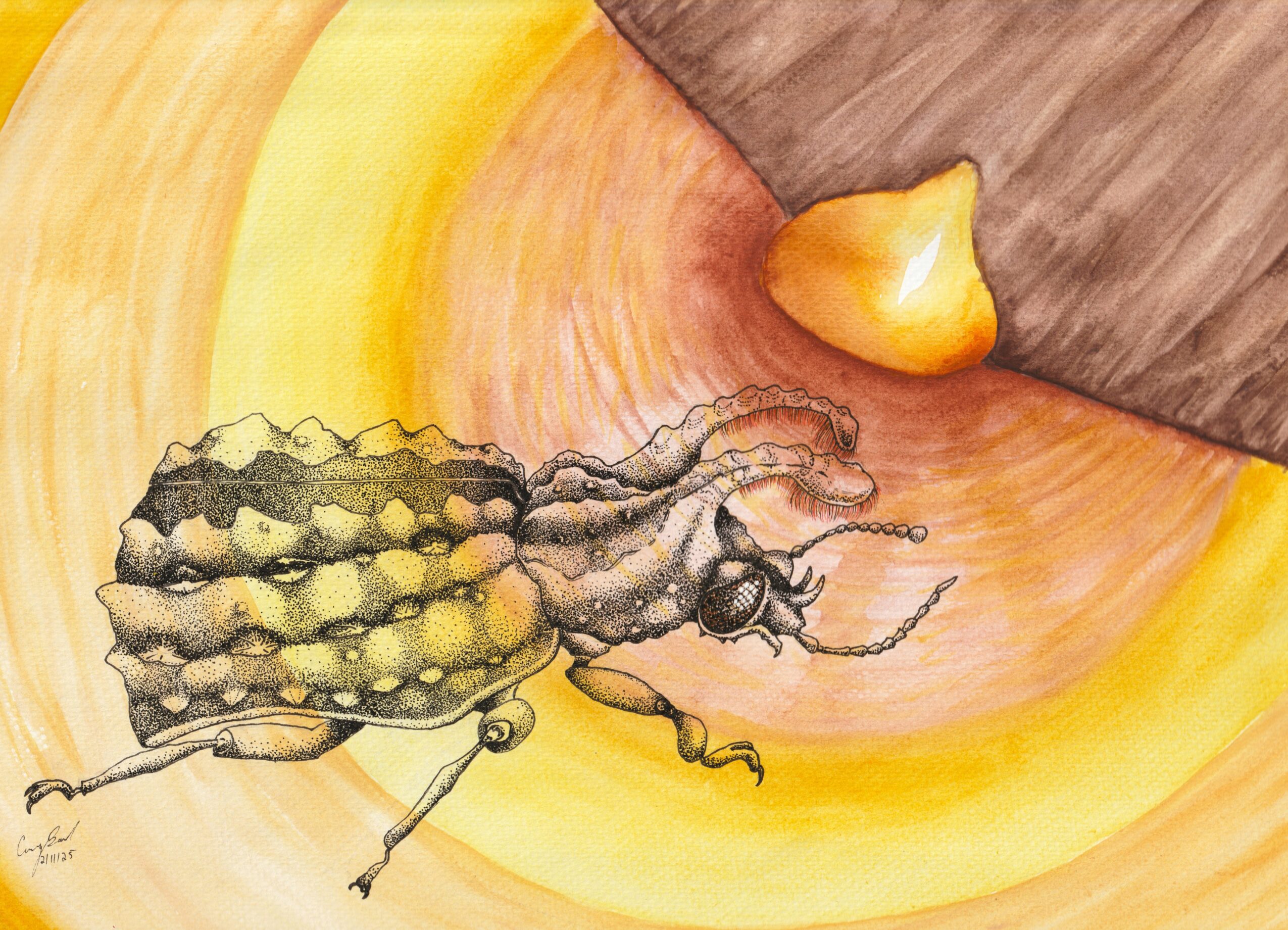
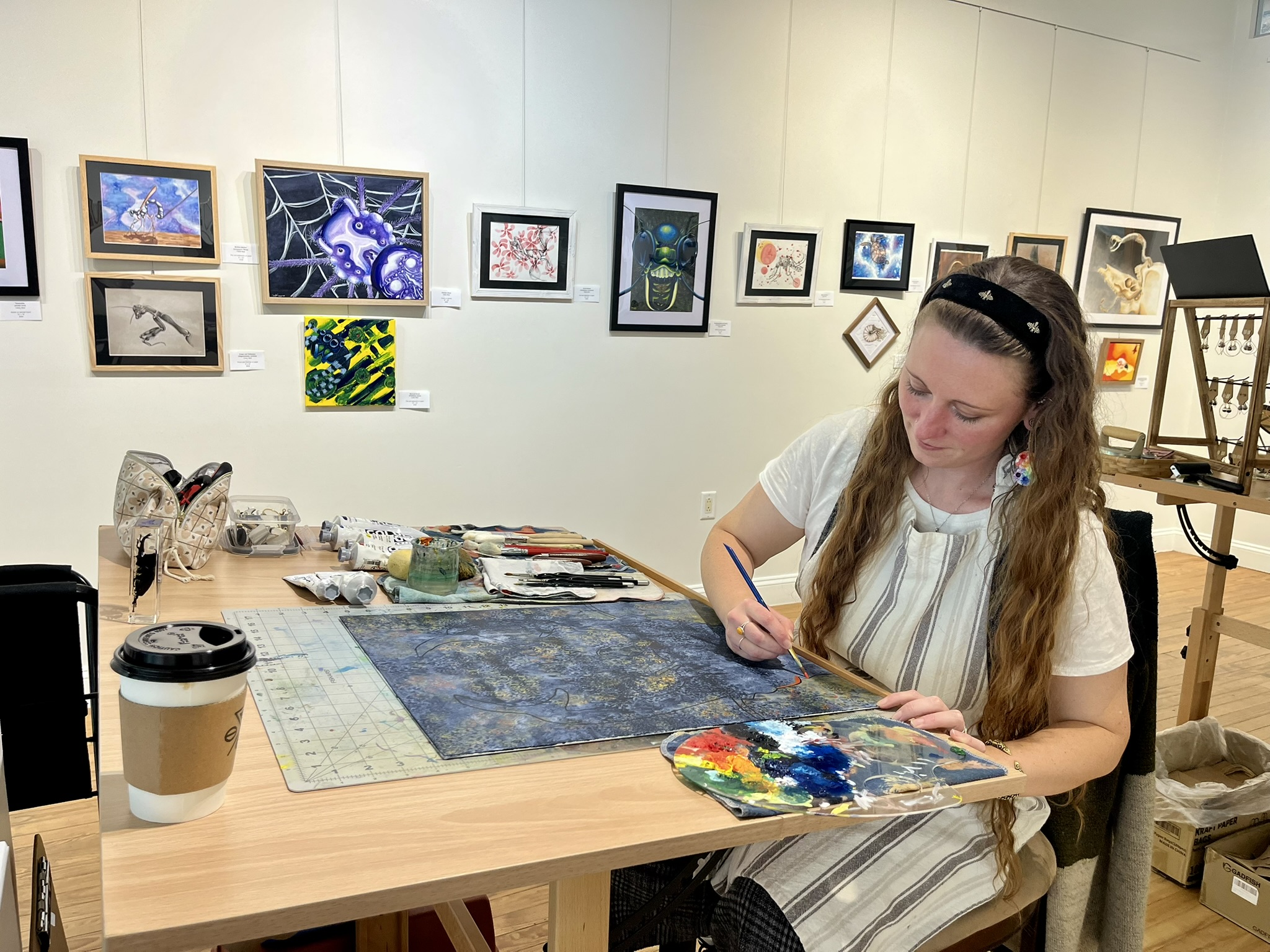
I use my art to tell the stories of animals that the average person might not know and to bring awareness to again hopefully change practices to protect these animals. The majority of my art work is comprised of mixed media pieces depicting precisely drawn and stipple shaded insects overtop of abstract painted backgrounds. The insects are somewhat see-through, as the stippling does not fully fill in their shape. This lends an invisible quality to the insects, which is a nod to the alarmingly fast rate of decline in insect biodiversity. We are losing so many important pollinators and creatures that keep the cycles of our ecosystems running smoothly.
I hope that in seeing my work, viewers can see the awe and beauty these often overlooked creatures command, and maybe think twice about squashing a fly or applying pesticides to their garden.
As you know, we’re big fans of you and your work. For our readers who might not be as familiar what can you tell them about what you do?
I specialize in wildlife art, primarily portraying insects, birds, aquatic animals, and plants. My work is a little different from other wildlife artists, as I love to incorporate abstract elements in the backgrounds instead of depicting the subject in a more true to life habitat. I feel that Biology and Art cannot exist without each other, and therefore neither can I or my work. I employ dramatic paint strokes of vibrant colors and shapes to convey free expression and creation, though I tend to try to reflect an emotion or a feeling in the background that pairs well with the subject.
When it comes to the subject of my artwork, I am greatly inspired by antique biology textbooks. I love to recreate the feeling of reading an early study of an animal by rendering the animal as precisely as I possibly can. I then laboriously shade the creature using the stipple technique, where I employ many thousands of tiny dots to shade in shape and texture.
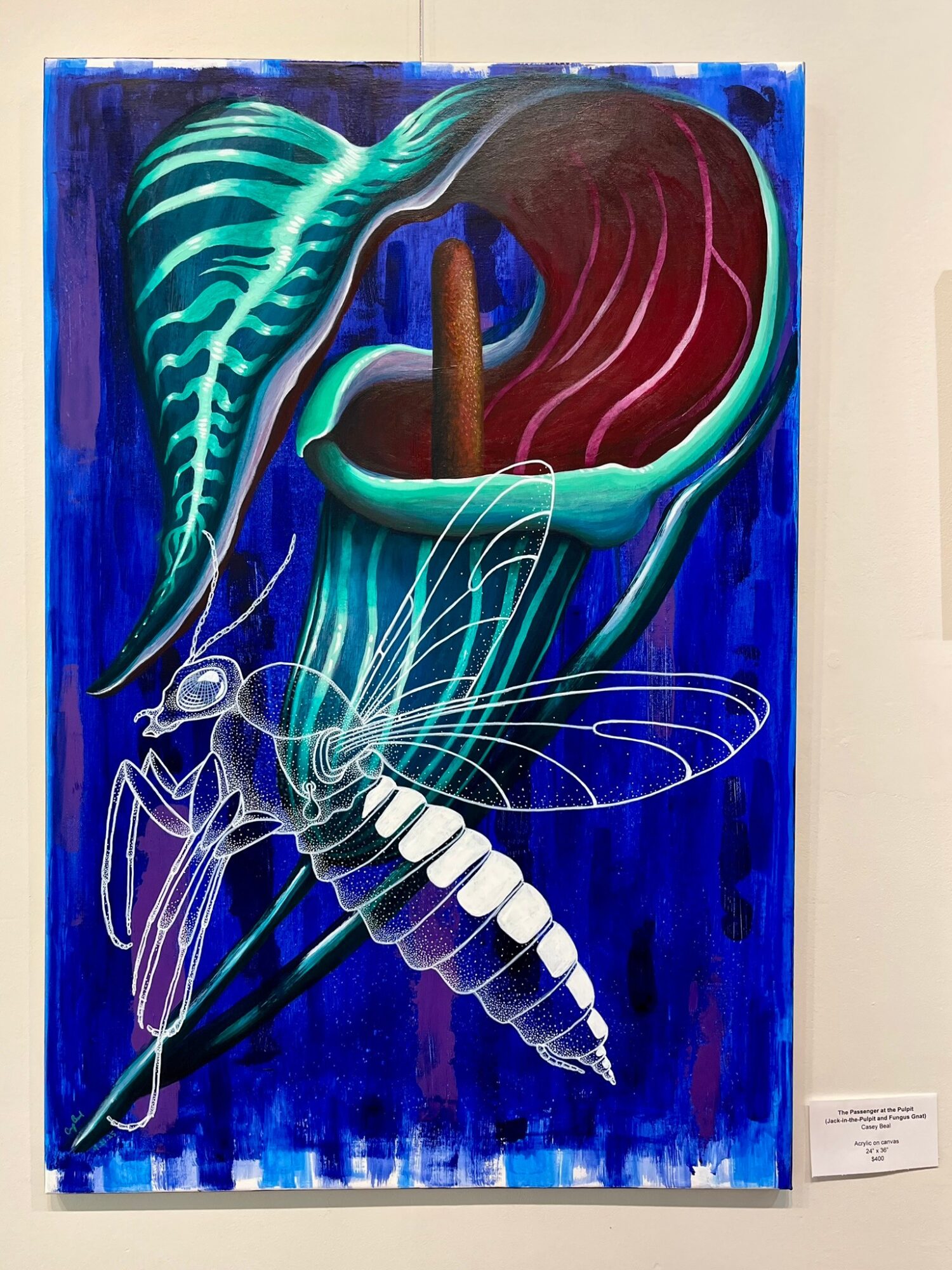
Much of my work is meant to tell the story of the creature depicted, rather than just recreate the animal. One of my personal favorite pieces I’ve created is a large (24 x 36in) acrylic painting telling the story of the Jill-in-the-Pulpit (the female flower of the Jack-in-the-Pulpit plant) and its ill-fated pollinator, the humble fungus gnat. The Jack-in-the-Pulpit flower is a hooded pitcher shaped flower, that produces a musty fungus-like odor and stores its pollen at the base of the flower. Fungus gnats are attracted to the plant because of its odor, not knowing that there is no fungus for the gnat to eat. Searching for food, the gnat explores the entire flower and makes it all the way down to the bottom where it unknowingly picks up pollen as it walks about. The male Jack-in-the-Pulpit flower is kind enough to have a built-in exit hole near the base, so the gnat can easily leave once it realizes there’s no lunch here. After leaving, the gnat may come across another deliciously scented plant and explores again, thinking maybe this time there is something tasty here to eat. However, if gnat has entered a female Jill-in-the-Pulpit flower, it will discover that there is no convenient built-in exit hole. In its frustration to find a way out, the gnat will drop pollen around the base of the flower, which fertilizes the plant. The plant will then be able to produce its fruit and ultimately seeds, securing the next generation of plants. The gnat however, is unable to escape from the flower and will eventually starve. I painted “The Passenger at the Pulpit” last year as the center piece for my solo exhibition, depicting the phantom of the fungus gnat finally emerging from the Jill-in-the-Pulpit flower after completing its deadly duty. This has been one of my favorite pieces to show and discuss because it not only evokes emotions through the interplay of life, death, and rebirth, but it also teaches the unknown stories of the hidden creatures living in our backyards, here in Pennsylvania.
In addition to my mixed media work and acrylic on canvas paintings, I really enjoy making jewelry that also honors nature and wildlife. The two types of jewelry I make are painted pendants and homegrown flower filled earrings.
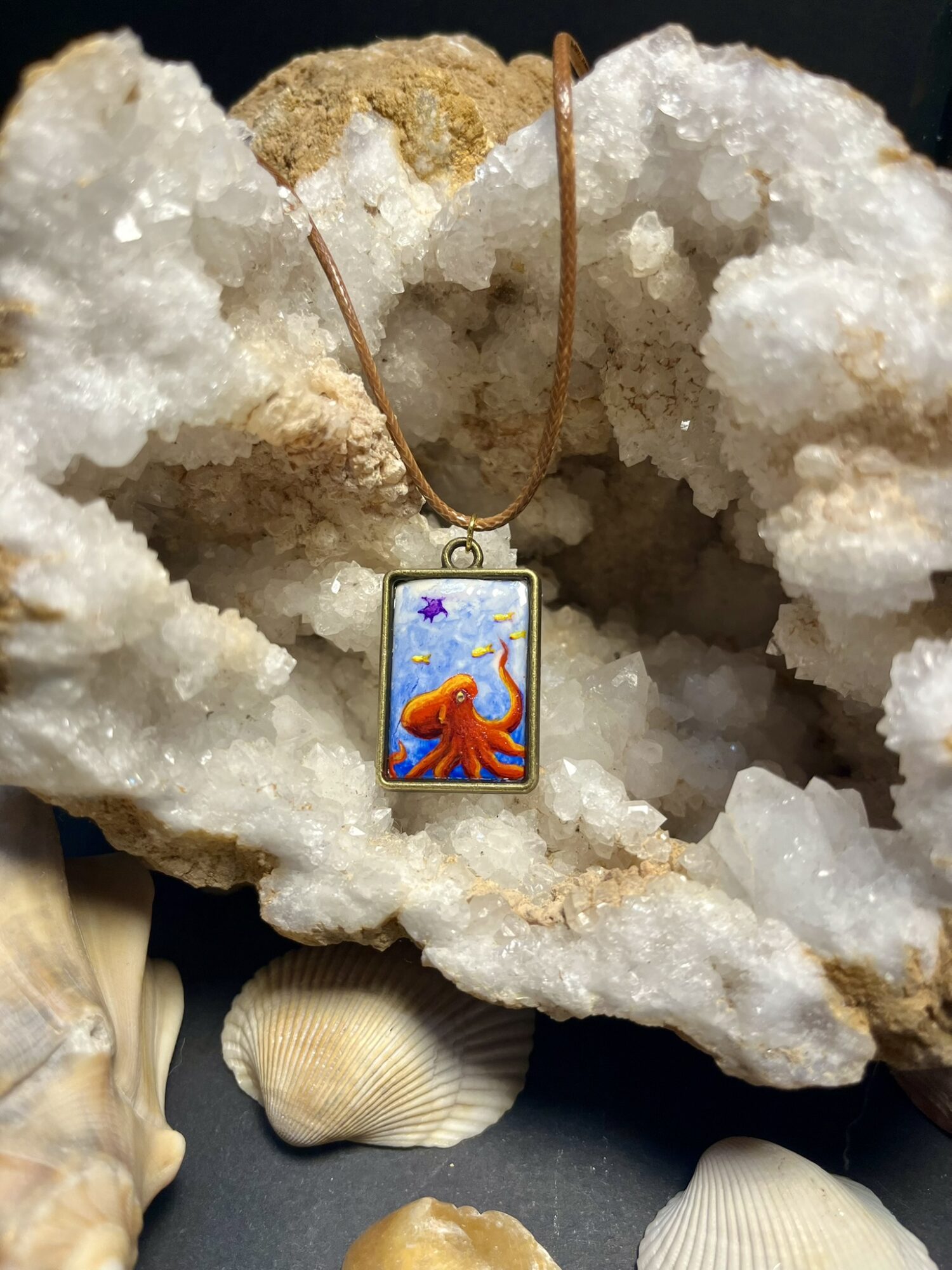
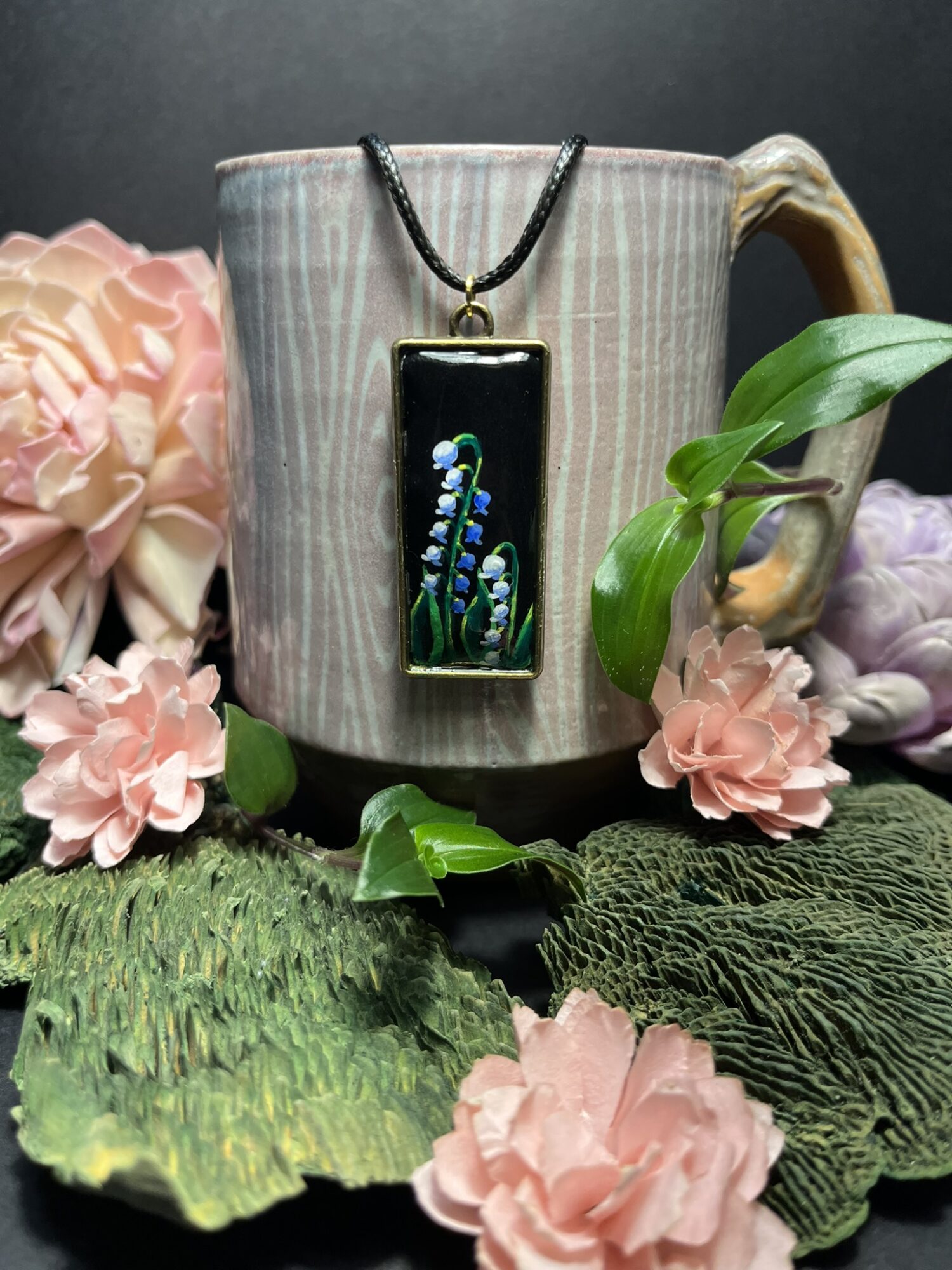
I hand shape the polymer clay pendant base that I then paint with the tiniest brushes I can find. I really enjoy making these micro paintings because I can get a lot of ideas painted and out of my head all at once, since they are so small. I try to make a new series for every market I attend. Each one is unique and usually features flowers and animals, but I sometimes like to sneak in tiny landscapes or cute things like teapots. I love experimenting with different colors and techniques at such a small scale because I can apply what I like to my larger full-sized work. To finish, I double varnish each pendant to protect the paint, and I never use resin so this will not yellow over time. My pendants are miniature wearable painted masterpieces.
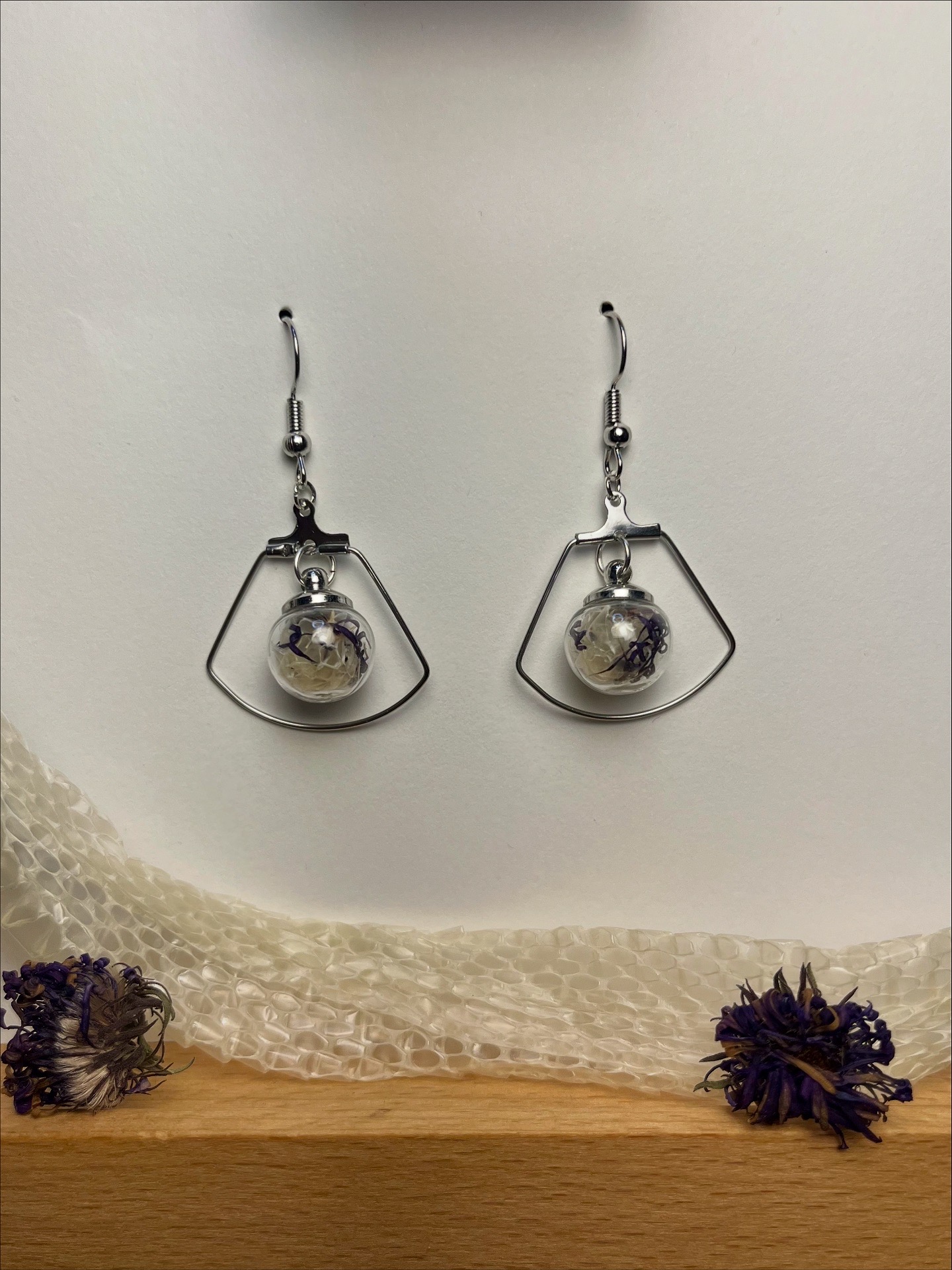
My floral earrings are only made with flowers that I grow myself in my garden. Every season the flowers I use change, depending on what is ready to come out of the press. The majority of my flowers are wildflowers native to Appalachia, but I do grow some roses and other well known nonnative plants too. To make them, I start with hollow miniature glass globes and I fill them by using tweezers to layer each petal since they are so delicate! I then seal the globes closed with a tiny metal lid, and then hook them up to earring posts or hooks. Some are encircled with differently shaped hoops and some are just the plain floral globes on chain. I think of these as little bits of preserved sunshine in a bottle that you can wear when it’s cold outside and you need a reminder of summer, or just want to be near flowers.
Keeping in line with my nature friendly mindset, I try to make as little waste from my art and jewelry, and repurpose anything that is left over. Dried paint left on my pallet is chipped off and put into empty globe earrings as a specialty paint chip earring sets. It may sound strange, but these earring sets are vibrant, multicolored, and always look different as they move when you wear them, they are some of my favorites to wear. I store all the left over flower stems and leaves from the press for a painting project I am working on. Any packaging from shipping when I order supplies is repurposed when I ship out my own work, or is used in artwork. I do not use any plastic in my packaging, and I will happy recycle packaging from my customers when they return it to me. All of my classes and workshops are also designed to produce little or no waste as well.
If you had to, what characteristic of yours would you give the most credit to?
I feel that my unwavering hope and enormous gratitude are what has brought me the most success.
After becoming so ill, I knew that I could either give up and succumb to sadness or that I could cling to hope and try to make the best of things. So, being the incredibly stubborn person that I am, once I decided there was still hope, then there must be hope for everything. I started small, I used to just hope for a day without much pain, and then a day where I could brush my hair on my own, and then a day where I could walk in and out of the grocery store without needing to rest, and so forth. Every time something I hoped for would happen, I would feel such gratitude that it happened and I hadn’t given up. It became a feedback cycle where I would hope, then work towards that goal, then feel such happiness and gratitude in achieving it, and that would fuel the next goal.
In living through such a scary experience, I found it so much easier to put myself and my artwork out there then when I was younger and healthy. I was drawing and painting constantly while I was at my sickest because there wasn’t much else I could physically do. I had quite the stack of artwork built up when that familiar hum of hope began to buzz in my head as I imagined what it would feel like to have my artwork on display. The first time you put your art into a public place, it’s a little nerve-wracking. You worry about how people will receive it, is it good enough, that sort of thing. So I finally put a painting up at a local coffee shop, and nothing bad happened. No one called me up to laugh at my butterfly at the cafe. So then I felt bold enough to submit a few pieces for a group exhibit, and this time I got some compliments from other artists which boosted my confidence a bit more. From there, the momentum of my hope/gratitude feedback cycle has fueled me to power through tough days and keep the best days in focus. I keep reaching for new rungs, slowly and steadily climbing the ladder of the art world. Sometimes I get rejected from exhibitions or projects that I want to be a part of, but these days I don’t even bat an eye. I am so incredibly grateful for every opportunity I have had that I don’t really feel set back by a rejection. I jokingly tell my friends when a rejection happens “oh well, they can’t stop me!” I pivot and move on to the next project, no hard feelings.
Becoming an artist is the achievement I am most proud of. There was so much stacked against me; my health is a rollercoaster, I had very little formal training, and I didn’t know a thing about starting a business. But whenever I’m nervous about a market or applying for projects or exhibits, I always think back to when I chose hope instead of defeat. If I could do that, why can’t I do this too? This whole beautiful shining part of my life may have never happened had I just sulked and given up when I got sick, and never dared to hope for better days.
I believe this mindset comes through in most aspects of my life, not just in my art and business. I am incredibly grateful for my supportive husband who takes care of me, for my wonderful friends who cheer me on, for the kind people who gave my art a chance and let me hang it in their businesses. And of course, I am incredibly grateful to my patrons and customers who visit my exhibitions and stop by my booth at art markets, they continue to support me and my goals. I hope they all know how much they mean to me!
Pricing:
- Watercolor/stippled mixed media pieces typically range from $145 to $250 depending on the time to complete and size, and always come framed.
- Acrylic painting price ranges based on size and framing, typically between $40 to $500
- Hand-painted pendants are $30, but I will accommodate specific commission requests for $35
- Homegrown pressed flower globe earrings are $30, and I only create these from what I grow myself. What flowers are available depends on what my garden produces each year
- Block print artwork ranges from $15-$20
Contact Info:
- Website: https://www.samaranselkie.com
- Instagram: I use two accounts on insta and I share my art on both. My primary is https://www.instagram.com/_casbea_/ and my business account is https://www.instagram.com/samaran_selkie/
- Facebook: https://www.facebook.com/casey.zender1/